

Commentary
Depleted financial reserves and a shrinking tax base mean it is no longer possible to simultaneously deliver high defense spending, price stability, and economic growth.
Alexandra Prokopenko
{
  "authors": [
    "Konstantin Gaaze"
  ],
  "type": "commentary",
  "centerAffiliationAll": "",
  "centers": [
    "Carnegie Endowment for International Peace",
    "Carnegie Russia Eurasia Center"
  ],
  "collections": [
    "Inside Russia"
  ],
  "englishNewsletterAll": "",
  "nonEnglishNewsletterAll": "",
  "primaryCenter": "Carnegie Russia Eurasia Center",
  "programAffiliation": "",
  "programs": [],
  "projects": [],
  "regions": [],
  "topics": [
    "Economy"
  ]
}
Source: Getty
Putin’s press conference made it clear that for the president, the question of whether ordinary people want to participate in modernization is secondary to the fact that the government wants to carry it out, and that there are enough people around who are “full of optimism and ready to work.” The subject of optimism and the future epitomizes the problem of the gap between the modernization agenda and public sentiment.
Many of the questions asked of Russian President Vladimir Putin at his end-of-year press conference on December 20, 2018, addressed the difference between the way the president sees the state of affairs in the country and the way ordinary people see it. By asking about nonexistent pipelines, apartment buildings that are complete only on paper, and some creative statistics, it was as though journalists were attempting to burst the bubble that Putin is living in. They did not succeed.
Putin effectively answered all questions about meaningless statistics and the bureaucracy’s monumental output of lies at the very start of the press conference, when he said that those who think the March edict outlining Russia’s development aims through 2024 cannot be carried out “shouldn’t think that way.” They should think differently, and then everything will work out: that’s the president’s answer to all those who complain that the government is blind.
The demand for a new mentality is typical of perestroika, but despite what many political experts might wish, when the president talks about this demand, he envisions a pivot not toward democratization but toward a new iteration of authoritarianism.
If, as the president said, there is no difference between the Internet and real life, then the point of modernization is to bring the laws of the real world into the Internet. In effect, this is the colonization of the new, digital dimension of the economy and society, a colonization that could allow the state to impose its system on the new world and bring profits to businesses with ties to the Kremlin.
Another vector of this modernization is the specific interest in technologies that boost the efficiency of delivering budget funds, both in the form of payouts and services. The same can be said about the digital economy. Modernization in this field resembles an attempt to use a certain set of technologies to reduce the cost of rubles filtering down to ordinary people: outsource it all to the robots. Digitalizing everything in this case means reducing expenses.
Putin’s press conference made it clear that for the president, the question of whether ordinary people want to participate in modernization is secondary to the fact that the government wants to carry it out, and that there are enough people around who are “full of optimism and ready to work.”
Yet Russians are starting to view as a problem the divergence between their worldview and the picture being painted by the government and the president in particular. The fishy statistics, the pipelines that “exist, kind of,” the apartment buildings that are officially complete but aren’t fit for moving into by residents who financed their construction; all of these beg the question: is the president’s worldview realistic? Journalists asked Putin several times whether he has a clear picture of the situation. Notably, Putin did not express any doubts about his perspective; he only conceded that sometimes things aren’t the same in life as on paper, and said that indices need to be explained correctly to people, because people don’t always correctly understand indices.
The subject of optimism and the future epitomizes the problem of the gap between the modernization agenda and public sentiment. For the president, the foundation for victory and the ticket to future success is to “think differently.” Based on opinion polls—whose figures did not come up at the press conference—Russians feel increasingly doubtful about the future: they sorely lack optimism. The president’s bravado about the prospects of entering “a new league” is clearly at odds with the expectations of ordinary people on this subject.
It is too early to assert that there is a crisis of confidence in the government, but the press conference showcased all of the preconditions for such a crisis. The state plans to collect money from those it associates with its positive agenda, while ordinary people—at least those who attended the press conference—no longer believe that the regime has a rational perception of the world. Optimism is an even bigger problem. There are plenty of optimists around Putin, but increasingly few in society at large. Public opinion surveys of narrower sections of society are even more likely to show that specific categories of respondents, such as farmers or businessmen, are pessimistic and don’t expect anything good from the future.
Putin’s interpretation of modernization only requires political power, and the conclusion that can be drawn from the press conference is that all the president sees around him today is either the projection of his power, or a deficit of power and a weakness on the part of others. This shines a somewhat different light on the question of Putin’s political legacy and vision.
It was previously believed that Putin viewed sanctions as a prelude to a resolution and a new status quo. However, the end-of-year press conference put that assumption in doubt. It seems that Putin sees the world order as being quite resolved as it is, and considers Russia’s objective to be continuing to undermine the position of its adversaries rather than reconciliation with the West or the flourishing of multilateralism.
In addition, the concept of Russophobia appears to have been used for the first time as a universal argument (rather than a personal one, i.e., accusing specific members of the U.S. elite) to explain the foreign policy of Western countries. Since there is no way to vanquish Russophobia, in this sense, Putin remains a realist. And since Russia cannot cure the West of Russophobia, then it should fight the West, or at least stand back and let it collapse on its own.
The contours of Putin’s exit strategy are today much clearer. Prior to his departure, the president will articulate the foundations for a new state ideology, which he believes will remain his legacy when he departs from politics. This policy will be grounded in the interpretation of sovereignty as that same unlimited projection of presidential power, both at home and abroad.
The synthesis of sovereignty as the president’s absolute power and the thesis of Western Russophobia as the foundation for the doctrine of Russia’s global survival guarantees that for the next few decades—so long as Putin has any say in the matter—the Russian regime will not change fundamentally.
Konstantin Gaaze
Konstantin Gaaze is a sociologist, and a journalist.
Carnegie does not take institutional positions on public policy issues; the views represented herein are those of the author(s) and do not necessarily reflect the views of Carnegie, its staff, or its trustees.

Depleted financial reserves and a shrinking tax base mean it is no longer possible to simultaneously deliver high defense spending, price stability, and economic growth.

Alexandra Prokopenko

A much-discussed disagreement over internet restrictions in Russia was never an existential threat for Putin: It was about elite groups protecting their interests.
Alexandra Prokopenko

The demands of the Kremlin’s war in Ukraine, demographic problems, and public hostility toward Central Asians mean Russia does not have enough workers.

Salavat Abylkalikov
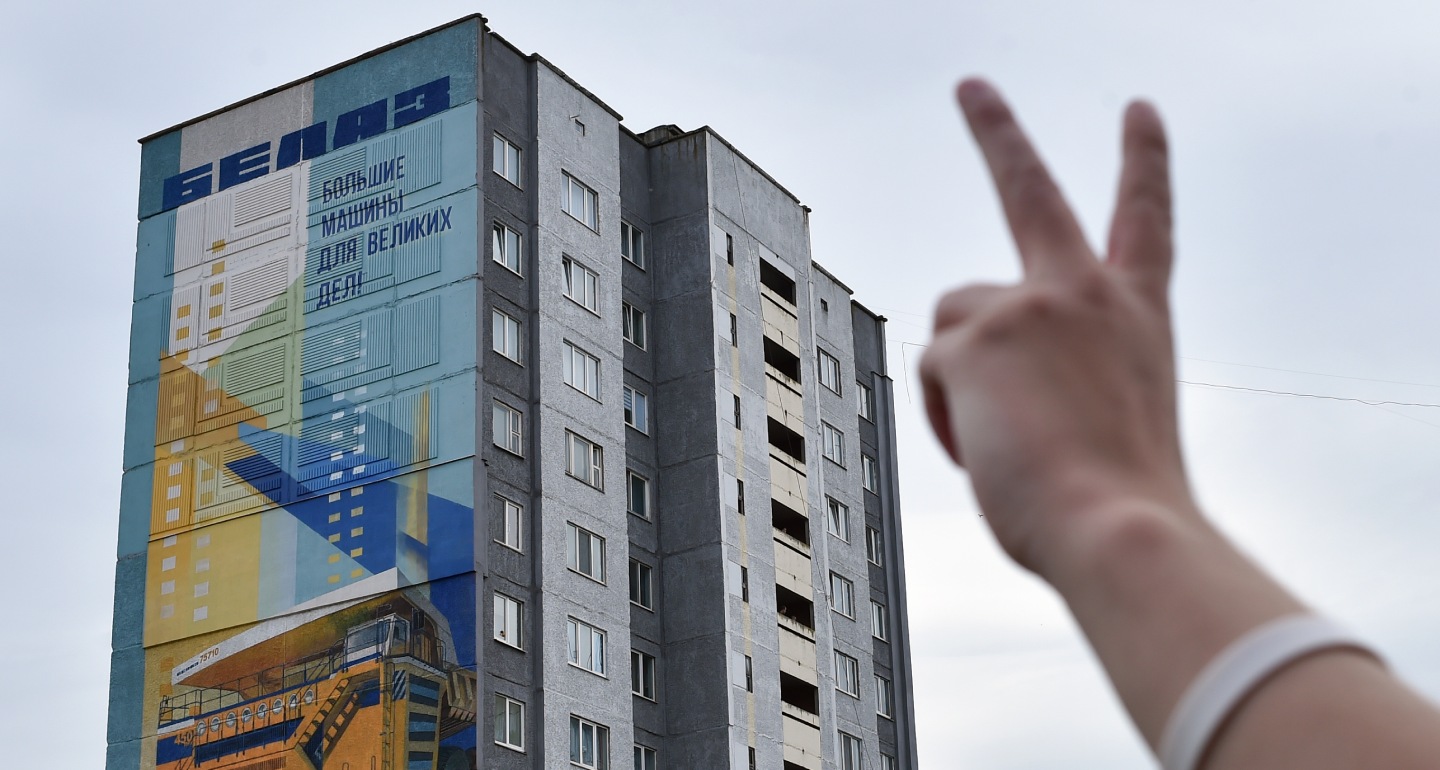
Minsk’s faith in the future of its larger neighbor’s economy is fading as Belarusian firms in Russia see record losses.

Olga Loiko
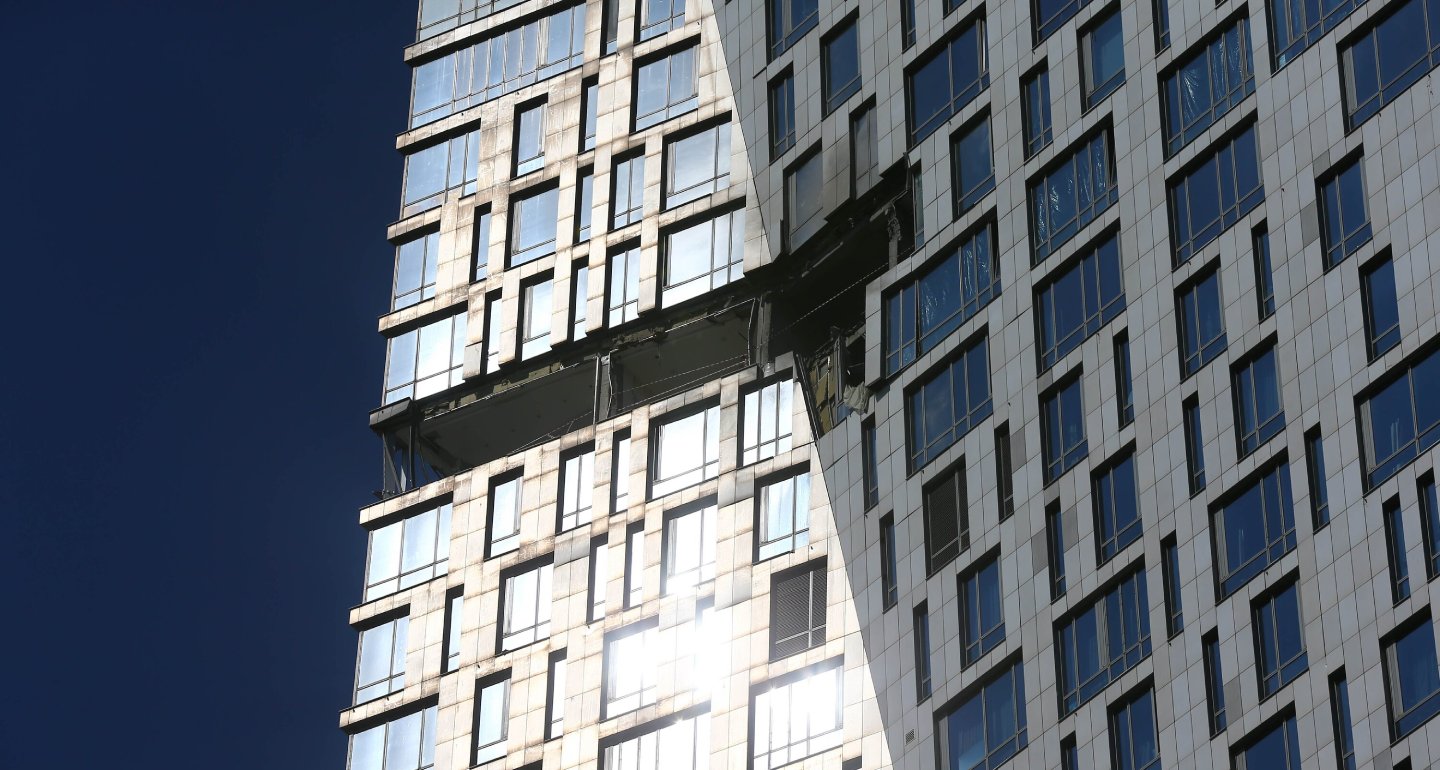
The cost of air defense has become an unregistered tax on revenue for businesses. While military rents are consolidated in the federal budget, the costs of defense are being spread across the balance sheets of companies and regional governments.
Alexandra Prokopenko