

Commentary
Putin’s conservative staffing policies and search for ever greater control have cemented parliament’s transformation into a bureaucratic appendage of the executive branch.
Andrey Pertsev
{
  "authors": [],
  "type": "other",
  "centerAffiliationAll": "dc",
  "centers": [
    "Carnegie Endowment for International Peace"
  ],
  "collections": [],
  "englishNewsletterAll": "menaTransitions",
  "nonEnglishNewsletterAll": "",
  "primaryCenter": "Carnegie Endowment for International Peace",
  "programAffiliation": "MEP",
  "programs": [
    "Middle East"
  ],
  "projects": [],
  "regions": [
    "North Africa",
    "Egypt"
  ],
  "topics": [
    "Political Reform",
    "Democracy",
    "Foreign Policy"
  ]
}
Source: Getty
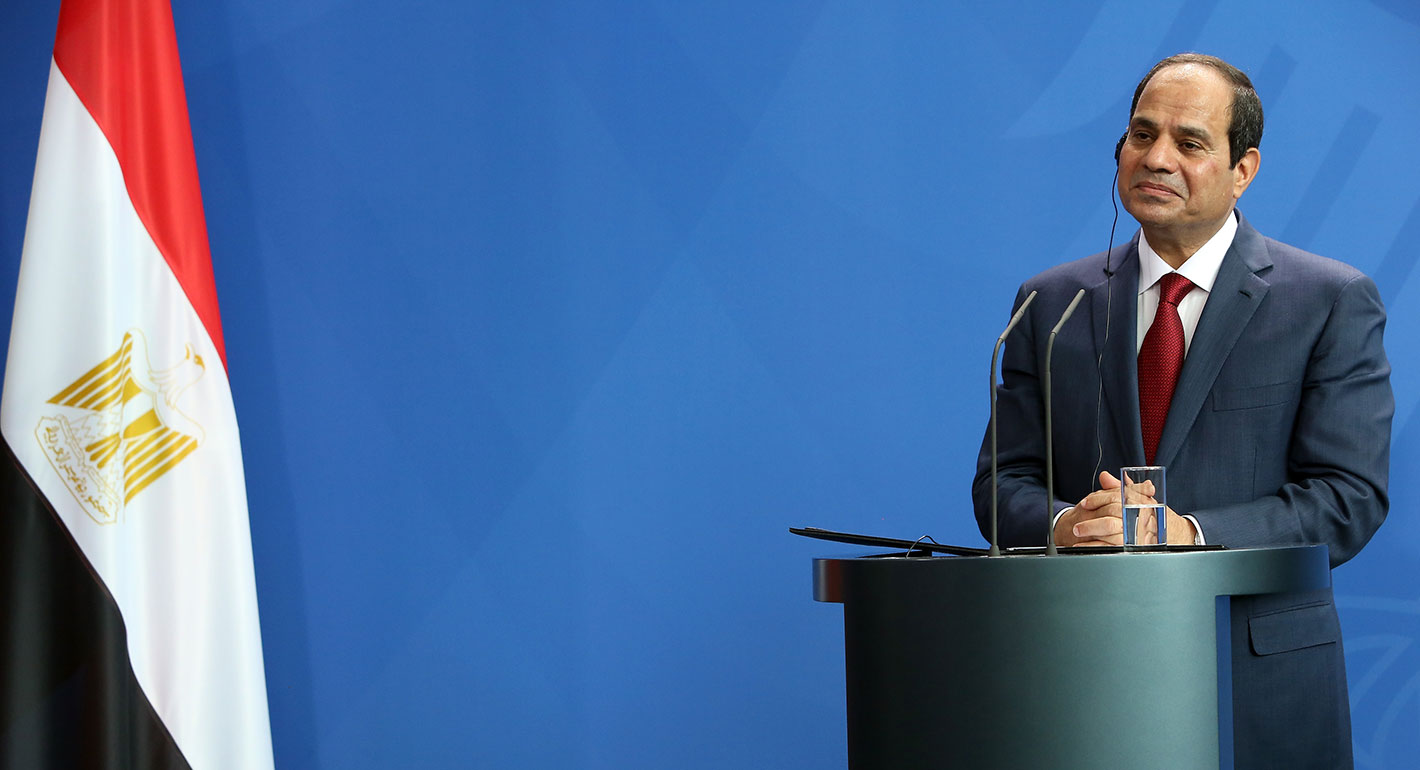
The United States should make clear in public and private that amendments to the Egyptian constitution intended to keep Sisi in power beyond 2022 meet neither Sisi’s own commitments to his citizens nor the expectations of the American government.
February 22, 2019
The Honorable Michael R. Pompeo
Secretary of State
U.S. Department of State
2201 C Street NW
Washington, DC 20500
John R. Bolton
Assistant to the President for National Security Affairs
The White House
1600 Pennsylvania Avenue NW
Washington, DC 20500
Dear Secretary Pompeo and Mr. Bolton:
As a bipartisan group of foreign affairs specialists, we respectfully ask you to engage with President Abdel Fattah al-Sisi to express strong concern about the amendments to the Egyptian constitution now moving through a rapid approval process. These amendments constitute a stunning power grab, potentially allowing Sisi to stay in office until 2034—despite his promises to leave after his second term ends in 2022—as well as depriving the judiciary of the remaining vestiges of its independence and enshrining a formal role for the military in civilian politics. There is no indication of any popular demand or even support for these major constitutional changes and there may be widespread opposition. With al-Sisi’s brutal repression of political opposition, civil society, and independent media, those who dare to express criticism risk imprisonment or worse
The Obama administration made a serious error in November 2012 when it failed to respond more aggressively to then-President Mohammed Morsi’s undemocratic constitutional declaration. Popular opposition to Morsi rose and within eight months then-Defense Minister al-Sisi used that momentum to unseat Morsi in a military coup that ended the nascent democratic transition. Amidst Egyptian public criticism of the U.S. for failing to act to constrain Morsi’s undemocratic actions, U.S. influence in Egypt and the Middle East region eroded.
We hope that the Trump administration will not make the same mistake now. Neither autocratic leaders nor the citizens of their countries respect the United States when it abandons its own values. Your administration has spoken out against incumbent efforts to change constitutions in order to stay in power in Bolivia, Burundi, the Democratic Republic of Congo, and Rwanda; it should do so now regarding Egypt.
The United States should make clear in public and private that amendments to the Egyptian constitution intended to keep Sisi in power beyond 2022 meet neither Sisi’s own commitments to his citizens nor the expectations of the American government. Pending amendments that drain independence away from the judiciary would also be dangerous for Egypt’s political stability.
We ask you to call on President al-Sisi to do the following:
The proposed constitutional amendments, which might be approved in a matter of weeks, are only one of the many deprivations of the liberties of Egyptians perpetrated by the current government. Thousands of political prisoners (including American citizens), systematic torture, extrajudicial killings and disappearances, unfair trials and executions, continued persecution of local civil society and media, widespread economic misery, and expanding military control are all urgent matters.
Yet the constitutional amendments deserve special attention by the United States now because they will deprive Egyptians of any hope of addressing their concerns through peaceful politics. Sisi made clear through his sham re-election in 2018 that he will brook no political competition; the amendments now show that he is attempting to consolidate permanent one-man rule.
As a friend and long-time supporter of Egypt through military and economic aid, the United States should articulate its concerns clearly: these ill-advised amendments will put Egypt on the road to instability and put American goodwill at risk. Sisi should abide by the current constitution, including term limits, and completely reopen the public sphere to allow Egyptian citizens a full say in public affairs.
Your failure to speak out would be an abandonment of the American values Secretary Pompeo articulated in Cairo just last month. It would put the United States government in the position of currying favor with an autocratic leader while incurring the ire of an Egyptian public that will demand its inalienable rights soon enough.
Respectfully,
The Working Group on Egypt (a bipartisan group of foreign policy specialists formed in 2010)
Michele Dunne (cochair)
Carnegie Endowment for International Peace*
Robert Kagan (cochair)
Brookings Institution
Jamie Fly
German Marshall Fund
Reuel Gerecht
The Foundation for the Defense of Democracies
Amy Hawthorne
Project on Middle East Democracy
Neil Hicks
Cairo Institute for Human Rights Studies
Thomas Hill
former Senior Professional Staff, House Committee on Foreign Affairs
Stephen McInerney
Project on Middle East Democracy
Andrew Miller
Project on Middle East Democracy
Tamara Wittes
Brookings Institution
Ken Wollack
former president, National Democratic Institute
*Members participate in their individual capacity; institutional affiliations are provided for purpose of identification only.
Carnegie does not take institutional positions on public policy issues; the views represented herein are those of the author(s) and do not necessarily reflect the views of Carnegie, its staff, or its trustees.

Putin’s conservative staffing policies and search for ever greater control have cemented parliament’s transformation into a bureaucratic appendage of the executive branch.

Andrey Pertsev

Without a ceasefire with Ukraine on attacking each other’s energy infrastructure—to which the Kremlin is unlikely to agree—the diesel agreement between Putin and Trump is largely for show, rather than representing a genuine increase in the volumes of Russian diesel on the global market.

Sergey Vakulenko

Ex-president Gurbanguly Berdimuhamedov remains interested in politics, but his son Serdar, Turkmenistan’s current president, is becoming increasingly independent and willing to break with his father’s legacy. If their covert rivalry goes too far, both risk losing power.

Galiya Ibragimova

Despite a new textbook, an influx of Russian teachers and managers, and an end to the teaching of Ukrainian, the Kremlin is unlikely to have “reprogrammed” locals.

Konstantin Skorkin

Cargo traffic through Russia’s Northern Sea Route has increased because of the disruption caused by the conflict in the Middle East, the Ukraine war, and U.S.-China tensions.

Mikhail Korostikov