

Other
François Godement, Ashley J. Tellis
{
  "authors": [
    "François Godement"
  ],
  "type": "legacyinthemedia",
  "centerAffiliationAll": "dc",
  "centers": [
    "Carnegie Endowment for International Peace"
  ],
  "collections": [],
  "englishNewsletterAll": "asia",
  "nonEnglishNewsletterAll": "",
  "primaryCenter": "Carnegie Endowment for International Peace",
  "programAffiliation": "AP",
  "programs": [
    "Asia"
  ],
  "projects": [],
  "regions": [
    "East Asia",
    "China",
    "Western Europe"
  ],
  "topics": []
}
Source: Getty
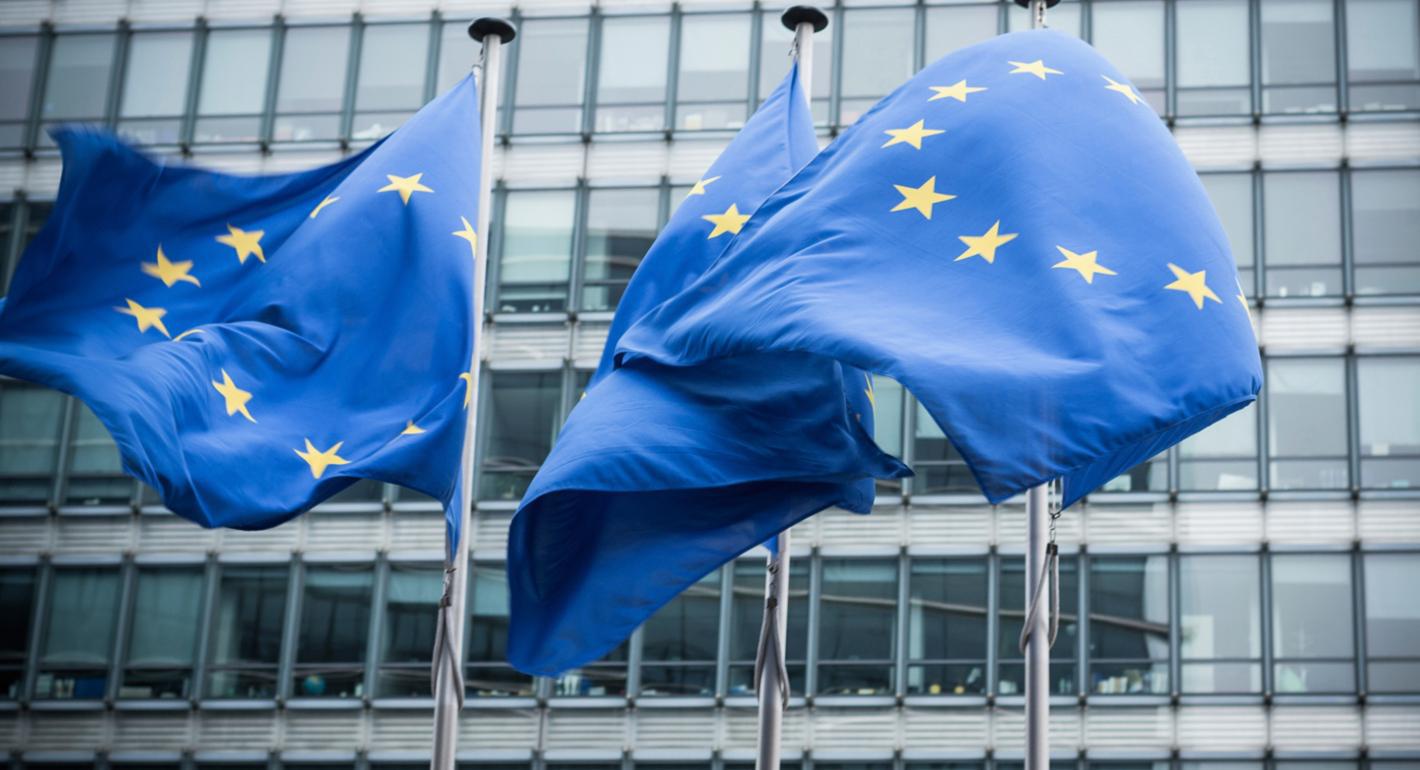
Relations between the EU and China are shifting.
Source: Institut Montaigne
"No longer a developing economy." A "systemic rival" - and over economic issues a "strategic competitor". A major coal power plant exporter that thereby impedes the fight against climate change. Worsening human rights policies – starting from Xinjiang and domestic lawyers, extending to EU and other foreign citizens. A "short and mid-term" military issue of concern for the EU with "large military maneuvers". A state whose aid to national companies and different standards do not allow for a level-playing field in third countries. A failure to implement reciprocal access to its domestic market, inter alia through heavy subsidies to its companies and manifold restrictions to foreign firms: the apex of this being the international expansion of Chinese fintech while access to its own market is denied. A rising protectionist trend in public markets. Multiple obstacles to European agricultural exports…
The latest communication from the Commission (and EEAS) on China really throws the book at China. Of course, it also maintains the need to “deepen its engagement with China for the promotion of common interests at the global level”. The part about China’s foreign policy is notably more discreet, with calls for more joint action on Iran, Africa.
But the above treatment is not the most important one. Two aspects of the Communication are more striking. The first is the placing of a deadline on China to conclude an investment treaty by 2020. The Comprehensive agreement for investment, aka bilateral investment treaty, has gone through 19 rounds of negotiation in 7 years. The Commission also asks for "swift" completion of an agreement on geographical indications (it had been expected in 2018…), and "in the coming weeks" for another one on civil aviation. Towards a WTO reform, China must start to work on the issue of industrial subsidies. In short, China is asked to “deliver” on previous commitments. Brussels also calls for China to "cap its CO2 emissions before 2030" - the Paris Agreement committed China to that goal “around” 2030. It states that “the ability of EU and China to engage effectively on human rights will be an important measure of the quality of the bilateral relationship”: a tall order given the direction which China has taken under Xi Jinping.
This article was originally published by Institut Montaigne.

Former Nonresident Senior Fellow, Asia Program
Godement, an expert on Chinese and East Asian strategic and international affairs, was a nonresident senior fellow in the Asia Program at the Carnegie Endowment for International Peace.
Recent Work
François Godement, Ashley J. Tellis

François Godement, Abigaël Vasselier
Carnegie does not take institutional positions on public policy issues; the views represented herein are those of the author(s) and do not necessarily reflect the views of Carnegie, its staff, or its trustees.

With the growth in points of friction between the great powers, organizations like the SCO will continue to play a role in the strategic adaptation of the smaller powers caught between them.

Temur Umarov
With no key agreement signed on the Power of Siberia 2 gas pipeline, there is a risk that the window of opportunity for Russia will close if Chinese power generation becomes so green that new gas sources are no longer of any interest to Beijing.

Alexander Gabuev

Tokyo would have to surmount a lot of obstacles—not least Western sanctions—if it wanted to return Russian oil imports to even modest pre-2022 volumes.

Vladislav Pashchenko
For the Middle Corridor to fulfill its promises, one of these routes must become scalable. At present, neither is.

Friedrich Conradi

Troubled by the growing salience of nuclear debates in East Asia, Moscow has responded in its usual way: with condemnation and threats. But by exacerbating insecurity, Russia is forcing South Korea and Japan to consider radical security options.

James D.J. Brown