

Article
Paul Stronski
{
  "authors": [
    "Paul Stronski"
  ],
  "type": "commentary",
  "centerAffiliationAll": "dc",
  "centers": [
    "Carnegie Endowment for International Peace"
  ],
  "collections": [],
  "englishNewsletterAll": "ctw",
  "nonEnglishNewsletterAll": "",
  "primaryCenter": "Carnegie Endowment for International Peace",
  "programAffiliation": "russia",
  "programs": [
    "Russia and Eurasia"
  ],
  "projects": [
    "Changing Geopolitics of Eurasia"
  ],
  "regions": [
    "Central Asia",
    "Kazakhstan"
  ],
  "topics": [
    "Political Reform"
  ]
}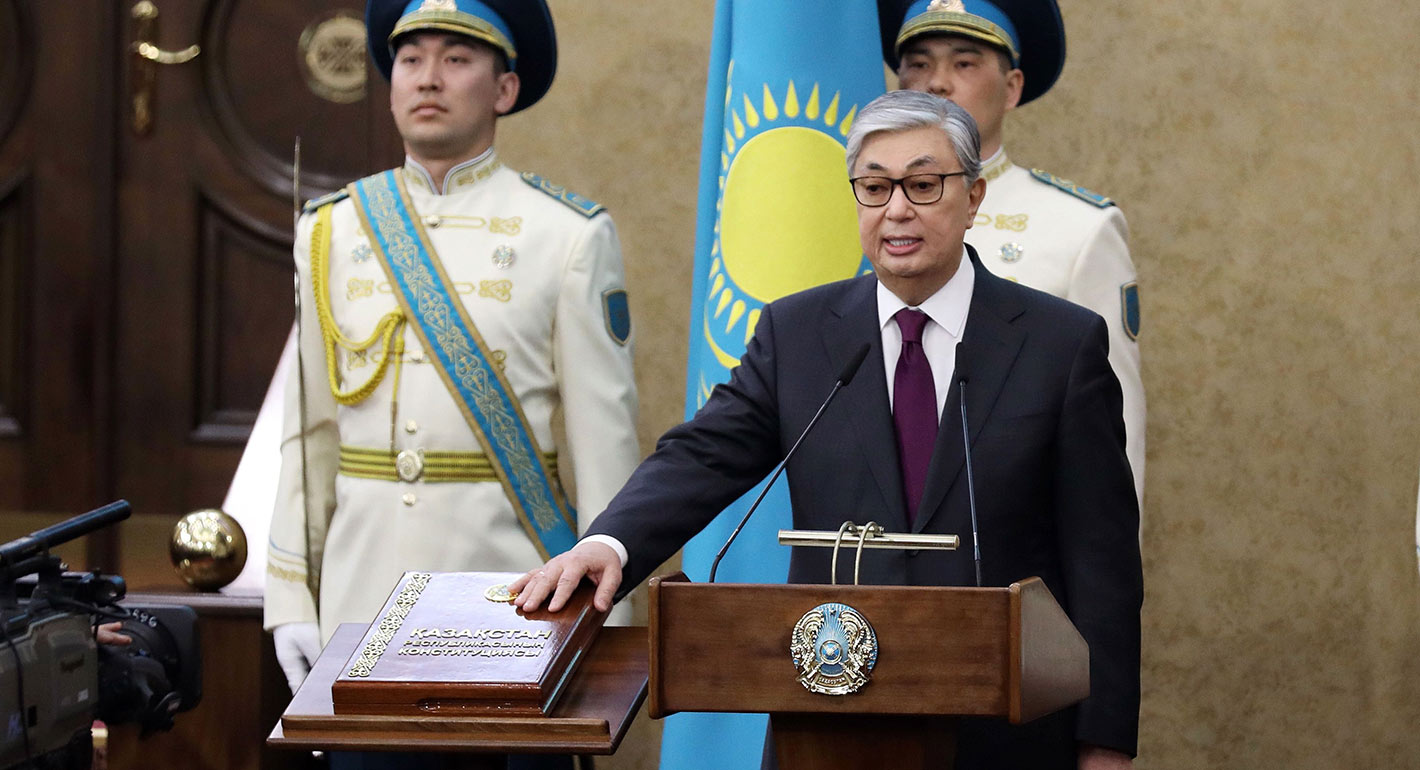
Source: Getty
President Nursultan Nazarbayev has resigned after nearly three decades. But the succession process appears to have just started, and it won’t be the last we will see of his influence.
Kazakhstan’s seventy-eight-year-old President Nursultan Nazarbayev announced his resignation on March 19, after leading the Central Asian country for almost thirty years. Given his long-standing hold on power and the country’s position as the region’s economic powerhouse, this news sent shockwaves through Central Asia. The speaker of the upper house of Kazakhstan’s parliament, Kassym-Jomart Tokayev, was sworn in as acting president a day later. He will serve until the next election, which is scheduled for 2020. Parliament subsequently elected Dariga Narzarbayeva, the former president’s daughter, to replace Tokayev as speaker, officially putting her in the constitutional line of succession.
The transition is occurring at a time of increased geopolitical uncertainty for Kazakhstan, with an assertive Russia to the north and an economically ambitious China to the east. Nazarbayev astutely managed these difficult relationships, while creating positive ties with the West. Tokayev, a former foreign Minister, is a well-respected figure in Kazakhstan’s three most important foreign partners, Russia, China and the United States. He appears likely to continue that tradition.
Kazakhstan also faces deep domestic challenges. Rising discontent over income inequality, poor governance, and growing social problems led to sporadic protests in the country’s two most important cities, as well as in oil-rich western Kazakhstan.
With a growing sense of economic stagnation and social malaise, Nazarbayev’s resignation is bound to divert attention away from these problems, at least for now. But what the country needs are systemic economic reforms to diversify the economy away from hydrocarbons, create jobs and reduce poverty. Such reforms are unlikely during a transition period.
Nazarbayev’s departure from the presidency does not necessarily reduce his influence. Constitutional changes in 2017 weakened the power of the Kazakh president, and strengthened the clout of the Security Council, which Nazarbayev will continue to chair. That position will give him influence over the country’s foreign policy and security trajectory. Meanwhile, his title as “Leader of the Nation” and head of the ruling party allow him to influence domestic matters for the foreseeable future.
Nonetheless, Nazarbayev’s resignation sets him apart from other post-Soviet Central Asian leaders, who have died in office or been overthrown in popular revolts.
Nazarbayev also has filled key positions with close allies, including Tokayev, Nazarbayeva and Karim Massimov, a former Prime Minister who now heads the country’s security services. Perhaps in a signal that transition was imminent, Massimov was elevated to the military rank of General Major the day before Nazarbayev’s surprise resignation announcement. Nazarbayev likely believes that this sort of transition will secure his family’s wellbeing, and help assure stability in the country as the transition plays out.
Former Senior Fellow, Russia and Eurasia Program
Paul Stronski was a senior fellow in Carnegie’s Russia and Eurasia Program, where his research focuses on the relationship between Russia and neighboring countries in Central Asia and the South Caucasus.
Recent Work
Paul Stronski
Paul Stronski
Carnegie does not take institutional positions on public policy issues; the views represented herein are those of the author(s) and do not necessarily reflect the views of Carnegie, its staff, or its trustees.

Ex-president Gurbanguly Berdimuhamedov remains interested in politics, but his son Serdar, Turkmenistan’s current president, is becoming increasingly independent and willing to break with his father’s legacy. If their covert rivalry goes too far, both risk losing power.

Galiya Ibragimova

Sergei Kiriyenko used Russia’s parliamentary vote to further hone his strategy of corporate mobilization that is designed to maximize votes for United Russia.

Andrey Pertsev

The European far right might fail to steer EU policy in the direction Russia wants, but they will create enough chaos inside Europe to benefit the Kremlin.

Dimitar Bechev

If the Russian-speaking community in Latvia cannot articulate their interests without being seen as disloyal, they could end up embracing a pro-Kremlin agenda.

Sergejs Potapkins

Russia’s ruling party would have benefited from Putin appearing as its distant patron, but as an active frontman imposing his views on the public, he has done nothing but harm both the party’s election campaign and the ruling system overall.
Andrey Pertsev