

Commentary
Ulrich Kühn
{
  "authors": [
    "Ulrich Kühn"
  ],
  "type": "legacyinthemedia",
  "centerAffiliationAll": "dc",
  "centers": [
    "Carnegie Endowment for International Peace"
  ],
  "collections": [
    "U.S. Nuclear Policy"
  ],
  "englishNewsletterAll": "ctw",
  "nonEnglishNewsletterAll": "",
  "primaryCenter": "Carnegie Endowment for International Peace",
  "programAffiliation": "NPP",
  "programs": [
    "Nuclear Policy"
  ],
  "projects": [],
  "regions": [
    "North America",
    "United States",
    "Russia",
    "Eastern Europe",
    "Western Europe"
  ],
  "topics": []
}
Source: Getty
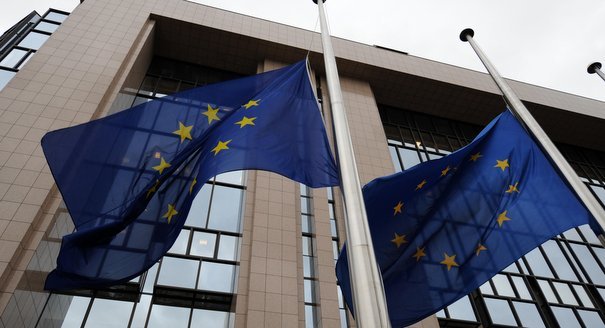
The collapse of the INF Treaty poses great challenges for Europe and NATO, forcing European capitals to conceptualize a new arms control framework.
The end of the 1987 Intermediate-range Nuclear Forces (INF) Treaty has the potential to plunge Europe and NATO into deep crisis. Russia’s continued violation coupled with the Donald J. Trump administration’s desire to balance against Moscow and Beijing could force a new missile debate on Europeans. Even though Washington is trying to assuage its allies, the specter of another round of INF missile deployments to Europe is not unrealistic. Meanwhile, NATO’s European members face a dilemma. Some want NATO to resolutely push back against Russia. Others want to avoid a new deployment debate, at almost all costs. The Kremlin will use these cleavages to weaken NATO. If not carefully handled, NATO’s response to the Russian missile buildup could lead to domestic turmoil in a number of European states and render the alliance ineffective for a prolonged period. Europeans need to act now and voice their preferences in the military and diplomatic domains. A number of different military options are available, below the level of deploying new INF missiles in Europe. However, Europeans need to consider trade-offs regarding crisis and arms-race stability. At the same time, it will be up to European capitals to conceptualize a new arms-control framework for the post-INF world, one that takes into account today’s geopolitical realities and the entanglement of modern conventional and nuclear forces. Given the Trump administration’s loathing of arms control, concepts of mutual restraint may well have to wait for the next US administration. In any case, that should not stop Europeans from taking on more responsibility for their own security.
This article was originally published in the Nonproliferation Review.

Former Nonresident Scholar, Nuclear Policy Program
Ulrich Kühn was a nonresident scholar at the Carnegie Endowment for International Peace, and the head of the arms control and emerging technologies program at the Institute for Peace Research and Security Policy at the University of Hamburg.
Recent Work
Ulrich Kühn
Ulrich Kühn
Carnegie does not take institutional positions on public policy issues; the views represented herein are those of the author(s) and do not necessarily reflect the views of Carnegie, its staff, or its trustees.

Trump has promised Belarus a massive potash deal. But Minsk is seeking something greater: restored Western transit and greater room for maneuver from Russia.

Balázs Jarábik

The European far right might fail to steer EU policy in the direction Russia wants, but they will create enough chaos inside Europe to benefit the Kremlin.

Dimitar Bechev

Minsk clearly expected the dialogue with Washington to yield more results, in particular the lifting of EU sanctions and permission to export potash.

Artyom Shraibman

If the Russian-speaking community in Latvia cannot articulate their interests without being seen as disloyal, they could end up embracing a pro-Kremlin agenda.

Sergejs Potapkins

Russia’s ruling party would have benefited from Putin appearing as its distant patron, but as an active frontman imposing his views on the public, he has done nothing but harm both the party’s election campaign and the ruling system overall.

Andrey Pertsev