

Article
C. Raja Mohan, Darshana M. Baruah
{
  "authors": [
    "C. Raja Mohan"
  ],
  "type": "legacyinthemedia",
  "centerAffiliationAll": "",
  "centers": [
    "Carnegie Endowment for International Peace",
    "Carnegie India"
  ],
  "collections": [],
  "englishNewsletterAll": "",
  "nonEnglishNewsletterAll": "",
  "primaryCenter": "Carnegie India",
  "programAffiliation": "",
  "programs": [],
  "projects": [],
  "regions": [
    "India"
  ],
  "topics": [
    "Foreign Policy"
  ]
}
Source: Getty
As technological innovation, commercial competition, and geopolitical rivalry put great strain on the old order in space, New Delhi will need all the strategic pragmatism, legal acumen, and diplomatic skill in shaping new rules for the regulation of outer space.
Source: Indian Express
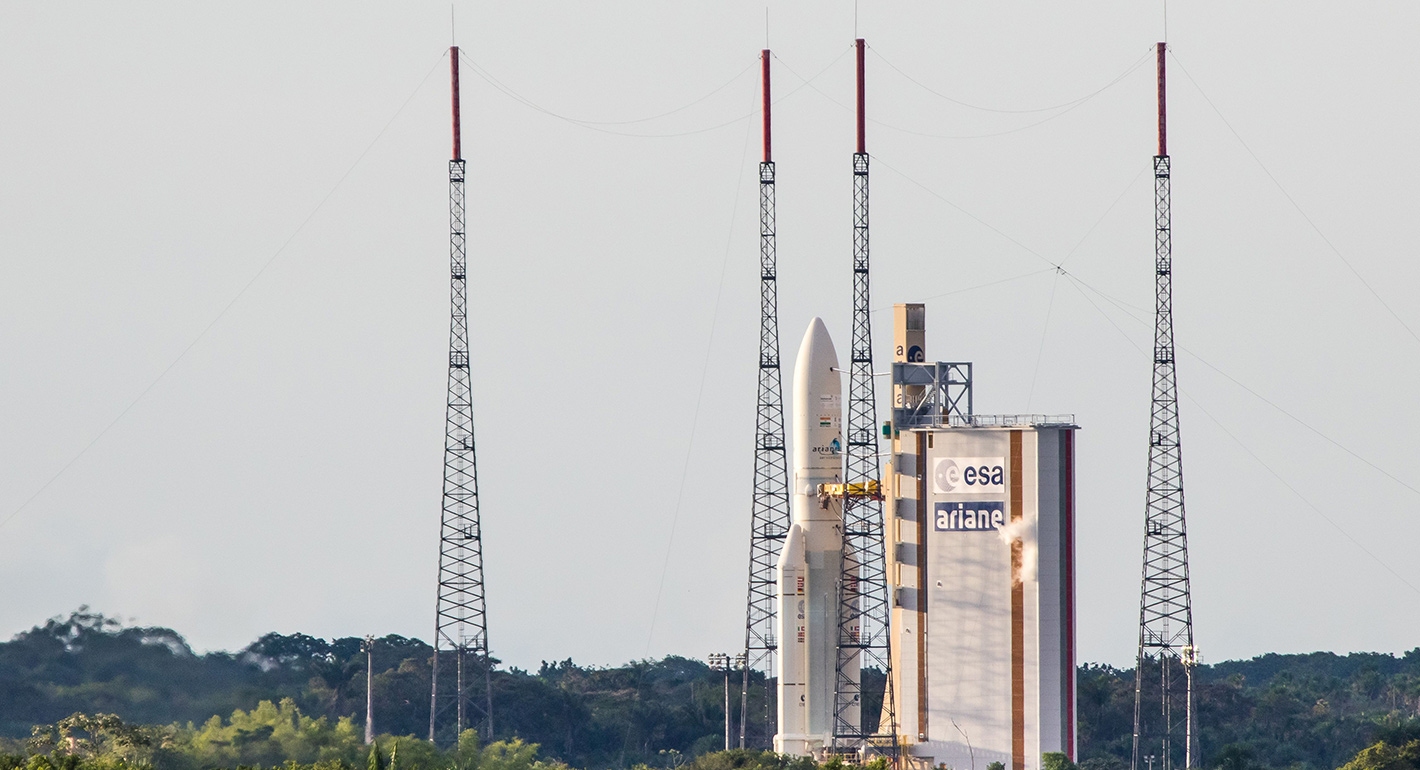
As it looks beyond its first anti-satellite weapon test last month, India needs to come to terms with a number of factors that are transforming the political and economic nature of outer space. Four issues demand India’s attention. And all of them call for a reorientation of India’s national strategy towards outer space. First is the unfolding drift towards the weaponisation of outer space. Over the last two decades, India has joined other powers in developing space assets for passive military uses of outer space — such as surveillance, targeting and military communication. It now needs to prepare for an outer space that might become an active military theatre.
In intercepting and destroying a satellite in orbit, India has signalled its determination to deter threats to its growing number of space assets. But Delhi has a long way to go before it can claim effective deterrence against such attacks. For the great powers are investing heavily in developing a wide range of capabilities to conduct space warfare. These include systems that are far more sophisticated than the one India tested. In February this year, the Trump administration announced its decision to set up a space force — the sixth arm of the military after army, navy, marine corps, coast guard and the air force. Meanwhile, China and Russia are said to be well on their way to deploying space weapons. To effectively secure its interests in outer space, India will need a comprehensive military space policy and the necessary investments to realise its goals.
Second, the challenge of the rapid expansion of commercial space and the growing role of the private sector. India’s national space programme has been quite successful in mobilising an advanced technology for development. The Indian Space Research Organisation has also been conscious of the need to draw industry, both public and private sector, to participate in the space endeavour over the decades. While its capabilities for the construction, launch and delivery of satellite services are impressive, India must now wrestle with the exponential growth of the space market. Today’s global space business is estimated to be $350 billion and according to some estimates it could nearly triple in the next two decades.
Delhi must promote a massive expansion of the private sector’s role in space to ensure that India gets a reasonable slice of the growing global space business. In the early decades of space technology development, private sector companies worked for and with the government programmes. Today in the US and more broadly the West, the private sector is taking the lead. Consider for example, the business of launching satellites that has been a government monopoly until recently. As the private sector seeks a larger share of the launch business, Elon Musk’s Space X has already made a big impression in the US. Other private companies like Blue Origin (US), OneSpace (China), and Interstellar technologies (Japan) are all joining the fray.
Meanwhile, the idea of deploying a constellation of small satellites is gaining great traction. Space X and Amazon have announced plans to put hundreds of satellites in low earth orbit to provide broadband internet around the world. Besides launching rockets and satellites, private sector companies are driving innovation and contributing to the transformation of the space business. Their ambitions now extend to space tourism and the mining of asteroids.
Third, as space becomes the site for expansive commercial enterprise, national space agencies are under pressure to redefine their role. Until recently, the national agencies were the researchers, investors, developers and champions of the space programme at the political level.
This all-encompassing role of the national agencies was necessary when space technology was in its infancy. It was a precondition for countries like India that embarked on the space journey with limited resources and capabilities. As the knowledge and capabilities begin to spread and the number of actors in the space domain grows rapidly, the national space agencies must necessarily redefine their role. While NASA has gone through multiple reinventions, the structure remains essentially unaltered in India.
Instead of trying to do everything, the national agencies could focus on a few critical objectives — to promote a dynamic national ecosystem for space research and development both within and outside the government, lay out a long-term vision for space policy, identify priorities, anticipate potential challenges, and become the face of the space programme at home and abroad.
Fourth, the need to promote effective domestic and international regulatory frameworks for the development of space programmes. After the ASAT test, many in India pointed to the importance of Delhi having the capabilities to shape the security order in outer space. They recall that India’s inability to conduct an atomic weapon test before the Nuclear Non-proliferation Treaty was finalised in 1968 had severely undermined India’s position in the global nuclear order.
In the near term, though, it is even more urgent to develop commercial space laws at home that attract investment, clarify property rights, limit liability for space operators and set standards for space products and operations. Externally, India must prepare for the inevitable evolution of the global space regime centred around the 1967 Outer Space Treaty that insisted on peaceful uses of outer space, barred the national appropriation of celestial bodies, and declared outer space to be “common province of mankind”.
As technological innovation, commercial competition and geopolitical rivalry put great strain on the old order in space, Delhi will need all the strategic pragmatism, legal acumen and diplomatic skill in shaping new rules for the regulation of outer space. Above all it needs collaboration with allies and partners in outer space.
This article was originally published in the Indian Express.
Former Nonresident Senior Fellow, Carnegie India
A leading analyst of India’s foreign policy, Mohan is also an expert on South Asian security, great-power relations in Asia, and arms control.
Recent Work

C. Raja Mohan, Darshana M. Baruah


Alexander Gabuev, Paul Haenle, C. Raja Mohan, …
Carnegie does not take institutional positions on public policy issues; the views represented herein are those of the author(s) and do not necessarily reflect the views of Carnegie, its staff, or its trustees.

With the growth in points of friction between the great powers, organizations like the SCO will continue to play a role in the strategic adaptation of the smaller powers caught between them.

Temur Umarov

When faced with fuel shortages in the past, Central Asian governments could always count on additional supplies from Moscow. That safety net no longer exists.

Galiya Ibragimova

Despite unhappiness on the ground, Moscow is determined to use both carrot and stick to ensure there is record support for United Russia in occupied Ukraine.

Konstantin Skorkin

The recent damage inflicted by Ukrainian drones and missiles on Russia has made Belarus aware of its own vulnerabilities—and surprisingly amenable to Kyiv’s demands.

Artyom Shraibman
Russia looks set to reap economic benefits from closer ties with Southeast Asian countries that are keen to find reliable energy suppliers and diversify trade ties.
Alexander Gabuev