

Commentary
While France and Australia are seeking to establish the legal obligations of messaging apps like Telegram, Russia wants total subordination.
Maria Kolomychenko
{
  "authors": [
    "François Godement",
    "Mathieu Duchâtel"
  ],
  "type": "other",
  "centerAffiliationAll": "dc",
  "centers": [
    "Carnegie Endowment for International Peace"
  ],
  "collections": [],
  "englishNewsletterAll": "asia",
  "nonEnglishNewsletterAll": "",
  "primaryCenter": "Carnegie Endowment for International Peace",
  "programAffiliation": "AP",
  "programs": [
    "Asia"
  ],
  "projects": [],
  "regions": [
    "East Asia",
    "China",
    "Western Europe"
  ],
  "topics": [
    "Technology"
  ]
}
Source: Getty
5G brings with it unprecedented possibilities of applications, including healthcare, education, autonomous vehicles, augmented reality, industrial production, public services. But it does come with risks.
Source: Institut Montaigne
Is Huawei paying the price for its high profile? The case serves to create attention to Europe’s hard choices for 5G infrastructure. 5G brings with it unprecedented possibilities of applications, including healthcare, education, autonomous vehicles, augmented reality, industrial production, public services. But it does come with risks.
Donald Trump’s decision to forbid American companies from trading with Huawei is a game changer, with repercussions exceeding by far the US-China confrontation. European companies will inevitably be faced with hard choices, and the Chinese company’s long standing 5G offer suddenly poses a much more critical dilemma.
In its quest for the status of global leader in telecommunications network equipment, Huawei's strong presence in European 3G/4G has compensated for its absence in American networks. Indeed, Huawei is already at the heart of Europe’s telecommunications networks. But will it be able to maintain its offer without its American suppliers?
For the time being, France and several European countries have excluded a ban against Huawei and are opting instead for a regulatory approach aimed at securing sensitive data. Will such an approach be sufficient?
Institut Montaigne has decided to address the issues related to 5G deployment at a European level. The growing dilemma around Huawei sheds light on European weaknesses in digital networks.
This policy paper was originally published by Institut Montaigne.

Former Nonresident Senior Fellow, Asia Program
Godement, an expert on Chinese and East Asian strategic and international affairs, was a nonresident senior fellow in the Asia Program at the Carnegie Endowment for International Peace.
Mathieu Duchâtel
Mathieu Duchâtel is Director of the Asia Program at Institut Montaigne since January 2019.
Carnegie does not take institutional positions on public policy issues; the views represented herein are those of the author(s) and do not necessarily reflect the views of Carnegie, its staff, or its trustees.
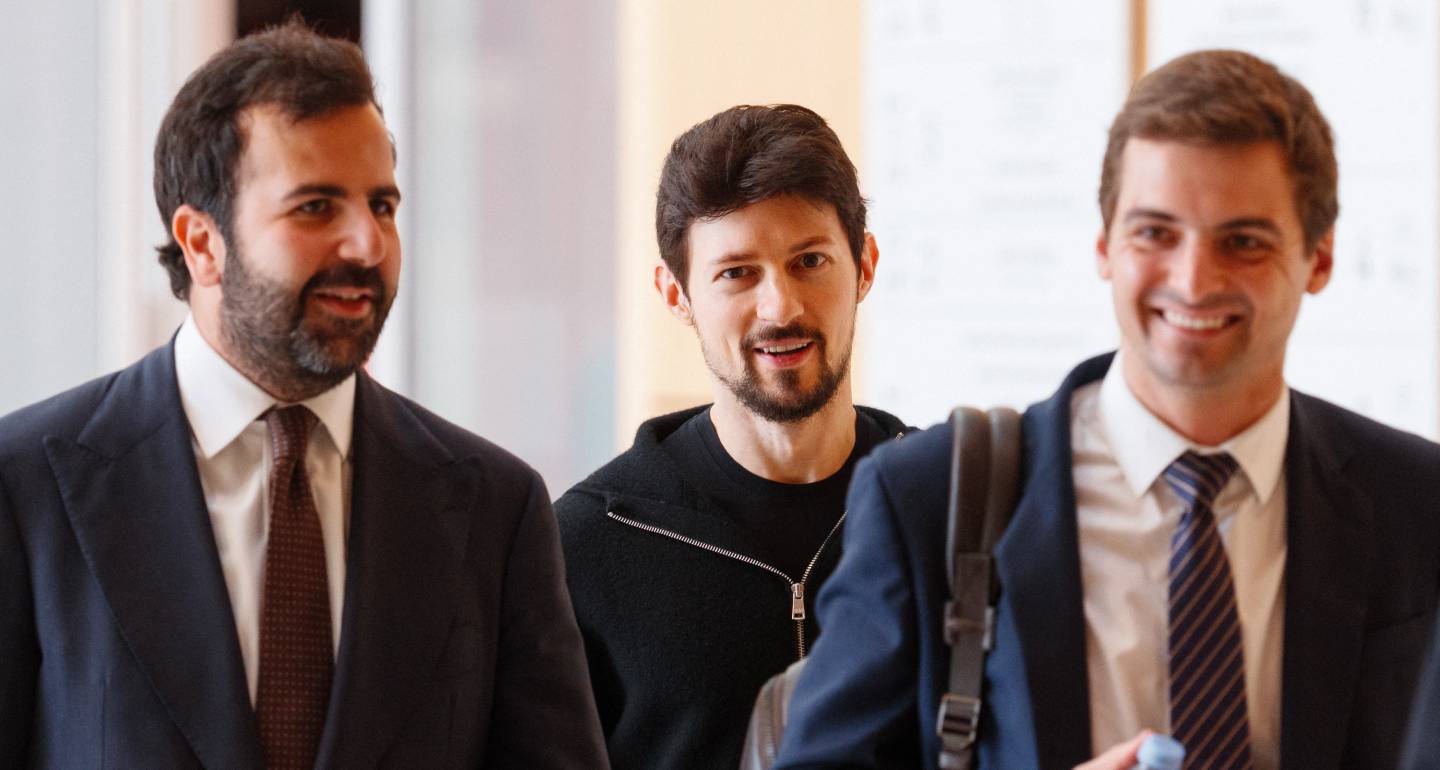
While France and Australia are seeking to establish the legal obligations of messaging apps like Telegram, Russia wants total subordination.

Maria Kolomychenko

With the growth in points of friction between the great powers, organizations like the SCO will continue to play a role in the strategic adaptation of the smaller powers caught between them.

Temur Umarov
The war in Ukraine and a change in ownership led VK to neglect its commercial ventures in favor of implementing the Kremlin’s online agenda. Now it’s been sanctioned by the EU.
Maria Kolomychenko

When political power is concentrated in the hands of a small circle of people, a country invariably ends up with technological stagnation.

Aleksei Kiselev

With its scattershot approach to enforcing internet censorship, the Russian regime risks losing a battle against the many Russians who have learned to evade online restrictions.
Maria Kolomychenko