

Q&A
- +1
Sheena Chestnut Greitens, Oriana Skylar Mastro, Yukon Huang, …
{
  "authors": [
    "Yukon Huang"
  ],
  "type": "legacyinthemedia",
  "centerAffiliationAll": "dc",
  "centers": [
    "Carnegie Endowment for International Peace"
  ],
  "collections": [],
  "englishNewsletterAll": "asia",
  "nonEnglishNewsletterAll": "",
  "primaryCenter": "Carnegie Endowment for International Peace",
  "programAffiliation": "AP",
  "programs": [
    "Asia"
  ],
  "projects": [],
  "regions": [
    "North America",
    "United States",
    "East Asia",
    "China"
  ],
  "topics": [
    "Economy",
    "Trade",
    "Security"
  ]
}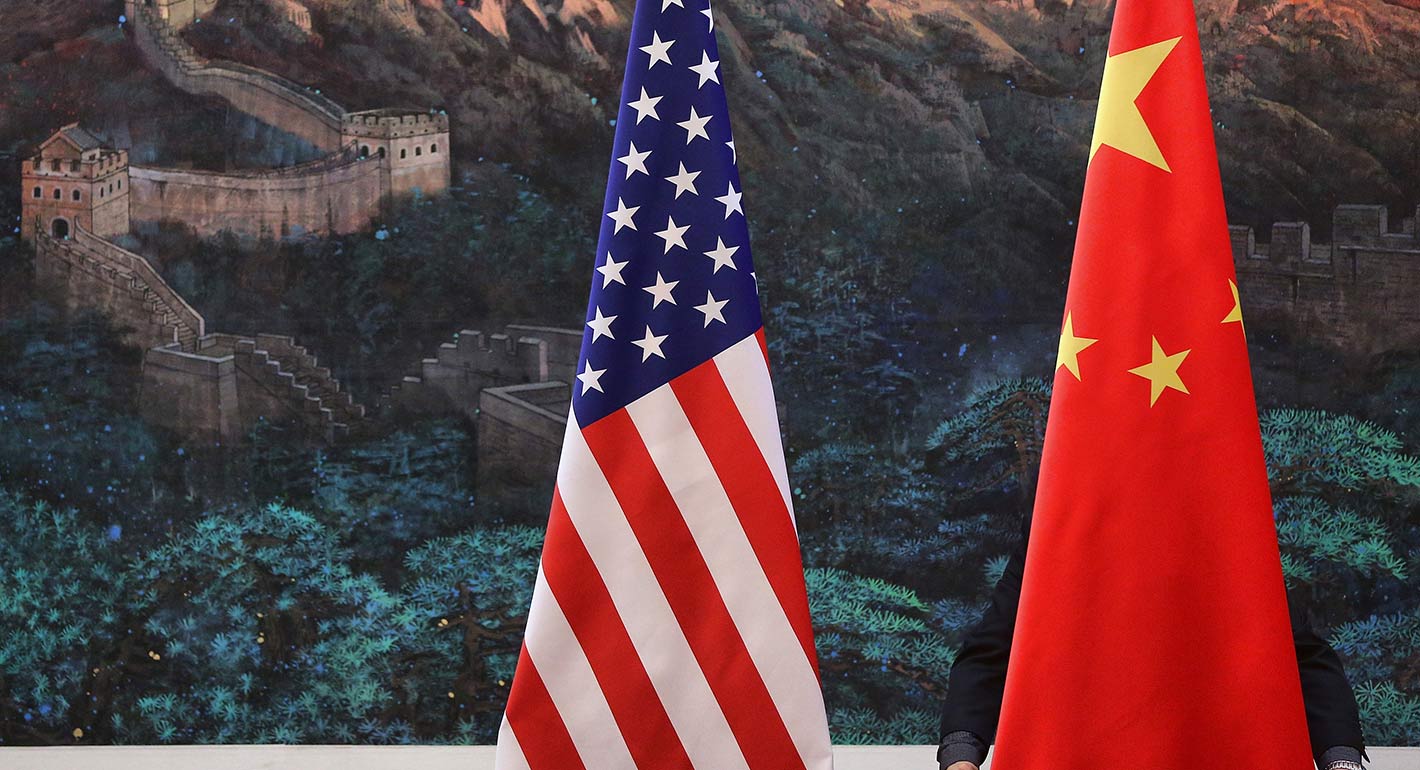
Source: Getty
The new round of tariffs has put U.S.-China trade negotiations on hold. Just a month ago, a deal to end the trade war was deemed likely. So why did this process unravel so quickly and what is the way going forward?
Source: East Asia Forum
Just a month ago, an agreement to end the US–China trade war was deemed likely. Then came a flurry of accusations and another round of tariffs that have put negotiations on hold. Why did this process unravel so quickly and what might be the endgame?
Beijing ostensibly recoiled after senior leadership saw the entire package of demands as an infringement on national sovereignty. Meanwhile, Washington became more unified in its objectives and sensed that politically it was not the right time to strike a deal. Under such conditions, many saw an enduring solution as unlikely given the complexity of the issues. Any agreement would have been more of a negotiated truce, transforming the process from an unruly to a more regulated trade war.
This trade war began with US President Donald Trump’s fixation with bilateral trade deficits and his desire for a headline grabbing package of Chinese purchases. This concern is seen as misguided, as is the proposal to ask China to buy more from the United States and less from others, which would contravene World Trade Organization (WTO) regulations.
The United States business community’s accusations about China’s unfair investment practices and violations of intellectual property rights are more difficult to resolve. The proposed regulations did not guarantee that implementation would be smooth, but a good-faith agreement is preferable to a prolonged trade war.
What eventually undid the negotiation process, however, are the concerns of Washington’s geo-strategists and political community who see the trade war as a clash between two great powers. Their goal of getting China to abandon its innovation ambitions, thereby constraining its ability to challenge America as the dominant economic power, proved to be an outcome that Beijing could not accept.
Levying punitive tariffs is less about curbing trade deficits and more about using tariffs as a tactical weapon to rein in China’s technological ambitions. Security concerns highlighted by Huawei’s expansion into 5G communications and the growing competition in developing artificial intelligence have added a sharper edge to this debate.
The oft-discussed security concerns may be exaggerated but the political reverberations will not go away. The recently imposed curbs on America’s exports of high-tech products may have a devastating impact on Huawei, but it will also damage America’s innovative capacity and disrupt global supply chains. These troublesome developments highlight the need to rethink acceptable norms and regulatory mechanisms for knowledge transfer across nations, while recognising that China’s size and role of the state give it certain advantages.
We now face the textbook ‘prisoner’s dilemma’, which tells us that when trust breaks down between two rational, self-interested actors, agreement is impossible and both sides end up worse off. Can an outsider help break the stalemate?
Europe is too preoccupied with its domestic concerns while Asia, as the most directly affected region, has more at stake. But China’s efforts to strengthen relations with its neighbours have not been helped by its ambitious Belt and Road Initiative despite the reassurances provided at the recent Beijing summit. The stalled Regional Comprehensive Economic Partnership (RCEP) is yet to provide China with any perceived advantages given the difficulties in forging an agreement among such diverse participants. China is also no longer running such large trade deficits with its Asian partners, so its growth facilitating impact is much less than it was a decade ago.
Within Asia, views differ on the domestic consequences of the trade war. Within ASEAN, countries like Vietnam or Indonesia could benefit from production relocating from China while others will suffer from reduced Chinese demand. A survey by UBS suggests that most of the relocated activity to date has gone to the United States and North Asia (Japan, Korea and Taiwan) instead of South East Asia.
But with rising tariffs, developing Asian economies will benefit more in the future — especially Thailand, Indonesia and Malaysia. Elsewhere, Japan, Australia and India are more concerned about containing China’s foreign policy ambitions than with the consequences of the trade war. In sum, Asia is too splintered to take a unified position favouring either the United States or China.
This has made it easier for the dominant global power to capitalise on its advantages in dealing bilaterally with its major trading partners, be it China, Mexico or Japan. More efficient and equitable outcomes require a rules-based, multilateral approach. The most obvious path to take would require restructuring the WTO. A Trump-led administration would instinctively recoil against such an approach as exemplified by its efforts to undermine the WTO even though the United States has fared well in its rulings.
Any sustainable solution begins with a political consensus. The best option to bring together both developed and developing countries is the G20. None of the major European or Asian powers have thus far been motivated enough to spur this process forward. China has been reluctant to reach out, worried that this would restrict its flexibility.
But Beijing needs to see that its interests would be better served by stressing its commitment to reforms that would entice others to coalesce around a global solution, even if the United States is unwilling.
This article was originally published by the East Asia Forum.

Senior Fellow, Asia Program
Huang is a senior fellow in the Carnegie Asia Program where his research focuses on China’s economy and its regional and global impact.
Recent Work


Sheena Chestnut Greitens, Oriana Skylar Mastro, Yukon Huang, …


Yukon Huang, Isaac B. Kardon, Matt Sheehan
Carnegie does not take institutional positions on public policy issues; the views represented herein are those of the author(s) and do not necessarily reflect the views of Carnegie, its staff, or its trustees.

Japan’s long-term security policy is driven by concerns about China, and there is little appetite for (or interest in) pursuing a confrontation with Moscow.

James D.J. Brown
The truth of the strategic situation is that Europe and Russia are extremely unlikely to be able to “turn the page” on their confrontation within the next two decades.

Arkady Moshes

Russia’s AI-driven propaganda campaigns operate in a fragmented, chaotic, and often illogical manner. That’s not necessarily a problem for the Kremlin, though: It’s much easier to mimic genuine public debate that way.

Ilya Klishin

Without a ceasefire with Ukraine on attacking each other’s energy infrastructure—to which the Kremlin is unlikely to agree—the diesel agreement between Putin and Trump is largely for show, rather than representing a genuine increase in the volumes of Russian diesel on the global market.

Sergey Vakulenko

Russian strikes are weakening the economy sustaining Ukraine’s war effort. Closing the growing funding gap will require more European support and politically contentious reforms in Kyiv.

Balázs Jarábik