

Commentary
With the growth in points of friction between the great powers, organizations like the SCO will continue to play a role in the strategic adaptation of the smaller powers caught between them.
Temur Umarov
{
  "authors": [
    "Richard Sokolsky",
    "Aaron David Miller"
  ],
  "type": "legacyinthemedia",
  "centerAffiliationAll": "dc",
  "centers": [
    "Carnegie Endowment for International Peace"
  ],
  "collections": [
    "Iranian Proliferation"
  ],
  "englishNewsletterAll": "asia",
  "nonEnglishNewsletterAll": "",
  "primaryCenter": "Carnegie Endowment for International Peace",
  "programAffiliation": "AP",
  "programs": [
    "Asia"
  ],
  "projects": [],
  "regions": [
    "North America",
    "United States",
    "Middle East",
    "Iran"
  ],
  "topics": [
    "Security",
    "Foreign Policy",
    "Nuclear Policy"
  ]
}
Source: Getty
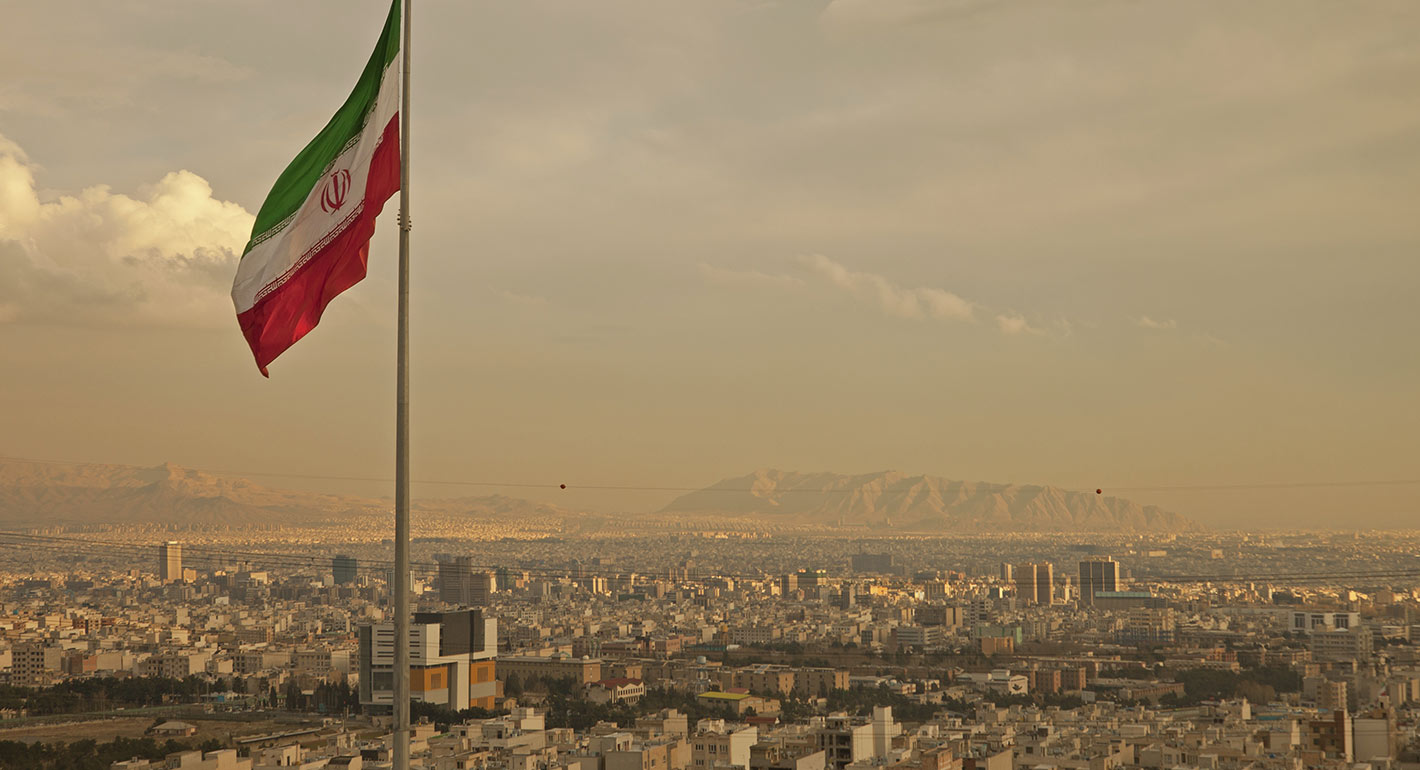
Washington has only increased tensions with Tehran and cut off possible avenues for deescalation without achieving any of its goals.
Source: Business Insider
All administrations — and together we worked for seven — have their blind spots and illusions on foreign policy and national security. But the Trump administration seems particularly divorced from reality, especially with its otherworldly view of the current US-Iran crisis.
Facing up to some hard realities might actually help to prevent a catastrophe and protect US interests, even though we have little confidence the administration will be able to — or even wants to — squirm out of the box it has put itself in.
First, the current crisis flows from events set in motion by President Donald Trump's reckless and unnecessary decision to walk out of an admittedly flawed but still highly functional nuclear accord without a serious plan B.
Make no mistake: The US and Iran were at odds long before Trump walked out of the 2015 Iran nuclear deal last year. Iran flagrantly abuses human rights. It is a repressive, authoritarian, and ideologically extreme regime that executes more people every year than any country except China.
It is a state sponsor of terror that trades in anti-Americanism, anti-Semitism, and Holocaust denial. And the regime in Tehran also seeks to spread its influence in four Arab capitals — Beirut, Damascus, Sanaa, and Baghdad — where its fellow Shia reside.
But the original sin of unilaterally leaving an agreement that was imposing stringent restrictions on Iran's nuclear program — and that Tehran was abiding by — has been compounded by the administration's misguided and dangerous conviction that its maximum-pressure campaign of sanctions will force Iran to capitulate; instead, it has isolated America from its allies and pushed the US and Iran to the verge of a military confrontation that, given the level of tension and mistrust between the two countries and the absence of any regular and direct channels of communication, could easily spiral out of control.
Iran is now threatening to end its compliance with key provisions of the nuclear accord, including enriching uranium at higher levels and maintaining a larger stockpile of the material than allowed under the agreement.
In a disturbing trend that is all too familiar with this administration, in walking away from the nuclear agreement, it came up with a solution to a problem it manufactured and then made much worse in the process; instead of following the usual administration playbook of defining success downward to allow the president to declare a win, it has doubled and even tripled down on a strategy that offers no prospect for success.
Second, the administration's strategy of maximum pressure is disconnected from any realistic or coherent goals. Trump may want to squeeze Tehran to death economically to force it back to the negotiating table to reach a better deal than his predecessor did — one that would not only establish even more draconian restrictions on Iran's nuclear program but curb its development of ballistic missiles and end its aggressive regional behavior. But the president's policies and rhetoric have done nothing to encourage Iranian leaders to believe that they can achieve a better outcome for their interests through negotiations.
Moreover, the president's hardline advisers, Secretary of State Mike Pompeo and national security adviser John Bolton, hope to use maximum pressure either to provoke Iran to take actions that would provide a pretext for US military strikes, or to bring about the collapse of the regime.
But maximum pressure isn't working. Instead of forcing Iran to make concessions, dialing up sanctions and belligerent rhetoric have provoked and will continue to provoke Iran to take actions that threaten freedom of navigation in the Persian Gulf, which it hopes will demonstrate to the US and its allies that there is a cost to tying the sanctions noose even tighter and thus generate pressure to relax sanctions.
In short, the administration's strategy is the worst of both worlds: It has only increased tensions and cut off possible avenues for deescalation without achieving any of its goals. And it will not coerce the regime in Tehran to wave a white flag and cave to the preposterous negotiating demands the US has set as the price for removing its crippling sanctions.
Third, one gets the feeling that much of the administration's Iran policy is driven by domestic politics and presidential ego rather than the national interest. When it comes to human-rights abuses, Iran is no worse than North Korea, also a state sponsor of terror and a more direct threat to US security because, unlike Iran, it already possesses deliverable nuclear weapons.
Yet the administration has elevated Tehran, not Pyongyang, to the level of a global menace, as Trump praises Kim Jong Un, describes their correspondence as love letters, and warmly meets with him at high-profile summits. Part of this is Trump's desire to cut a deal with North Korea that would get him into the history books. He views Iran, on the other hand, as old business, a bad deal he inherited from Obama.
Bashing Tehran is also popular among evangelicals, the conservative Jewish community, and regional cheerleaders, like Israel and Saudi Arabia, that feel genuinely threatened by Iran but also have an interest in hyping the danger and mobilizing domestic constituencies and the White House in their anti-Iran campaign. Much of these constraints are self-imposed. If Trump can deal with Kim, he can certainly negotiate with Iran.
Tehran and Washington are engaged in a long-term struggle for influence and power. This isn't the first crisis, and it won't be the last.
The mullahs in Tehran believe that knuckling under to US threats and pressure will only encourage Washington to escalate what it already sees as unacceptable demands; the president is all about acting tough and believes that compromise is a four-letter word. Given the fundamentally divergent interests of the two countries, the best the US can do is manage the conflict.
Even if a serious negotiation is resumed — and that's a heavy lift — the most likely outcome would be an amended nuclear accord, which will occur only if both sides are willing to give as good as they get. As of now, that possibility seems more remote than ever.
Iran is in desperate need of economic relief, but the administration is unwilling and the Europeans unable to provide it. Trump says he does not want a war with Iran, and the regime clearly doesn't want to court one.
Maybe a major confrontation can be avoided. At the moment, however, there's a real risk that the US and Iran are playing a game of highway chicken, and neither side is quite in control of the steering wheel. Fasten your seat belts: The road ahead could get a whole lot bumpier.
This article was originally published by the Business Insider.

Nonresident Senior Fellow, Russia and Eurasia Program
Richard Sokolsky is a nonresident senior fellow in Carnegie’s Russia and Eurasia Program. His work focuses on U.S. policy toward Russia in the wake of the Ukraine crisis.

Senior Fellow, American Statecraft Program
Aaron David Miller is a senior fellow at the Carnegie Endowment for International Peace, focusing on U.S. foreign policy.
Carnegie does not take institutional positions on public policy issues; the views represented herein are those of the author(s) and do not necessarily reflect the views of Carnegie, its staff, or its trustees.

With the growth in points of friction between the great powers, organizations like the SCO will continue to play a role in the strategic adaptation of the smaller powers caught between them.

Temur Umarov

When faced with fuel shortages in the past, Central Asian governments could always count on additional supplies from Moscow. That safety net no longer exists.

Galiya Ibragimova

Two divergent trends—Putin’s hardline vision of how to prosecute the war in Ukraine, and a growing desire for change in Russia—could tear the regime apart.

Tatiana Stanovaya
Andrey Melnichenko’s essay offers no answer to the fundamental question of how, under any kind of negotiated settlement, Europe can protect itself from the Russian ressentiment that is inevitable in all scenarios except for an outright victory for Putin.

Leonid Bershidsky

Despite unhappiness on the ground, Moscow is determined to use both carrot and stick to ensure there is record support for United Russia in occupied Ukraine.

Konstantin Skorkin