

Commentary
Judy Dempsey
{
  "authors": [
    "Judy Dempsey"
  ],
  "type": "legacyinthemedia",
  "centerAffiliationAll": "dc",
  "centers": [
    "Carnegie Endowment for International Peace",
    "Carnegie Europe"
  ],
  "collections": [
    "EU Integration and Enlargement"
  ],
  "englishNewsletterAll": "ctw",
  "nonEnglishNewsletterAll": "",
  "primaryCenter": "Carnegie Europe",
  "programAffiliation": "EP",
  "programs": [
    "Europe"
  ],
  "projects": [],
  "regions": [
    "Europe",
    "Western Europe",
    "Iran"
  ],
  "topics": [
    "Foreign Policy",
    "EU",
    "Security",
    "Democracy"
  ]
}
Source: Getty
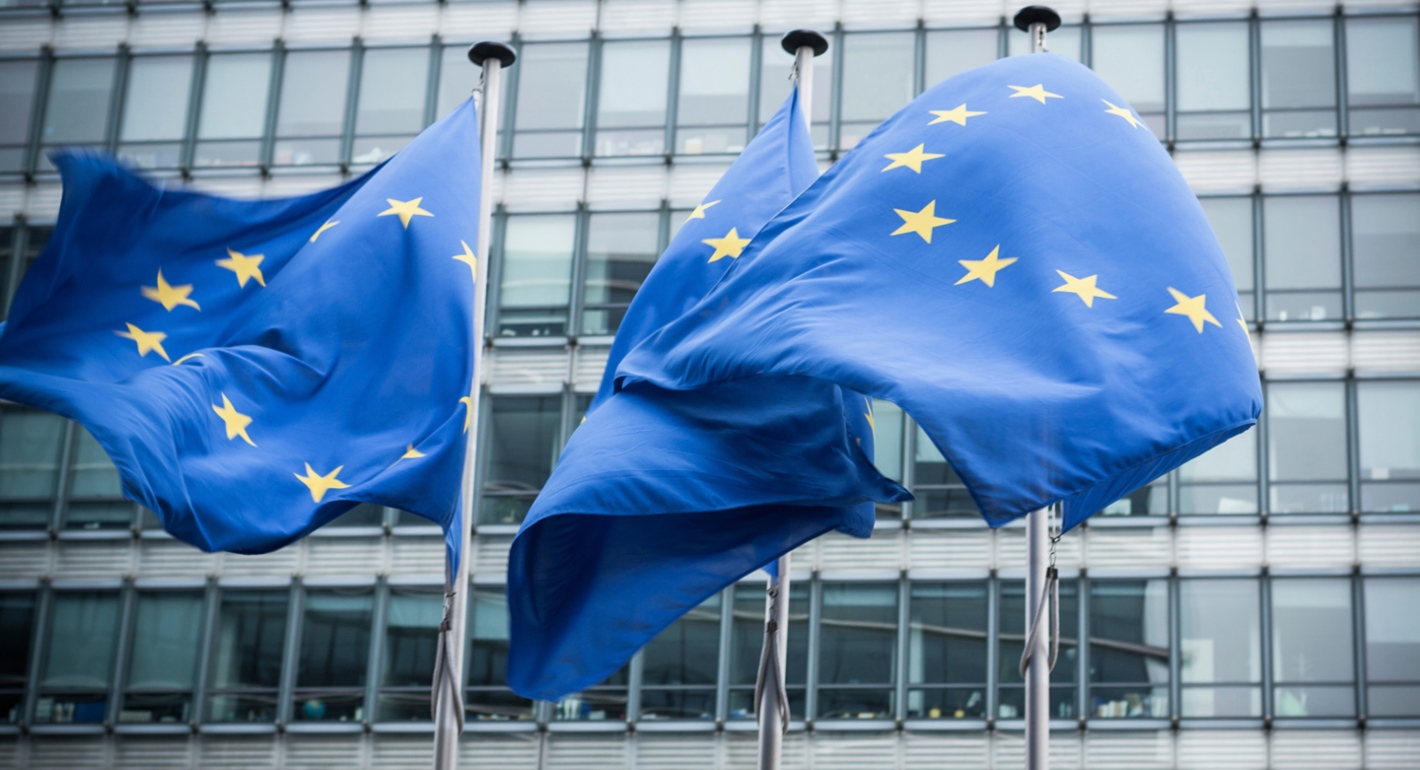
Thirty years after the 1989 reunification, Europe remains a political pygmy. The EU needs a serious foreign and defense policy if it wants to become a credible global player.
Source: Washington Post
The reunification of Europe after 1989 was one of the great achievements of the post-1945 era. The countries of Eastern and Central Europe were finally free to join the Euro-Atlantic organizations of NATO and the European Union. When Poland, Hungary and the Czech Republic joined NATO in 1999, later joining the E.U. in 2004 along with Estonia, Latvia, Lithuania, Slovakia and Slovenia, there was jubilation across the region. Those were heady days.
That euphoria has long since faded. The global financial crisis of 2008 took a heavy toll on economic growth and the pace of integration. But now the E.U. countries from the former East Bloc appear to have bounced back. Growth is picking up. Living standards in many of the new member states reached 70 percent of the E.U. average by 2016, up from about 40 percent in 2000. Admittedly, the positive gains are slow and fragile, especially in the non-E.U. countries of the Western Balkans.Where Europe has lagged most strikingly is in its efforts to transform a bigger and more prosperous E.U. into a credible foreign, defense and strategic player. Astonishingly, this is unlikely to happen in the near future despite President Trump’s tirades against the E.U. and NATO as well as his undisguised support for Brexit and populist leaders in Hungary and Poland.
One big reason for Europe’s failure to embrace a united foreign and defense policy is because governments disagree over the threats facing the bloc. The Baltic states, Poland and Sweden see Russia as a major threat. For the southerners — Spain, Italy, Greece, Malta — the main worry is migration and the unending instability in the Middle East. For France, the primary issue is terrorism and the potential combustibility in the Sahel, concerns now shared by Germany.
These different perceptions of threats have made it extremely difficult for the E.U. to agree on a migration policy or on a strategy for stabilizing Libya, where Italy and France have been at loggerheads over which political groupings to support. Given such differences, it is remarkable how the E.U. has been united over rolling over sanctions on Russia.
Europe’s other handicap since 1989 is the unwillingness to match its soft power with hard power. The Western Balkans is a prime example. The E.U. civilian missions in Bosnia and Kosovo have failed to create strong institutions, end rampant corruption or even train competent police forces. The fact that NATO has been in Kosovo since 1999 underlines the E.U.’s incapacity to use hard power to back up its soft power tools of development and economic assistance.
The reluctance to even discuss hard power means that E.U. discussions about building a serious defense policy appear toothless. In 1999, the Europeans launched the Helsinki Headline Goal, which aimed at deploying 60,000 troops within 60 days “in response to a crisis” through separation of parties by force, military advice to non-E.U. countries, conflict prevention and evacuation operations. This initiative never got off the ground.
Plans by Britain and France in 2003 (with German support) to establish a military rapid reaction force have also gone nowhere. Though some member states are increasing cooperation on defense and training, there is no common strategic culture and goal to bind them together.The E.U.’s weak foreign and security policy is also hampered by the growing role of the member states at the expense of the European Commission, the bloc’s executive.
During the 1990s and the early 2000s, the commission held sway. Indeed, the Central and Eastern Europeans believed a stronger commission and a more integrated Europe would defend their interests and protect them against Germany and France and the other big member states.
Not any more. With few exceptions, the member states, abetted often by populist leaders, call the shots at the expense of more political and economic integration.
Take China’s growing economic role in Central Europe and the Balkans. The commission has been unable to rein in the 16+1 group, which has promoted close economic ties between a number of countries in the region (including 11 from the E.U.). This has given China a strategic foothold in these parts of Europe thanks to Beijing’s deep pockets, its lack of conditionality and the speed at which it modernizes transportation networks.
Finally, a robust foreign and defense policy needs the members to trust one another. Britain consistently opposed the creation of an E.U. military planning headquarters, believing it would weaken NATO. With Britain set on leaving the E.U., this could be a chance for Europe to shape its own defense policies.
Yet Europeans are divided over this issue. The Baltic states and Poland don’t trust the E.U. to manage defense or provide a security guarantee. They are also suspicious that France would set the agenda for Europe’s defense and strategic doctrine in ways that would weaken NATO — just as several countries oppose France’s drive for more economic and political integration.
The bottom line is that without a serious foreign and defense policy to underpin its size and economic weight, Europe will remain a political pygmy. The unification that began 30 years ago has yet to be completed.

Nonresident Senior Fellow, Carnegie Europe
Judy Dempsey is a nonresident senior fellow at Carnegie Europe
Recent Work
Judy Dempsey
Judy Dempsey
Carnegie does not take institutional positions on public policy issues; the views represented herein are those of the author(s) and do not necessarily reflect the views of Carnegie, its staff, or its trustees.

Minsk clearly expected the dialogue with Washington to yield more results, in particular the lifting of EU sanctions and permission to export potash.

Artyom Shraibman

If the Russian-speaking community in Latvia cannot articulate their interests without being seen as disloyal, they could end up embracing a pro-Kremlin agenda.

Sergejs Potapkins

With the growth in points of friction between the great powers, organizations like the SCO will continue to play a role in the strategic adaptation of the smaller powers caught between them.

Temur Umarov

When faced with fuel shortages in the past, Central Asian governments could always count on additional supplies from Moscow. That safety net no longer exists.

Galiya Ibragimova

Two divergent trends—Putin’s hardline vision of how to prosecute the war in Ukraine, and a growing desire for change in Russia—could tear the regime apart.

Tatiana Stanovaya