

Commentary
Putin’s conservative staffing policies and search for ever greater control have cemented parliament’s transformation into a bureaucratic appendage of the executive branch.
Andrey Pertsev
{
  "authors": [
    "Dalia Ghanem",
    "Loulouwa Al Rachid",
    "Sabri Benalycherif"
  ],
  "type": "commentary",
  "centerAffiliationAll": "dc",
  "centers": [
    "Carnegie Endowment for International Peace",
    "Malcolm H. Kerr Carnegie Middle East Center"
  ],
  "collections": [
    "Arab Awakening",
    "Arab Spring 2.0"
  ],
  "englishNewsletterAll": "menaTransitions",
  "nonEnglishNewsletterAll": "",
  "primaryCenter": "Malcolm H. Kerr Carnegie Middle East Center",
  "programAffiliation": "MEP",
  "programs": [
    "Middle East"
  ],
  "projects": [],
  "regions": [
    "Levant",
    "Maghreb",
    "Lebanon",
    "Algeria",
    "Middle East",
    "North Africa"
  ],
  "topics": [
    "Political Reform",
    "Democracy"
  ]
}
Source: Getty
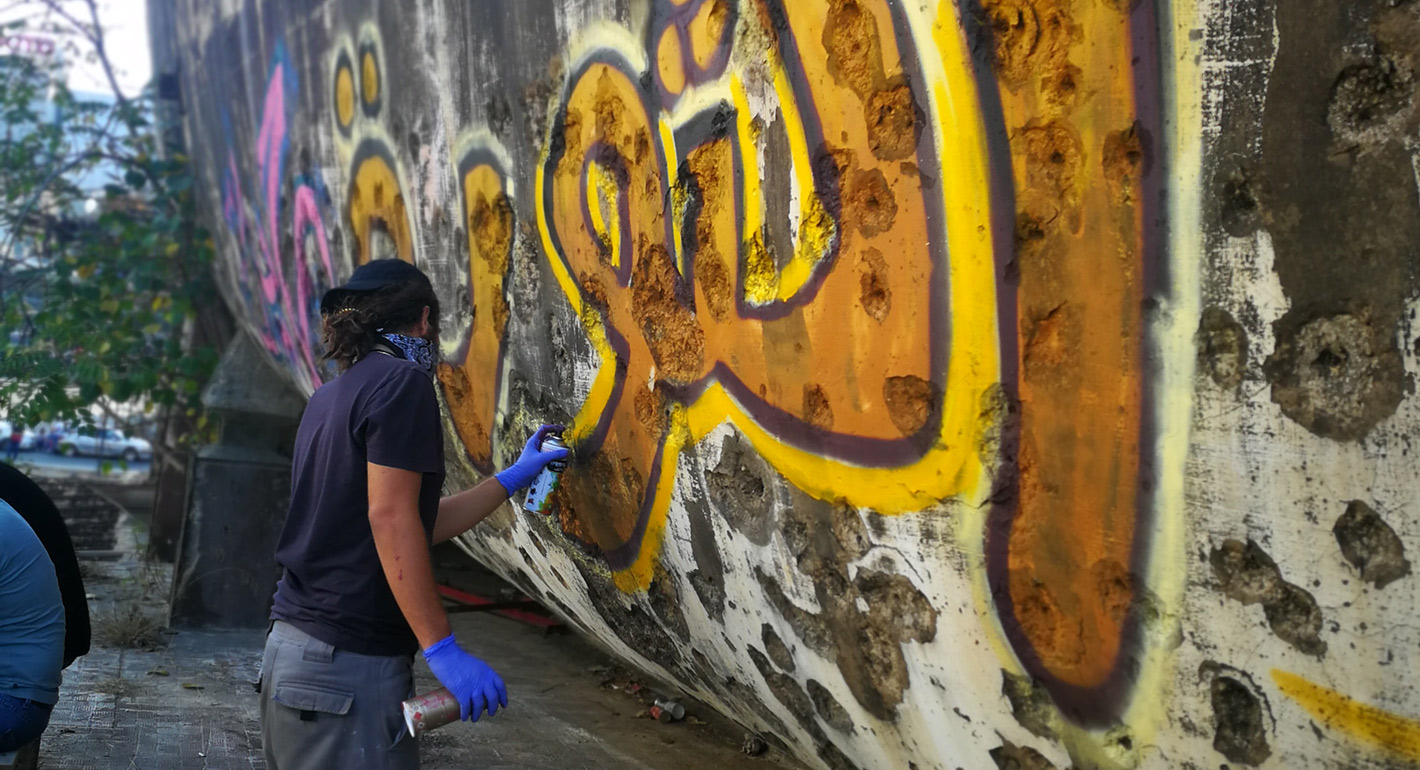
Whether drawing inspiration from fictional characters or historical heroes, young people in Beirut and Algiers are creating bold visions to take back the public space.
Thousands of young people in the Middle East hit the streets this month to protest against bad governance, corruption, and social injustice. But not just by raising their voices. Some wielded a quieter yet equally powerful tool to demand change and inspire hope—graffiti.
Walking through the city centers of Algiers and Beirut, it is difficult to miss the bold words and imagery that spatter the walls. Some evoke the past to illustrate a long history of suffering, while others use metaphors and name-calling to unite people against their “oppressors.”
In Algeria, where public space has been severely restricted for decades, graffiti artists seek to arouse nationalistic sentiment. Many portraits and messages hark back to Algeria’s war for independence from French colonial rule. Today’s activists still use symbols from the war’s slogans, heroes, and martyrs.
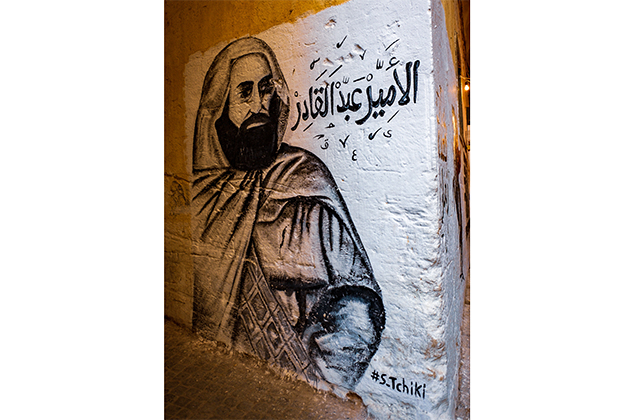

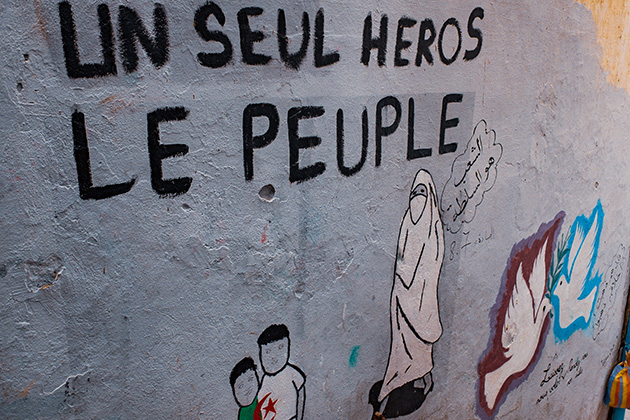
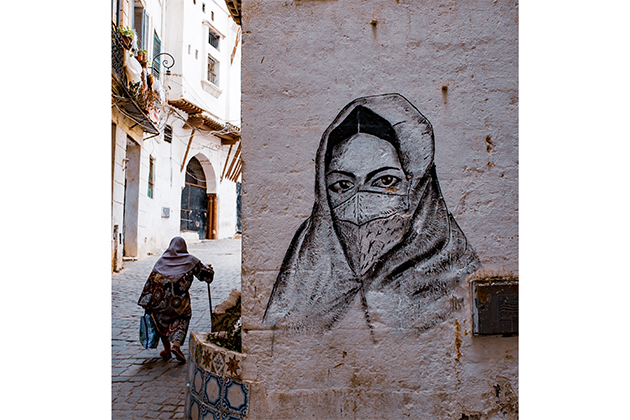

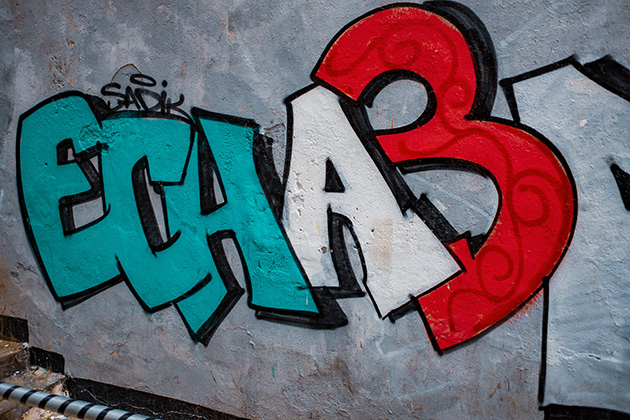
In Lebanon, the artists seem to use graffiti for emotional expression and to stoke the fires of revolution. Images use political words, quotes, and sometimes insults. Many messages contain swear words and crude language, in an effort to strip their targets (for example, government leaders) of their legitimacy and moral credentials. The art has been made hastily in a moment of anger and disgust against the system.


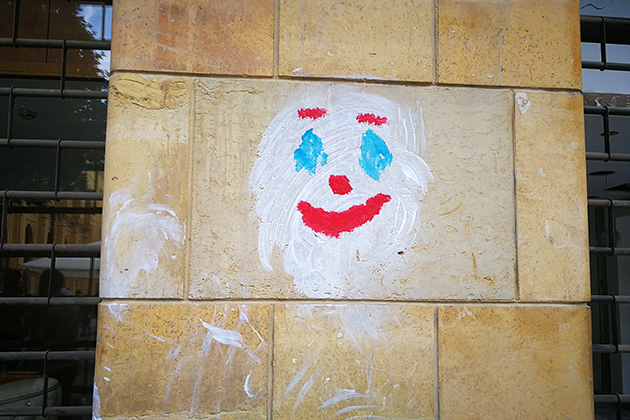


Yet in both countries, graffiti art subverts state control and takes back the public space. It is difficult to determine the mobilizing or educational effects of graffiti, but perhaps it has been a source of inspiration. Street artists are not the only ones using the written word and images to press for radical change. In Beirut, hundreds of protesters recently hooked pieces of paper onto barbed wire to create a chain of messages that, among other things, demand a technocratic council be formed until elections are held.
Regardless of attempts to quell the protests, the countries’ youth are bypassing institutions, political parties, and ideologies to forge a path to necessary reforms.
Dalia Ghanem is a resident scholar at the Carnegie Middle East Center in Beirut and the co-director for gender-related work for the program on Civil-Military Relations in Arab States, where her work examines political and extremist violence, radicalization, Islamism, and jihadism with an emphasis on Algeria.
Loulouwa Al Rachid is an Iraq expert and a former nonresident scholar at the Carnegie Middle East Center.
Sabri Benalycherif is an independent documentary photographer and contributor to Studio Hans Lucas.
Former Senior Resident Scholar, Malcolm H. Kerr Carnegie Middle East Center
Dalia Ghanem was a senior resident scholar at the Malcolm H. Kerr Carnegie Middle East Center in Beirut, where her research focuses on Algeria’s political, economic, social, and security developments. Her research also examines political violence, radicalization, civil-military relationships, transborder dynamics, and gender.
Former Co-Director, Program on Civil-Military Relations in Arab States, Carnegie Middle East Center
Loulouwa Al Rachid was a co-director of the Program on Civil-Military Relations in Arab States at the Carnegie Middle East Center.
Sabri Benalycherif
Sabri Benalycherif is an independent documentary photographer and contributor to Studio Hans Lucas.
Carnegie does not take institutional positions on public policy issues; the views represented herein are those of the author(s) and do not necessarily reflect the views of Carnegie, its staff, or its trustees.

Putin’s conservative staffing policies and search for ever greater control have cemented parliament’s transformation into a bureaucratic appendage of the executive branch.

Andrey Pertsev

Ex-president Gurbanguly Berdimuhamedov remains interested in politics, but his son Serdar, Turkmenistan’s current president, is becoming increasingly independent and willing to break with his father’s legacy. If their covert rivalry goes too far, both risk losing power.

Galiya Ibragimova

Sergei Kiriyenko used Russia’s parliamentary vote to further hone his strategy of corporate mobilization that is designed to maximize votes for United Russia.
Andrey Pertsev

The European far right might fail to steer EU policy in the direction Russia wants, but they will create enough chaos inside Europe to benefit the Kremlin.

Dimitar Bechev

If the Russian-speaking community in Latvia cannot articulate their interests without being seen as disloyal, they could end up embracing a pro-Kremlin agenda.

Sergejs Potapkins