

Other
Michael D. Swaine
{
  "authors": [
    "Michael D. Swaine"
  ],
  "type": "other",
  "centerAffiliationAll": "dc",
  "centers": [
    "Carnegie Endowment for International Peace"
  ],
  "collections": [],
  "englishNewsletterAll": "asia",
  "nonEnglishNewsletterAll": "",
  "primaryCenter": "Carnegie Endowment for International Peace",
  "programAffiliation": "AP",
  "programs": [
    "Asia"
  ],
  "projects": [],
  "regions": [
    "North America",
    "United States",
    "East Asia",
    "China"
  ],
  "topics": [
    "Security",
    "Foreign Policy"
  ]
}
Source: Getty
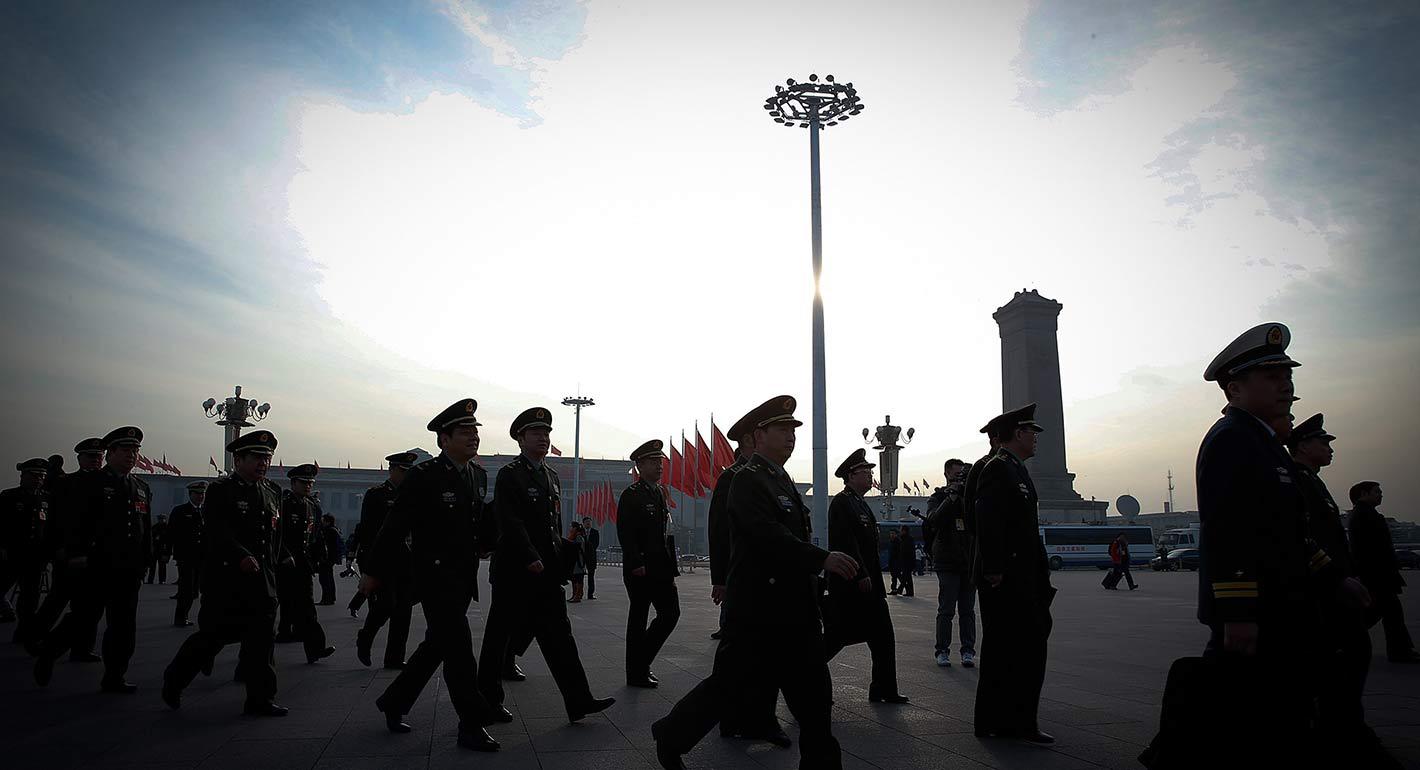
While frictions between the United States and China in the areas of trade, investment, and technology development are certainly important, in fact the most critical driver of potential instability between Washington and Beijing consists of clashing security perceptions and policies.
Source: China Leadership Monitor
While reaffirming China’s longstanding “peace and development” line and offering a more positive take on many developments in Asia, the 2019 Defense White Paper highlights many negative features of the global security environment. This suggests an unresolved internal contradiction in China’s security views and policies. Such an apparent contradiction is perhaps resolved by the Defense White Paper’s description of strategic competition as driven largely by the U.S., not by China, and out of step with deeper global trends. Indeed, the PLA under Xi Jinping is depicted as working with other countries to realize Xi’s “shared community for mankind” as it strengthens its deterrence capabilities. Yet this propaganda-laden take reinforces the suspicions of many regarding China’s “real” goals. Beijing must inject a much more pragmatic, hard-power perspective into its public security stance and engage Washington on that basis in order to realize a meaningful level of stability based on mutual accommodation.
Most observers of China’s rise and the increasingly troubled Sino-U.S. relationship tend to focus primarily on the frictions in the areas of trade, investment, and technology development. While these are certainly important, in fact the most critical driver of potential instability between Washington and Beijing consists of clashing security perceptions and policies. There is much rhetoric in Washington and elsewhere about China’s supposed intention to replace the U.S. as the dominant global military superpower. This, along with some worst-case Chinese scenarios, fuels an increasingly hostile, zero-sum set of assumptions in both China and the U.S. Yet, with some notable exceptions, surprisingly little U.S. analysis behind such rhetoric looks more broadly at the most credible evidence about Chinese security views, often preferring instead to cherry-pick statements by reliable or unreliable Chinese sources to support what amounts to a mirror image of America’s historical drive for military superiority.
Admittedly, it is not easy to obtain reliable data on Beijing’s security perceptions and objectives. Despite China’s many successes, the leadership in Beijing still sees the nation as relatively weak and under pressure from the U.S., thus requiring considerable secrecy on sensitive security matters. Although interviews with Chinese military and civilian analysts and a close reading of leaders’ speeches can glean much useful information, the most authoritative and arguably the most reliable source on official Chinese security perceptions and defense policies consists of the biennial PRC Defense White Paper (DWP), published since 1998. The most recent DWP was published in July 2019. Although these documents offer a carefully controlled description of security and defense issues designed to influence foreign perceptions, they also contain insights into how Beijing itself views its own security environment.
This article focuses primarily on the description of China’s security environment and the content and purpose of its defense policy as contained in the 2019 DWP. It compares statements in the 2019 DWP to those in earlier DWPs. Supplemented by additional Chinese and Western sources and the author’s nearly thirty years of experience studying China’s security views, it presents a bottom-line assessment of how Beijing is reacting to (and proactively is seeking to shape) its increasingly challenging security environment, especially vis-à-vis the United States. The article first identifies the key features of China’s security situation and its defense mission, policies, and strategies that are found in current and past DWPs as well as in some additional sources, comparing similarities and differences over time. It then assesses the implications of these findings for current Sino-U.S. security competition and its possible evolution over time.
The author is deeply indebted to Sylvie Zhong for her assistance in the preparation of this article.
This article will be published by the China Leadership Monitor.

Former Senior Fellow, Asia Program
Swaine was a senior fellow at the Carnegie Endowment for International Peace and one of the most prominent American analysts in Chinese security studies.
Recent Work
Michael D. Swaine
Michael D. Swaine
Carnegie does not take institutional positions on public policy issues; the views represented herein are those of the author(s) and do not necessarily reflect the views of Carnegie, its staff, or its trustees.
A leak of Russian gas price data helps establish that China is paying Russia far less than Central Asian countries and Gazprom’s former European customers.

Sergey Vakulenko

Japan’s long-term security policy is driven by concerns about China, and there is little appetite for (or interest in) pursuing a confrontation with Moscow.

James D.J. Brown

The truth of the strategic situation is that Europe and Russia are extremely unlikely to be able to “turn the page” on their confrontation within the next two decades.

Arkady Moshes

Russia’s AI-driven propaganda campaigns operate in a fragmented, chaotic, and often illogical manner. That’s not necessarily a problem for the Kremlin, though: It’s much easier to mimic genuine public debate that way.

Ilya Klishin

Without a ceasefire with Ukraine on attacking each other’s energy infrastructure—to which the Kremlin is unlikely to agree—the diesel agreement between Putin and Trump is largely for show, rather than representing a genuine increase in the volumes of Russian diesel on the global market.
Sergey Vakulenko