

Q&A
Dara Massicot, Aaron David Miller, Andrew S. Weiss
{
  "authors": [
    "Aaron David Miller"
  ],
  "type": "legacyinthemedia",
  "centerAffiliationAll": "",
  "centers": [
    "Carnegie Endowment for International Peace"
  ],
  "collections": [],
  "englishNewsletterAll": "",
  "nonEnglishNewsletterAll": "",
  "primaryCenter": "Carnegie Endowment for International Peace",
  "programAffiliation": "",
  "programs": [],
  "projects": [],
  "regions": [
    "North America",
    "United States"
  ],
  "topics": [
    "Political Reform"
  ]
}
Source: Getty
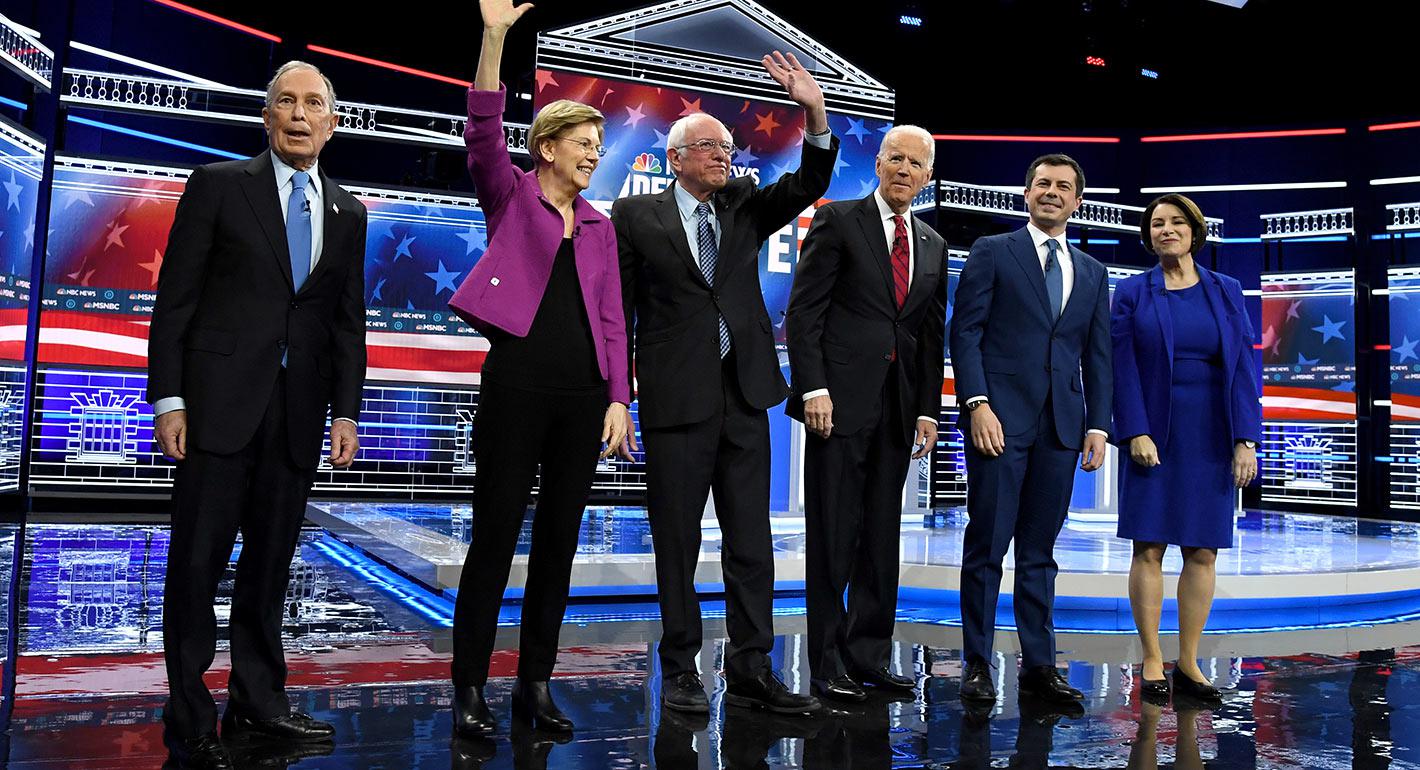
His first Democratic primary debate could have been Michael Bloomberg’s night. But instead it was his nightmare.
Source: CNN
This could have been Michael Bloomberg's night. But instead it was his nightmare. Viewers were anxious for a first look at the billionaire former mayor of New York. And to meet or exceed them, Bloomberg had to do three things. Sadly for him, he failed at all three.
First, he had to establish a stage presence. But throughout the debate, Bloomberg seemed disengaged and withdrawn -- uncomfortable and emotionless. His performance improved a bit later during the debate. But for the most part, he seemed unable to project a vibrant persona, let alone charisma. And for a tough businessman, he seemed strangely hesitant, reserved and poorly equipped to push back hard on his opponents' charges of sexism, racism and capitalism.
Second, he failed to make the case for electability Bloomberg seemed to make little of his potentially strongest talking point -- his capacity to beat President Donald Trump. This should have been his single most effective narrative, and he should have turned at least part of every question to that end. In the end, he remained a cardboard figure seemingly unable to outline what he actually stands for.
Third, he could not defend his most controversial policies. On stop and frisk, Bloomberg didn't offer anything remotely resembling a sincere apology as much as an explanation for why it didn't work. But the real damage which may well prove fatal to Bloomberg's campaign was his response to Massachusetts Sen. Elizabeth Warren's question: would he free women who had settled harassment or discrimination suits from their non-disclosure agreements so their accounts might be heard? Bloomberg refused, stumbled and fumbled trying to lawyer his way out of the dead-end in which he was stuck.

Senior Fellow, American Statecraft Program
Aaron David Miller is a senior fellow at the Carnegie Endowment for International Peace, focusing on U.S. foreign policy.
Recent Work


Dara Massicot, Aaron David Miller, Andrew S. Weiss



Sophia Besch, Eric Ciaramella, Steve Feldstein, …
Carnegie does not take institutional positions on public policy issues; the views represented herein are those of the author(s) and do not necessarily reflect the views of Carnegie, its staff, or its trustees.

Putin’s conservative staffing policies and search for ever greater control have cemented parliament’s transformation into a bureaucratic appendage of the executive branch.

Andrey Pertsev

Ex-president Gurbanguly Berdimuhamedov remains interested in politics, but his son Serdar, Turkmenistan’s current president, is becoming increasingly independent and willing to break with his father’s legacy. If their covert rivalry goes too far, both risk losing power.

Galiya Ibragimova

Sergei Kiriyenko used Russia’s parliamentary vote to further hone his strategy of corporate mobilization that is designed to maximize votes for United Russia.
Andrey Pertsev

Trump has promised Belarus a massive potash deal. But Minsk is seeking something greater: restored Western transit and greater room for maneuver from Russia.

Balázs Jarábik

The European far right might fail to steer EU policy in the direction Russia wants, but they will create enough chaos inside Europe to benefit the Kremlin.

Dimitar Bechev