

Paper
Christopher S. Chivvis, Rohan Mukherjee, Milan Vaishnav
{
  "authors": [
    "Milan Vaishnav"
  ],
  "type": "other",
  "centerAffiliationAll": "dc",
  "centers": [
    "Carnegie Endowment for International Peace"
  ],
  "collections": [],
  "englishNewsletterAll": "ctw",
  "nonEnglishNewsletterAll": "",
  "primaryCenter": "Carnegie Endowment for International Peace",
  "programAffiliation": "SAP",
  "programs": [
    "South Asia"
  ],
  "projects": [],
  "regions": [
    "South Asia",
    "India"
  ],
  "topics": [
    "Economy"
  ]
}
Source: Getty
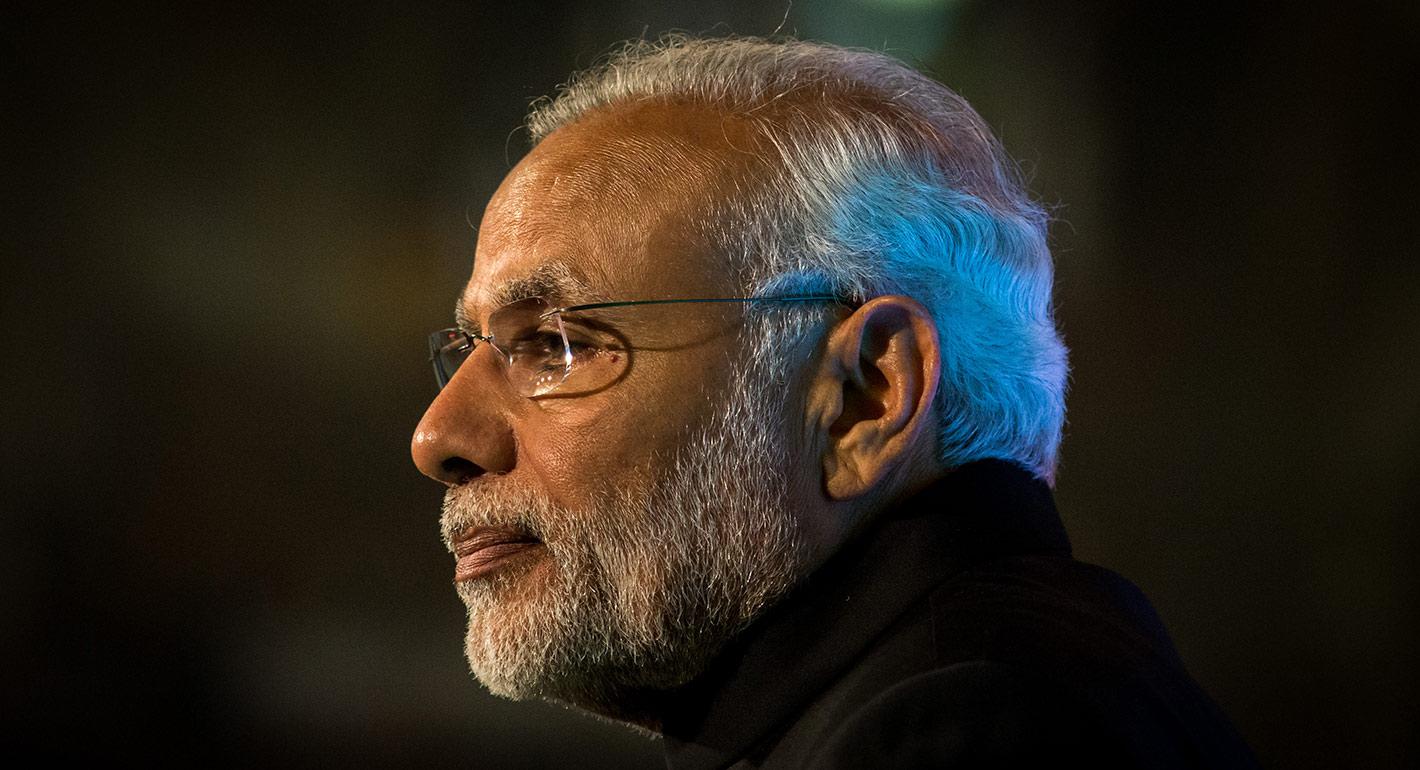
The Modi government inherited many macro-economic problems that it has not expended much political capital on finding solutions for.
Source: Rediff.com
“People are very concerned about the sagging headline economic numbers. They are even more concerned that rectifying the economy does not appear to be top of the mind for the government,” Milan Vaishnav, senior fellow and director of the South Asia Programme at the Carnegie Institute of International Peace, Washington, DC, tells Rediff.com’s Archana Masih.
Dr Vaishnav has focused his research on India's political economy and his book When Crime Pays: Money and Muscle in Indian Politics was awarded the Kamaladevi Chattopadhyay New India Foundation book prize for the best non-fiction book on contemporary India.
Most analysts had low expectations of the Budget and it is fair to conclude that they were met.
For starters, the government had little fiscal headroom to do much in terms of providing a stimulus. But these constraints notwithstanding, what is striking is what was not said.
In terms of ‘big ideas’, I think there were a few big takeaways.
First, the government has created a less cumbersome income tax regime, but only for those who are willing to do away with exemptions.
Second, the government has laid out a massive divestment target which needs to be viewed sceptically (in light of recent unmet targets).
Third, the government relaxed its fiscal consolidation roadmap in order to preserve government spending to address the slowdown.
At the end of the day, in my view, it does not.
There are at least three layers to the current economic crisis — which is arguably the most severe slowdown in three decades.
First, the ‘twin balance sheet’ crisis is still alive and well.
In fact, according to Arvind Subramanian (economist and former chief economic advisor to the finance ministry), it has now blossomed into a four balance sheet crisis (the original public sector bank NPA issue and the overleveraged infrastructure companies, now further complicated by the NBFC crisis and the slowdown in real estate).
Second, consumption has taken a hit thanks, in part, to the double whammy of demonetisation and the patchy rollout of GST.
The government’s own data from the NSSO (National Sample Survey Office) show that consumption has declined for the first time in four decades.
Even if you think those numbers are too pessimistic, there has been at least no growth or limited consumption growth.
Third, exports are anaemic. India’s boom years of the 2000s saw robust export growth. Thanks to issues in the global trading regime — compounded by India’s protectionist turn — India cannot export its way back to health any longer.
Let us just stick to three. First, a full reckoning of the PSU bank crisis would have been a good place to start.
Not only is there too little money allocated for recapitalising out the banks, but there is also no sign of a much-needed overhaul of the sector (in violation of just about every task force report in recent memory).
Second, rural demand remains a serious problem.
Given that, cuts to MNREGA are surprising and counterintuitive. Even PM-KISAN, the government’s cash transfer scheme to landed farmers, was flatlined.
Third, we continue to hear crickets on issues like factor market reform, judicial reform, and administrative reform — measures that help clean up the cobwebs of the past.
These are all problems the Modi government inherited — it did not create them — but it also has not expended much political capital on finding solutions.
5 percent growth sounds great if you are sitting in the West, where growth rates are half that (at best). But in India, it feels like a recession.
We are seeing this in the data, whether it is the spike in unemployment or the decline in household consumption.
From an international perspective, you can see the headlines and the editorials. People are very concerned about the sagging headline economic numbers. They are even more concerned that rectifying the economy does not appear to be top of the mind for the government.
I think the really interesting question is how the weak economy interacts with concerns about majoritarianism.
Talk of CAA/NRC with growth at 8 per cent and inflation at 4 per cent is very different than talk of CAA/NRC with growth at 4 per cent and inflation at 8 per cent.
The latter is a vulnerable place for the ruling party.
I think there is a political problem at the heart of the ineffectual response.
Despite all of the PM’s many strengths, it is increasingly clear he does not necessarily have a coherent and clear worldview on matters of macro policy.
I believe he is genuine in wanting to see India become a $5 trillion economy by 2024. However, it is not clear he has a detailed roadmap for doing so.
In the absence of a clear steer from the top, there is no Cabinet official with a clear reform compass who has filled the void either.
There is abundant talent in the Indian system — that is not the issue. It is about organising the politics to extract the most out of that talent which is the problem.
Don’t miss Part 2 of the interview!

Director and Senior Fellow, South Asia Program
Milan Vaishnav is a senior fellow and director of the South Asia Program and the host of the Grand Tamasha podcast at the Carnegie Endowment for International Peace. His primary research focus is the political economy of India, and he examines issues such as corruption and governance, state capacity, federalism, and electoral behavior. He also conducts research on the Indian diaspora.
Recent Work
Christopher S. Chivvis, Rohan Mukherjee, Milan Vaishnav



Sophia Besch, Eric Ciaramella, Steve Feldstein, …
Carnegie does not take institutional positions on public policy issues; the views represented herein are those of the author(s) and do not necessarily reflect the views of Carnegie, its staff, or its trustees.

Russian strikes are weakening the economy sustaining Ukraine’s war effort. Closing the growing funding gap will require more European support and politically contentious reforms in Kyiv.

Balázs Jarábik

For every ruble allocated to social policy, health, and education in 2027, double that amount is earmarked for the army, the police, and the security services.

Alexandra Prokopenko

Depleted financial reserves and a shrinking tax base mean it is no longer possible to simultaneously deliver high defense spending, price stability, and economic growth.
Alexandra Prokopenko

With the growth in points of friction between the great powers, organizations like the SCO will continue to play a role in the strategic adaptation of the smaller powers caught between them.

Temur Umarov
A much-discussed disagreement over internet restrictions in Russia was never an existential threat for Putin: It was about elite groups protecting their interests.
Alexandra Prokopenko