

Commentary
Alexander Gabuev
{
  "authors": [
    "Alexander Gabuev"
  ],
  "type": "legacyinthemedia",
  "centerAffiliationAll": "",
  "centers": [
    "Carnegie Endowment for International Peace",
    "Carnegie Russia Eurasia Center"
  ],
  "collections": [
    "Pax Sinica"
  ],
  "englishNewsletterAll": "",
  "nonEnglishNewsletterAll": "",
  "primaryCenter": "Carnegie Endowment for International Peace",
  "programAffiliation": "",
  "programs": [],
  "projects": [],
  "regions": [
    "East Asia",
    "China",
    "Russia"
  ],
  "topics": [
    "Foreign Policy"
  ]
}
Source: Getty
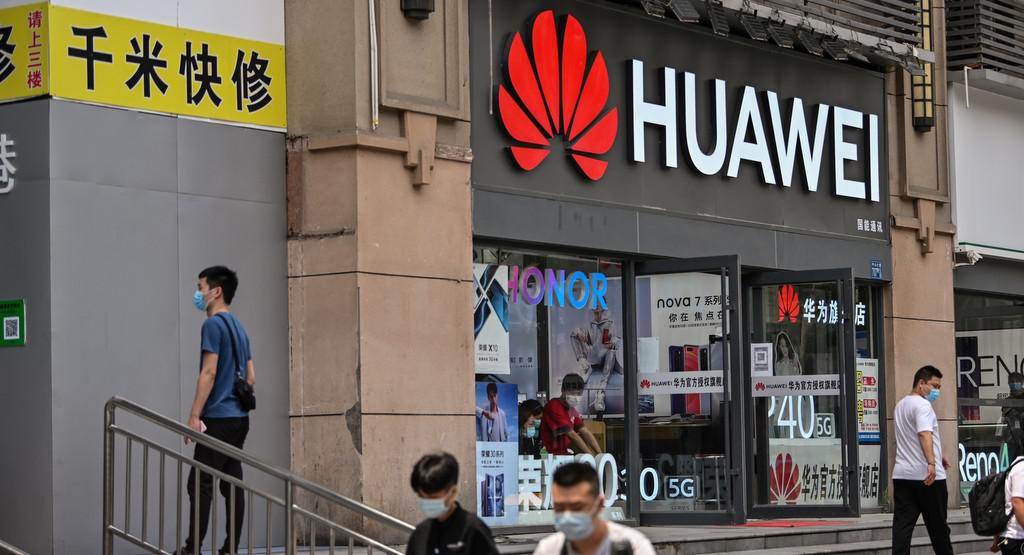
US and EU sanctions against the Chinese telecoms group have bolstered Sino-Russian co-operation
Source: Financial Times
The British government’s decision to launch a review of Huawei’s activity in the UK is an indication that the US campaign to pressure its allies to shun China’s biggest telecoms company is bearing fruit. Moreover, Downing Street is planning to forge an alliance of democracies with the mission of providing developing countries with alternatives to Huawei’s market-leading 5G capability.
Rather oddly, though, this western effort overlooks a key telecoms battleground: Russia. If Huawei succeeds in establishing control over Russia’s 5G buildout, that will strengthen the Chinese company’s position in the battle for other emerging markets.
There are four factors playing into Huawei’s hands in Russia. The first is money. Russian mobile operators have long been attracted by Huawei’s technology, which is on a par with European vendors but offered at lower cost, thanks to Beijing’s financial support.
However, Huawei’s attraction to Russia is not just about economics; it is also about national security. The Kremlin acknowledges that Russia is unable to produce quality 5G hardware on its own, and therefore needs to buy it from either Huawei or the west.
So the Kremlin’s rationale for selecting Huawei is straightforward: “We’re either going to be bugged by the US or by China, so we need to choose the lesser evil,” as one government insider told me. “Since the Americans are sanctioning us while the Chinese are helping us, the choice is obvious.”
Another point of concern for the Kremlin is who controls the “killer switch”. Russian security fears that the Pentagon might force western vendors to knock out Russian 5G networks, potentially unleashing political and economic chaos, and even regime change.
Again, China appears to be the lesser evil. No one in Moscow loses sleep worrying that Beijing might try to topple Vladimir Putin’s government. To be on the safe side, the Kremlin is also taking steps to ensure that communication systems used by the military and security officials are locally produced.
Alongside all this, Huawei’s is running a sophisticated public relations strategy to win Moscow’s trust. Even as Donald Trump’s administration has pushed Huawei out of partnerships with western research institutions, the Chinese company has quadrupled its research and development personnel in Russia to 2,000 employees. Huawei portrays this as support for the Kremlin’s mission to stop Russia’s brain drain and foster innovation.
Huawei is also building alliances with local power brokers. In March, the company dropped a $30m investment that would have marketed cloud solutions under Huawei’s own brand in Russia, and instead partnered with a cloud platform run by Sberbank, Russia’s biggest state-owned bank.
Huawei thus cunningly exploited US sanctions against Sberbank that have discouraged US tech giants from partnering with it. Instead, Huawei technology will become Sbercloud’s backbone, enabling the Chinese company to hitch its wagon to Sberbank’s extensive client base and the influence of chief executive Herman Gref, a longtime Putin confidant.
Lastly, there is the impact of Covid-19. The pandemic has sharpened Kremlin interest in Chinese digital surveillance as a tool of political control. Huawei products such as Safe City have impressed the security establishment.
If Huawei’s gamble pays off and it conquers Russia’s 5G market, that could be used by Beijing to lure other developing countries into a China-led digital domain. If proud and technologically sophisticated Russia believes that Huawei is safe, why should Brazil or South Africa resist? The US seemingly reached a similar conclusion last week when it suspended some sanctions against Huawei, out of fears the US might otherwise be excluded from global talks shaping future technologies.
France’s Emmanuel Macron has argued that “Chinese hegemony is not compatible with the Russian sense of pride”. But the Kremlin will never abandon Huawei completely. Recent experience shows that Russia’s relationship with the west is broken, and stable ties with Beijing are a must.
Even so, a more nimble western approach might capitalise on the desire of Russian companies and parts of the state to hedge their bets. Nokia and Ericsson have long been active players in the local telecom market.
A more honest conversation in the west about the collateral damage from US-EU sanctions, and the incentives they create for Sino-Russian co-operation, is overdue. Failure to act will help Beijing embed Russia in a China-centred technological order, a digital Pax Sinica with worrying, global ramifications.

Director, Carnegie Russia Eurasia Center
Alexander Gabuev is director of the Carnegie Russia Eurasia Center. Gabuev’s research is focused on Russian foreign policy with particular focus on the impact of the war in Ukraine and the Sino-Russia relationship. Since joining Carnegie in 2015, Gabuev has contributed commentary and analysis to a wide range of publications, including the Financial Times, the New York Times, the Wall Street Journal, and the Economist.
Recent Work
Alexander Gabuev
Alexander Gabuev
Carnegie does not take institutional positions on public policy issues; the views represented herein are those of the author(s) and do not necessarily reflect the views of Carnegie, its staff, or its trustees.

Russia’s ruling party would have benefited from Putin appearing as its distant patron, but as an active frontman imposing his views on the public, he has done nothing but harm both the party’s election campaign and the ruling system overall.

Andrey Pertsev

Depleted financial reserves and a shrinking tax base mean it is no longer possible to simultaneously deliver high defense spending, price stability, and economic growth.

Alexandra Prokopenko
Blurring the line between humans and animals is a long-standing tradition in social utopian prose. In his latest novel, Leonid Bershidsky reminds us that in social experiments, people are often treated no differently than animals.

Alexander Baunov
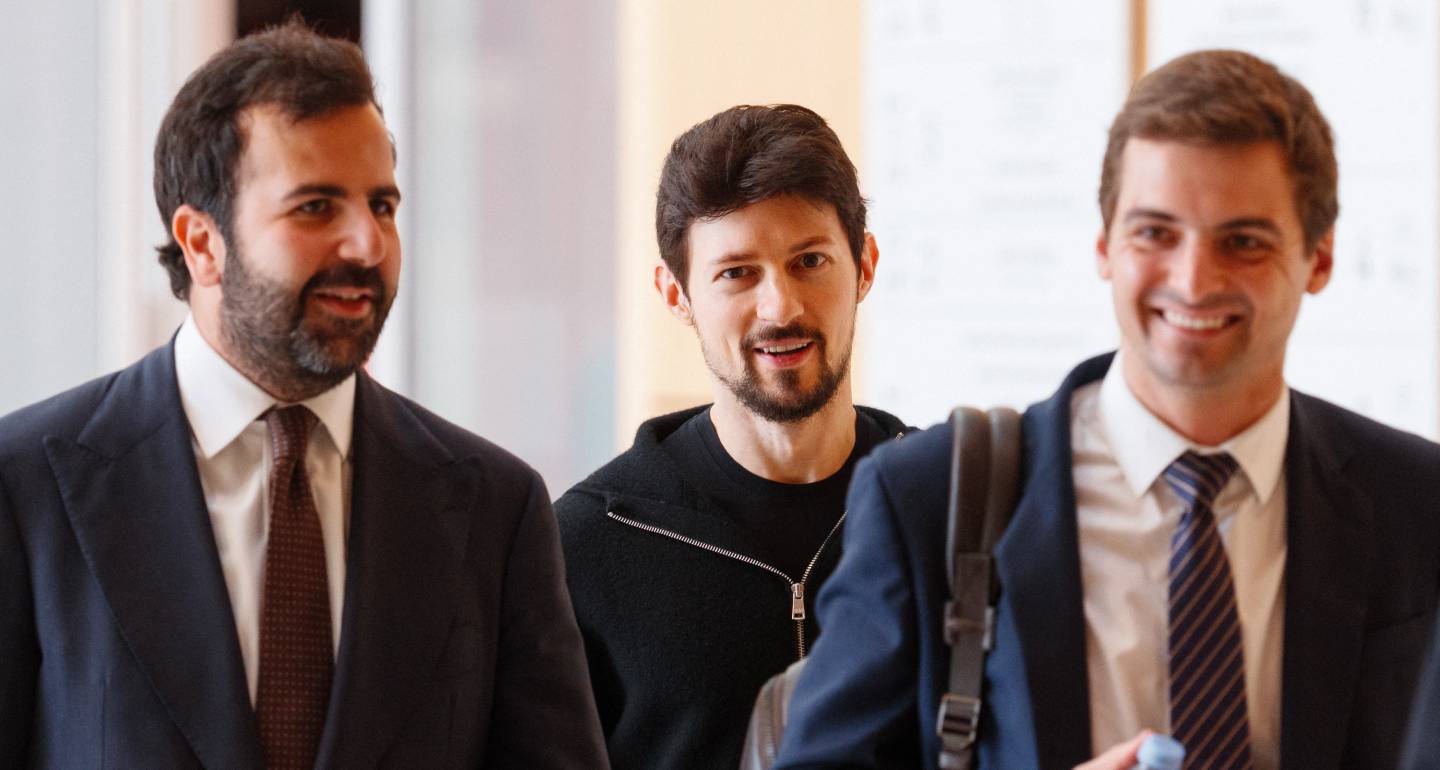
While France and Australia are seeking to establish the legal obligations of messaging apps like Telegram, Russia wants total subordination.

Maria Kolomychenko

The recent uncovering of Dmitry Donskoy’s relics in the Cathedral of the Archangel is yet another attempt by the Russian Orthodox Church to help the state solve its problems. However, parroting the state’s version of Russian history leaves the Church with no message except “patriotism.”

Alexander Zanemonets