

Commentary
Putin’s conservative staffing policies and search for ever greater control have cemented parliament’s transformation into a bureaucratic appendage of the executive branch.
Andrey Pertsev
{
  "authors": [
    "Rachel Kleinfeld",
    "Joshua Kleinfeld"
  ],
  "type": "legacyinthemedia",
  "centerAffiliationAll": "dc",
  "centers": [
    "Carnegie Endowment for International Peace"
  ],
  "collections": [
    "U.S. Democracy in Comparative Perspective"
  ],
  "englishNewsletterAll": "democracy",
  "nonEnglishNewsletterAll": "",
  "primaryCenter": "Carnegie Endowment for International Peace",
  "programAffiliation": "DCG",
  "programs": [
    "Democracy, Conflict, and Governance"
  ],
  "projects": [],
  "regions": [
    "North America",
    "United States"
  ],
  "topics": [
    "Political Reform",
    "Democracy",
    "Civil Society"
  ]
}
Source: Getty
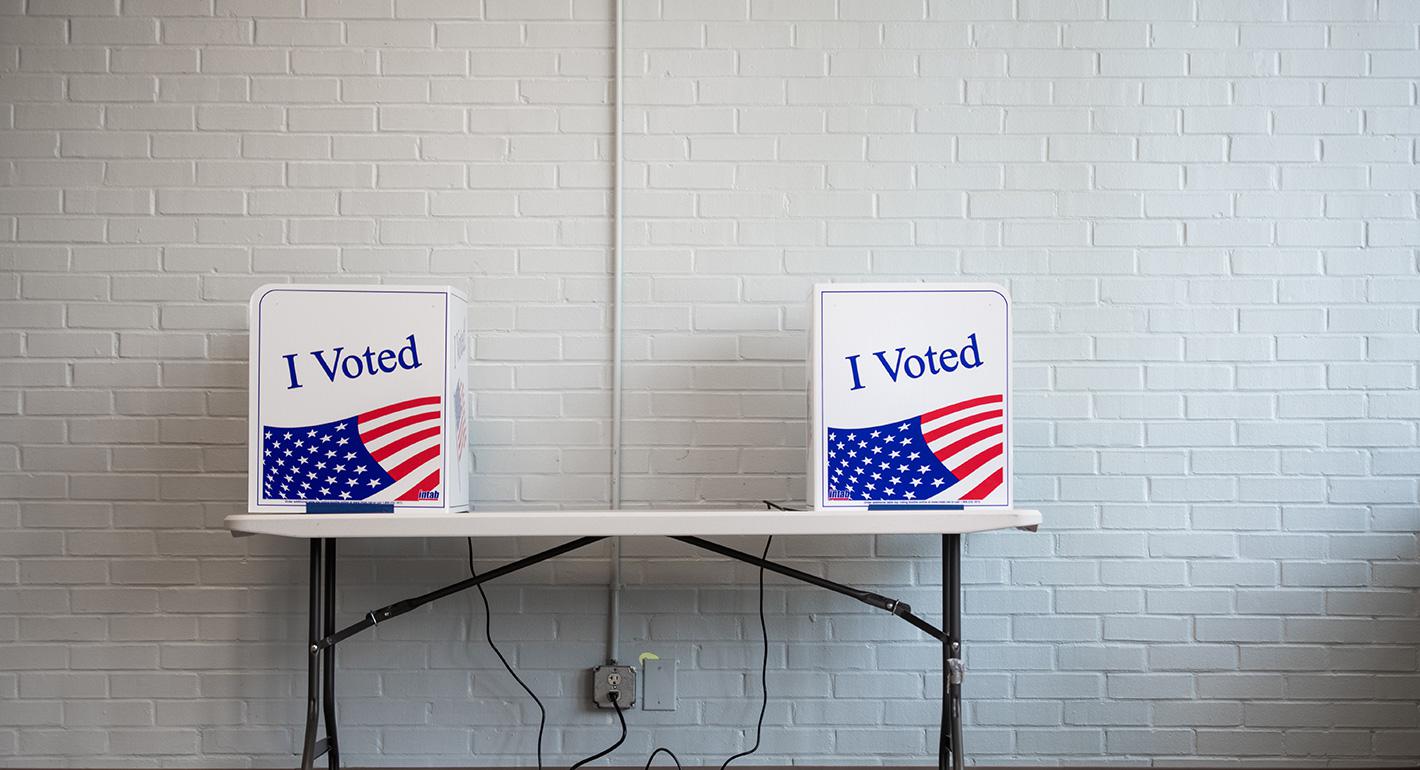
The coronavirus will not be over in the fall. If we do nothing, we risk the kind of debacle we saw in Wisconsin in April: low turnout, closed polling stations, endless voting lines, last-minute litigation and, at the end of the day, an election discredited and delegitimized.
Source: Anchorage Daily News
How can Alaska prepare for November’s election?
The coronavirus will not be over in the fall. If we do nothing, we risk the kind of debacle we saw in Wisconsin in April: low turnout, closed polling stations, endless voting lines, last-minute litigation and, at the end of the day, an election discredited and delegitimized. Democrats came out ahead, picking up a key state Supreme Court seat. But in a larger sense, everyone lost in Wisconsin’s election.
Our goal should be an election in which all Alaskans are free to vote without imperiling themselves or others.
Alaska is not prepared to meet that goal yet.
In one respect, we’re on the right track: Alaska already gives everyone the right to vote absentee for any reason. But so did Wisconsin. The problem was that, because of the pandemic, absentee ballot requests there spiked by 70% relative to 2016 — nearly a million extra ballots. The state wasn’t prepared for that quantity. The result? Thousands of Wisconsinites’ ballots weren’t mailed, weren’t counted, or were simply lost in tubs.
Alaska is likely to face a similar avalanche of people choosing to vote from home. The state needs to prepare for a massive absentee operation. That includes proactively mailing an absentee request form to every Alaskan voter, so they can specify whether they would like a Republican or Democratic absentee ballot. It’s also important to make in-person voting as safe as possible, with hand sanitizers, masks, and other provisions.
All that starts with federal funding, and Senators Murkowski and Sullivan play a key role. Absentee ballots cost money, as do safe in-person polling stations. With oil prices and tourist revenue in free fall, Alaska has no money to meet these needs. Since the election is partly for national offices, it’s also right as a matter of principle that the federal government should shoulder some of the costs.
Governor Dunleavy has a role to play too. Alaska’s Legislature already authorized Governor Dunleavy to allow expanded absentee voting in the August primary, but his office has largely refused to do anything. That needs to change before November.
Above all, elected officials throughout the nation must remember that they are representatives. What do the people they represent want? Nationally, 80% of voters – including 70% of Republicans – want alternatives to voting in-person on election day during this crisis. Seventy-eight percent believe the federal government should provide the funds for it.
What could stand in the way of such extraordinary unity among the people? The answer is: party politics.
The “Heroes Act,” which passed in the House and is currently pending in the Senate, has funds for states to cover just the sort of costs facing Alaska. But Democrats have written the Act to make many of these voting changes permanent, along with other voting provisions that doom the Act with Republicans. This overreaching threatens our ability as a country to deal with the present challenge.
Meanwhile, many Republican activists believe that smoothing the path to voting is bad for the party. That might not be true even in ordinary times. Colorado and Utah already use vote-by-mail systems, and there’s been no clear party benefit on either side. Florida’s mail-in ballots are key to Republican turnout, helping Donald Trump in 2016 and Ron DeSantis in 2018. In California, Republican Mike Garcia won by double digits in an election that was almost entirely by mail. Nebraska’s recent vote-by-mail primary increased turnout while barely altering party share. In Anchorage, recent vote-by-mail municipal elections were party-neutral. Empirical studies confirm that expanded absentee voting does not hurt Republicans.
And, of course, the upcoming election is not “ordinary times." The pandemic is massively more dangerous to the elderly, and elderly voters trend Republican. Nationally, if Republicans insist on in-person voting and the elderly choose to stay home, the election might well be controlled by fired-up Democrats.
The key substantive objection to absentee voting is fraud. But we can combat fraud with three tried-and-true methods that work: signature-matching, ballot-tracking and a commitment to prosecuting wrongdoers (alongside the right to claim a signature as legitimate if one’s ballot was wrongfully culled). In addition, fraud is rare, and the only fraud possible at a large scale is computer hacking. The best antidote to hacking is paper ballots — which absentee voting provides.
Sen. Lisa Murkowski’s maverick write-in campaign in 2010 was based on the principle that elections should be about what voters want, not what parties dictate. She’s sponsored the Voting Rights Advancement Act three times to expand voting rights. As a veteran, Sen. Dan Sullivan has likely benefitted from the absentee voting system created for our military during the Civil War and routinely used by soldiers overseas.
We were born and raised in Alaska. Our parents, both over 75, will live and vote there until they are carried away. We want them, and all other Alaskans, to be able to vote safely. The right to vote is the bedrock of all our other freedoms. Alaska’s representatives can ensure that right for Alaskans during this pandemic. In doing so, they can lead for the rest of America as well.
This article was originally published by the Anchorage Daily News.

Senior Fellow, Democracy, Conflict, and Governance Program
Rachel Kleinfeld is a senior fellow in Carnegie’s Democracy, Conflict, and Governance Program, where she focuses on issues of rule of law, security, and governance in democracies experiencing polarization, violence, and other governance problems.
Joshua Kleinfeld
Joshua Kleinfeld is a professor of law and (by courtesy) philosophy at Northwestern University. His work focuses on the nature and practice of democratic government, both as a matter of first principles and in diverse areas of law, including legislation, constitutional and statutory interpretation, and criminal law.
Carnegie does not take institutional positions on public policy issues; the views represented herein are those of the author(s) and do not necessarily reflect the views of Carnegie, its staff, or its trustees.

Putin’s conservative staffing policies and search for ever greater control have cemented parliament’s transformation into a bureaucratic appendage of the executive branch.

Andrey Pertsev

Ex-president Gurbanguly Berdimuhamedov remains interested in politics, but his son Serdar, Turkmenistan’s current president, is becoming increasingly independent and willing to break with his father’s legacy. If their covert rivalry goes too far, both risk losing power.

Galiya Ibragimova

Sergei Kiriyenko used Russia’s parliamentary vote to further hone his strategy of corporate mobilization that is designed to maximize votes for United Russia.
Andrey Pertsev

Trump has promised Belarus a massive potash deal. But Minsk is seeking something greater: restored Western transit and greater room for maneuver from Russia.

Balázs Jarábik

The European far right might fail to steer EU policy in the direction Russia wants, but they will create enough chaos inside Europe to benefit the Kremlin.

Dimitar Bechev