

Q&A
Darshana M. Baruah, Satyendra Prasad, Denghua Zhang
{
  "authors": [
    "Darshana M. Baruah"
  ],
  "type": "commentary",
  "centerAffiliationAll": "dc",
  "centers": [
    "Carnegie Endowment for International Peace"
  ],
  "collections": [
    "The Day After: Navigating a Post-Pandemic World"
  ],
  "englishNewsletterAll": "ctw",
  "nonEnglishNewsletterAll": "",
  "primaryCenter": "Carnegie Endowment for International Peace",
  "programAffiliation": "SAP",
  "programs": [
    "South Asia"
  ],
  "projects": [],
  "regions": [
    "South Asia",
    "India"
  ],
  "topics": []
}
Source: Getty
The rise of China has changed India’s security landscape, creating opportunities to deepen its partnerships and enhance its regional posture.
As India’s foreign policy vision evolves, maritime security is taking on a new strategic importance. Although India has long been a major actor in the Indian Ocean, the United States and other Western nations have played larger roles in the region, especially during the Cold War. But China’s recent economic and military expansion across the Indian and Pacific Oceans has changed the strategic realities and presented new opportunities for collaboration among India’s key partners in the Indo-Pacific construct: Australia, France, Japan, and the United States.
Since independence, maritime security has remained at the periphery of India’s strategic thinking. Troubles along the northern border and wars with Pakistan and China, combined with a quiet maritime domain, have resulted in the Indian Army receiving the lion’s share of defense spending. This has created serious capacity and capital limitations elsewhere; the Indian Navy, for example, was allocated a meager 15 percent of the most recent defense budget.
Despite these capacity constraints, India has established itself as a fundamental security partner for many of its maritime neighbors, especially the island nations of Maldives, Mauritius, Seychelles, and Sri Lanka. It has strengthened its image by stepping up as a first responder in humanitarian and disaster relief efforts across the region. However, increasing Chinese engagement across South Asia and the Indian Ocean and strategic inertia from New Delhi have presented Beijing as an additional or perhaps alternative security provider in the neighborhood.
This strategic competition with China in the Indo-Pacific is now motivating New Delhi to maximize its limited resources and increase its political and diplomatic footprint. Over the last several years, India has deepened its maritime partnerships and launched initiatives such as the Coalition for Disaster Resilient Infrastructure, the Indo-Pacific Oceans Initiative, and the International Solar Alliance. These bilateral and multilateral efforts are helping India increase its global political and diplomatic profile. Similarly, New Delhi is looking to address regional interests and challenges such as the blue economy, infrastructure, and disaster response.
Yet New Delhi continues to be caught between its past commitments and new strategic realities. Some in the region believe that India has joined the bandwagon of Western powers trying to contain China and, in doing so, is conceding its strategic autonomy. Groupings such as the Quadrilateral Security Dialogue (which includes Australia, India, Japan, and the United States) are largely seen as Western coalitions pushing against an assertive China. As Sino-Indian competition intensifies, New Delhi has an opportunity to address threats and challenges through new partnerships. One strategy involves leveraging island territories at key chokepoints to expand India’s military presence and improve its gathering of maritime information and intelligence.

Former Nonresident Scholar, South Asia Program
Darshana M. Baruah was a nonresident scholar with the South Asia Program at the Carnegie Endowment for International Peace where she directs the Indian Ocean Initiative.
Recent Work

Darshana M. Baruah, Satyendra Prasad, Denghua Zhang
Darshana M. Baruah
Carnegie does not take institutional positions on public policy issues; the views represented herein are those of the author(s) and do not necessarily reflect the views of Carnegie, its staff, or its trustees.

With the growth in points of friction between the great powers, organizations like the SCO will continue to play a role in the strategic adaptation of the smaller powers caught between them.

Temur Umarov

The demands of the Kremlin’s war in Ukraine, demographic problems, and public hostility toward Central Asians mean Russia does not have enough workers.

Salavat Abylkalikov
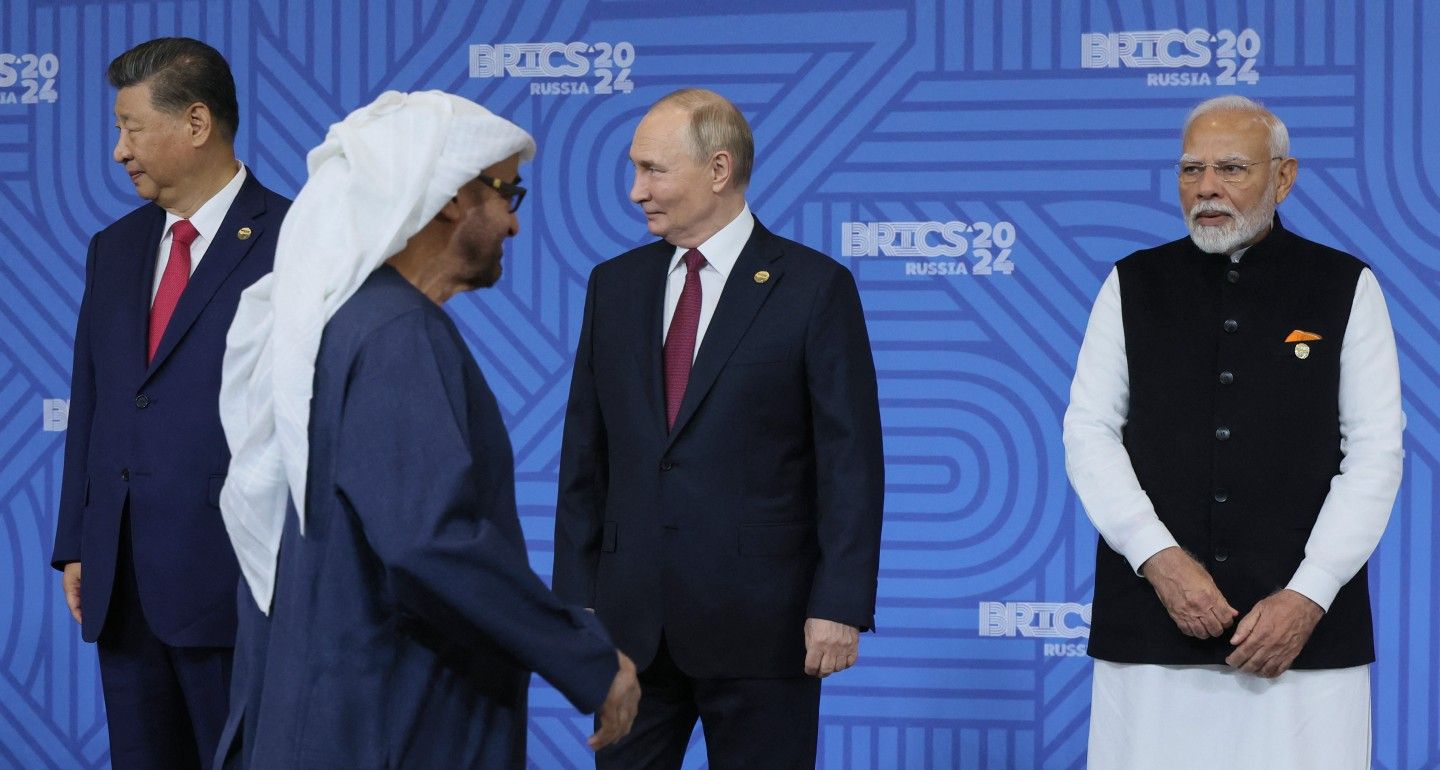
It might seem that within BRICS, Russia should be overshadowed by the giant economies of China and India, especially the former. Yet what is happening is almost the opposite, with Russia effectively taking over the leading role in the club.

Alexander Baunov

As Russia’s relationship with the West has deteriorated, the Kremlin’s view of the Taliban has changed. But substantive economic cooperation will be hard to achieve.

Ruslan Suleymanov
And how Russia’s war has upended ties in China, Turkey, and the Arctic.



Judy Dempsey, Alexander Gabuev, Rose Gottemoeller, …