

Commentary
Alexander Gabuev
{
  "authors": [
    "Alexander Gabuev"
  ],
  "type": "legacyinthemedia",
  "centerAffiliationAll": "",
  "centers": [
    "Carnegie Endowment for International Peace",
    "Carnegie Russia Eurasia Center"
  ],
  "collections": [
    "Pax Sinica"
  ],
  "englishNewsletterAll": "",
  "nonEnglishNewsletterAll": "",
  "primaryCenter": "Carnegie Endowment for International Peace",
  "programAffiliation": "",
  "programs": [],
  "projects": [],
  "regions": [
    "East Asia",
    "China",
    "Russia",
    "Western Europe"
  ],
  "topics": [
    "Foreign Policy"
  ]
}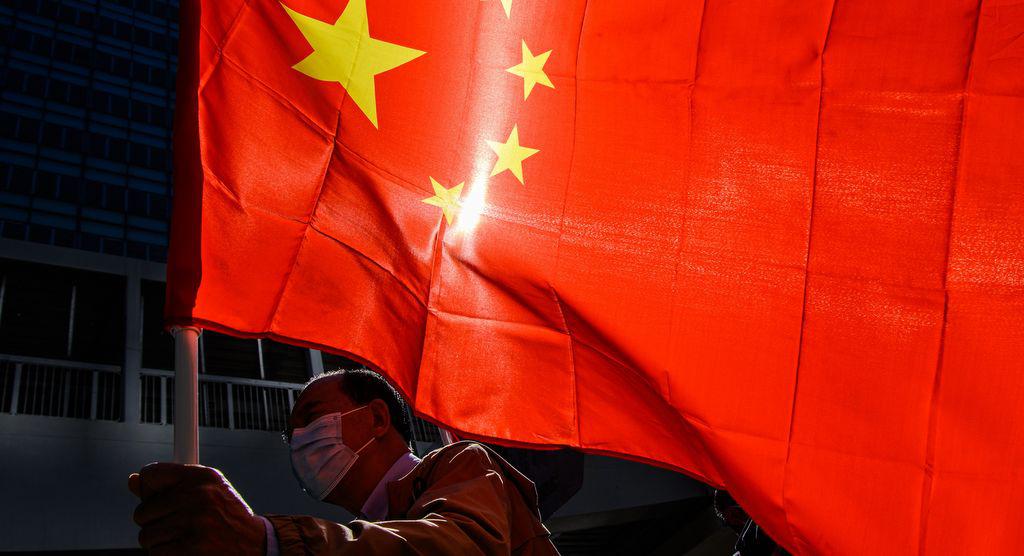
Source: Getty
Europe’s policy should start with a clear identification of those elements of Sino-Russian cooperation that are detrimental for EU’s interests and that whose direction it can influence.
Source: Berlin Pulse
As the transatlantic community enters a new political cycle following the US presidential election, rivalry among great powers looms increasingly large. Two players stand out as the most problematic for Europe. First, there is the familiar challenge of dealing with a belligerent Russia. Second, there is an increasingly assertive China. What is new is that these two challenges get ever more conflated. Beijing and Moscow are entering into a relationship that is also increasingly asymmetric, with the latter gradually becoming the junior partner. The emergence of a Sino-Russian axis as the backbone of Beijing-centred order in Eurasia – a Pax Sinica – has profound security and economic implications for Europe and Germany.
China and Russia have gradually deepened their ties over the last three decades. Since solving their territorial dispute in 2004, they share a need for peace along their 4,200 kilometres border – the alternative is too risky and too costly for two nuclear states. Then there is the natural economic complementarity between commodities-exporting Russia and a resources-hungry China. In addition, the two authoritarian regimes do not criticize each other for illiberalism at home, and they share a common agenda in global for a on issues like internet governance.
On top of that, both Beijing and Moscow are in confrontation with the West. Following the war in Ukraine and the introduction of western sanctions, Russia is increasingly looking to China for markets, technology and money. Meanwhile, Beijing taps Moscow’s support for the modernization of the People’s Liberation Army, and it looks at the Russian-led Eurasian Economic Union (EEU) as a testing ground for a geo-economic order dominated by Chinese technical standards. Chinese economic inroads into Russia are driven by the western sanctions. Ironically, they come at the expense of European, particularly German, businesses. For example, in 2016 China surpassed Germany as a major source of equipment and technology-related products in the Russian market, and in 2019 Russia imported nearly 2.5 times more in hi-tech products (US$30.8 billion) from China than from Germany.
The strengthening of the Sino-Russian axis is against western interests. First, resources provided by Russia to China, like the newest arms or help in fundamental research, boost Beijing’s assertive-ness. Second, with Moscow becoming increasingly dependent on Beijing, there is a risk of the two capitals starting to work in tandem in regions like eastern Europe or the Arctic, as well as to coordinate closely on matters affecting the global commons. Finally, Russia and the EEU becoming firmly embedded into Pax Sinica will help Beijing to extend its sphere of influence into continental Eurasia – and it will reduce Russia’s ability to maintain strategic autonomy and thus decrease its chances for a gradual political transformation in the future.
The European and German approach to the Pax Sinica challenge needs to be rooted in a clear-eyed look at Sino-Russian relations. Despite the growing asymmetry of these and rising concerns about it in the Russian elite and society, it is unrealistic to expect the Kremlin to turn its back on China in order to reset relations with the West. A pragmatic and friendly relationship with China is far too important for Russia’s security to trade it for some elusive gains with the West. At the same time, Russia’s disagreements with Europe are profound and there are no quick fixes for them on either side. Finally, Europe has a problem with regard to incentives since most of the sanctions against Russia are likely to remain for the foreseeable future. Still, in the Sino-Russian axis it is the Kremlin that wants to maintain strategic autonomy and independence from China, and that is why the West should direct its policy at Moscow.
Europe’s policy should start with a clear identification of those elements of Sino-Russian cooperation that are detrimental for EU’s interests and that whose direction it can influence. An honest internal discussion on the side effects of the sanctions is long overdue, and there should be careful consideration of future sanctions that could undermine western interests and push Russia deeper into China’s embrace at the same time (for example, a potential ban on selling European 5G equipment). Finally, Germany should play a leading role in keeping channels of communication with the Kremlin open, including on China. This dialogue, properly communicated to and supported by Germany’s allies, such as those in eastern Europe, is a tool of diplomacy, not a reward. Unfortunately, Russia’s counterproductive behaviour makes this strategy very difficult to execute, even with a transatlantic consensus appearing on the horizon.
This article was originally published in The Berlin Pulse, 2020

Director, Carnegie Russia Eurasia Center
Alexander Gabuev is director of the Carnegie Russia Eurasia Center. Gabuev’s research is focused on Russian foreign policy with particular focus on the impact of the war in Ukraine and the Sino-Russia relationship. Since joining Carnegie in 2015, Gabuev has contributed commentary and analysis to a wide range of publications, including the Financial Times, the New York Times, the Wall Street Journal, and the Economist.
Recent Work
Alexander Gabuev
Alexander Gabuev
Carnegie does not take institutional positions on public policy issues; the views represented herein are those of the author(s) and do not necessarily reflect the views of Carnegie, its staff, or its trustees.

Cargo traffic through Russia’s Northern Sea Route has increased because of the disruption caused by the conflict in the Middle East, the Ukraine war, and U.S.-China tensions.

Mikhail Korostikov
An analysis of traffic accident data suggests that Ukrainian drone attacks caused a material but not disastrous fall in Russian gasoline consumption over the summer.

Sergey Vakulenko

Sergei Kiriyenko used Russia’s parliamentary vote to further hone his strategy of corporate mobilization that is designed to maximize votes for United Russia.

Andrey Pertsev

The European far right might fail to steer EU policy in the direction Russia wants, but they will create enough chaos inside Europe to benefit the Kremlin.

Dimitar Bechev

Minsk clearly expected the dialogue with Washington to yield more results, in particular the lifting of EU sanctions and permission to export potash.

Artyom Shraibman