• Research
  • Politika
  • About
Carnegie Russia Eurasia center logoCarnegie lettermark logo
  • Donate
REQUIRED IMAGE
Book

Russia's Nuclear and Missile Complex: The Human Factor in Proliferation

Link Copied
Published on Mar 29, 2001

Additional Links

IntroductionPart I: The StudyMissile CitiesNuclear CitiesTable of Contents

Source: Washington, DC: Carnegie Endowment For International Peace, 2001

Study Commissioned by the Non-Proliferation Project

A new study commissioned by the Carnegie Endowment for International Peace provides the first detailed statistical glimpse inside the Russian nuclear and missile complexes. Authored by noted Russian social scientist Valentin Tikhonov, the report provides the results of extensive surveys performed in five Russian nuclear cities and three Russian missile enterprises, and paints the most complete picture yet available of the living and working conditions of Russia’s weapons experts. The results suggest an increasingly difficult situation, and illustrate the high potential that a significant percentage of Russia’s weapons experts might sell their services to would-be proliferators.

Cities surveyed for this report include the nuclear cities of Sarov, Snezhinsk, Seversk, Zarechniy, and Trekgorniy and the missile enterprises located in Miass, Votkinsk, and Korolev.

The report includes hundreds of statistics and facts on the working conditions of Russian nuclear and missile experts. Findings in the nuclear cities include:

  • More than 62% of employees earn less than $50 per month.
  • 58% of experts are forced to take 2nd jobs to earn money.
  • 89% of experts report a decline in living conditions since 1992.
  • 14% of experts would like to work outside of Russia.
  • 6% express interest in moving "any place at all."
  • One respondent stated "What does it matter, the main thing is that I should be paid money; after all, I will be working, not robbing or killing."

Findings in the missile enterprises include:

  • Between 40% -55% believe their salary is 2 to 3 times below what they should be paid.
  • 28% of surveyed experts are forced to take 2nd jobs to earn money.
  • 67% report a slight or severe decline in economic conditions since 1992
  • 25% of those surveyed would like to emigrate to another country and
  • 21% said they would work in the military complex of another country
Nuclear Policy

Carnegie does not take institutional positions on public policy issues; the views represented herein are those of the author(s) and do not necessarily reflect the views of Carnegie, its staff, or its trustees.

More Work from Carnegie Russia Eurasia Center

  • Commentary
    Carnegie Politika
    What Does Nuclear Proliferation in East Asia Mean for Russia?

    Troubled by the growing salience of nuclear debates in East Asia, Moscow has responded in its usual way: with condemnation and threats. But by exacerbating insecurity, Russia is forcing South Korea and Japan to consider radical security options.

      James D.J. Brown

  • Commentary
    Carnegie Politika
    For Putin, Increasing Russia’s Nuclear Threat Matters More Than the Triad’s Modernization

    For Putin, upgrading Russia’s nuclear forces was a secondary goal. The main aim was to gain an advantage over the West, including by strengthening the nuclear threat on all fronts. That made growth in missile arsenals and a new arms race inevitable.

      Maxim Starchak

  • Commentary
    Carnegie Politika
    Russia’s Latest Weapons Have Left Strategic Stability on the Brink of Collapse

    The Kremlin will only be prepared to negotiate strategic arms limitations if it is confident it can secure significant concessions from the United States. Otherwise, meaningful dialogue is unlikely, and the international system of strategic stability will continue to teeter on the brink of total collapse.

      Maxim Starchak

  • Commentary
    Carnegie Politika
    How the Kremlin Lost Trump

    The collapse of the Budapest summit is an inevitable result of the Russian system of artificially creating foreign policy crises in order to achieve a desired outcome.

      Alexander Baunov

  • Commentary
    Carnegie Politika
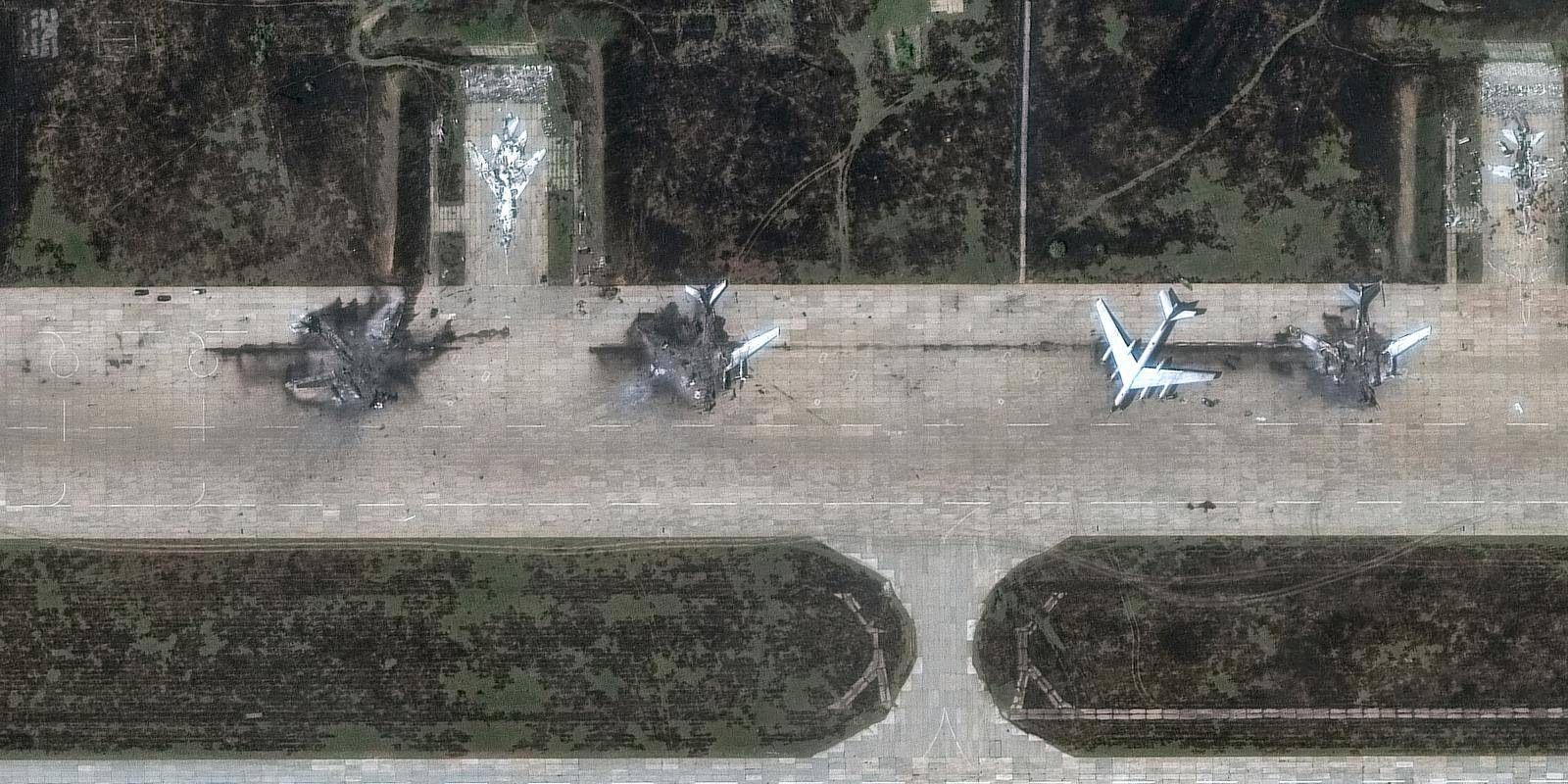
    Ukraine’s Drone Attack on Russia’s Strategic Aviation Has Broader Implications

    Russia could compensate for “nuclear losses” to its aviation by strengthening other elements of its nuclear triad. At a time when control mechanisms are not functioning, there is a risk of strategic uncertainty emerging over the development trajectory of Russia’s nuclear forces.

      Maxim Starchak

Get more news and analysis from
Carnegie Russia Eurasia Center
Carnegie Russia Eurasia logo, white
  • Research
  • Politika
  • About
  • Experts
  • Events
  • Contact
  • Privacy
  • For Media
Get more news and analysis from
Carnegie Russia Eurasia Center
© 2026 Carnegie Endowment for International Peace. All rights reserved.