

Commentary
Depleted financial reserves and a shrinking tax base mean it is no longer possible to simultaneously deliver high defense spending, price stability, and economic growth.
Alexandra Prokopenko

REQUIRED IMAGE
Source: Carnegie Endowment
Summary
For nearly two decades the Middle East and North Africa (MENA) has languished in economic stagnation and lassitude. At a time when the logic of market-driven reform and exportoriented growth has become nearly canonical worldwide, the MENA region has proven steadfastly unenthusiastic about reform, shutting itself out of the benefits of economic globalization and falling behind most other regions in economic development.
At the same time, the MENA region has distinguished itself by spurning another worldwide trend: democratization. As democracy has spread in Latin America, Central and Eastern Europe, Asia, and sub-Saharan Africa, the Middle East has remained largely authoritarian, experiencing at most only mild liberalizing political reforms. This dual resistance to world trends is intriguing and resurrects the question of the relationship between political and economic reform. Is this dual resistance to reform coincidental? And what does this resistance say about whether and how Western policy makers and aid practitioners should try to link or sequence their efforts to promote political and economic reform in the region?
Click on link above for the full text of this Carnegie Paper.
About the Author
Eva Bellin is associate professor in the Department of Political Science at Hunter College/City University of New York. An expert on the political economy of the Arab world, she is the author of Stalled Democracy: Capital, Labor, and the Paradox of State-Sponsored Development (Ithaca: Cornell University Press, 2002). She was previously associate professor in the Department of Government at Harvard University.
A limited number of print copies are available.
Request a copy
Eva Bellin
Carnegie does not take institutional positions on public policy issues; the views represented herein are those of the author(s) and do not necessarily reflect the views of Carnegie, its staff, or its trustees.

Depleted financial reserves and a shrinking tax base mean it is no longer possible to simultaneously deliver high defense spending, price stability, and economic growth.

Alexandra Prokopenko

This year’s wars have made alternative routes to transit through Russia no less risky for Central Asian countries.

Galiya Ibragimova

A much-discussed disagreement over internet restrictions in Russia was never an existential threat for Putin: It was about elite groups protecting their interests.
Alexandra Prokopenko

The demands of the Kremlin’s war in Ukraine, demographic problems, and public hostility toward Central Asians mean Russia does not have enough workers.

Salavat Abylkalikov
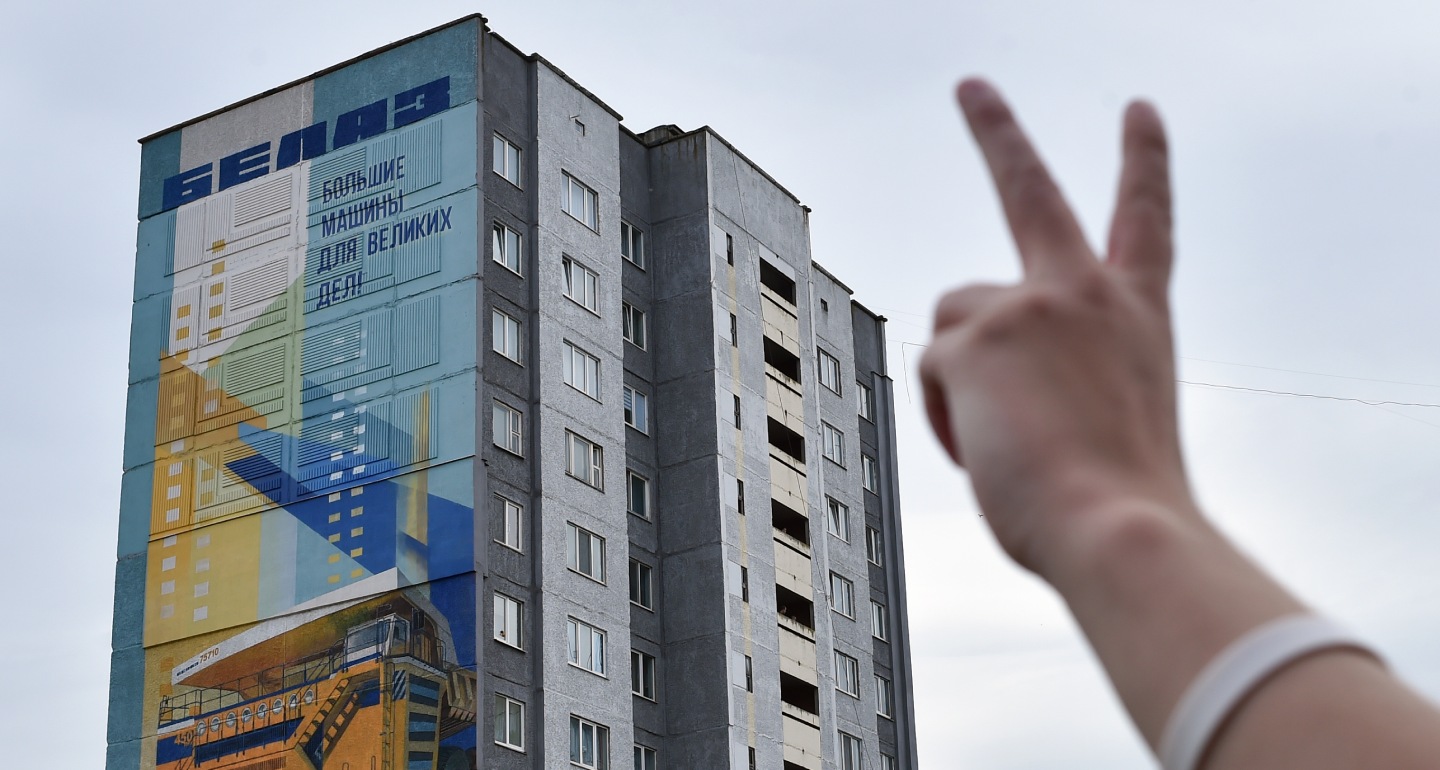
Minsk’s faith in the future of its larger neighbor’s economy is fading as Belarusian firms in Russia see record losses.

Olga Loiko