

In The Media
Martha Brill Olcott

Source: Getty
The ouster of Kyrgyz President Askar Akayev shows that popular expectations in the Asian states of the former Soviet Union are not appreciably different from those in the European ones. The United States and its OSCE partners must be prepared to provide Kyrgyzstan’s interim authorities with the technical assistance necessary to make these elections meet international norms.
The ouster of Kyrgyz President Askar Akayev shows that popular expectations in the Asian states of the former Soviet Union are not appreciably different from those in the European ones. For the third time in eighteen months seriously flawed elections have brought down the government in a CIS (Commonwealth of Independent States) state, and for the first time this has occurred east of the Urals.
The “tulip revolution” could prove to be the most remarkable of all, causing positive reverberations throughout a region that many had written off as lost from the point of view of building democratic societies. If the revolution is unsuccessful, it will not be because the masses in Central Asia failed to make the grade, but because the ruling elite in Kyrgyzstan managed to sabotage the process of political change.
For the last fifteen years the leaders of these Asian states have been warning the West that their populations were not ready for democracy, and that without the guidance of strong authority figures, the situation would degenerate into one of mob rule.
But there are encouraging signs that the “tulip revolution” could lead to the development of a democratic political system in Kyrgyzstan, something that was unlikely to have been the case had Askar Akayev been allowed to complete his term of office.
A first night of looting in the capital city of Bishkek was followed by a quick restoration of public order, with local volunteers helping to swell the ranks of security forces in street patrols. Public order has held in the southern part of the country, a densely populated region with a history of interethnic violence.
The bulk of the population seems either to support the ouster of Akayev, or at least is willing to reserve judgment until after the presidential elections (which the provisional government would like to hold on June 26) and the as-yet-unscheduled elections for a new parliament.
The greatest risk to stability is coming from the former president and his closest associates. In striking contrast to former Georgian President Eduard Shevernadze, Akayev still has not been willing to acknowledge his loss of power. Akayev fled the country, but continues to call on the population of Kyrgyzstan to restore constitutional order.
Akayev’s behavior gives credence to the opposition’s claim that the former physicist had no intention to leave office in October, when his term would have expired, and that he intended to use his newly elected “pocket parliament” to rewrite the constitution in order to allow him to remain as head of state.
Akayev’s actions during his last days in power exacerbated the challenges that Kyrgyzstan now confronts. Though Akayev already had lost control of the southern half of the country, he still went ahead and swore in the parliament chosen in the disputed elections. After Akayev fled, the country’s Supreme Court ruled the elections invalid, and acting President Bakiev has ordered the old parliament to remain in office until presidential elections are held. But on March 26 Kyrgyzstan’s central electoral commission ruled that the new parliament should serve in its place.
Both legislatures, the old two-house parliament and the newly elected one-house body, are dominated by Akayev loyalists, although opposition figures are certainly better represented in the former body than the latter one. Like the current one, the previous parliamentary election held five years ago was criticized by the Organization for Security and Cooperation in Europe (OSCE) as having failed to meet international norms of fairness and transparency.
But many of the newly elected deputies spent small fortunes--theirs or those of political associates--to secure their mandates; they do not want to lose the political influence they thought that they had managed to obtain. This will make negotiations on the holding of new parliamentary elections very difficult to conclude. The situation is further complicated by the fact that the new one-house parliament also has enhanced legal authority in comparison to its two-house predecessor.
OSCE officials and legal experts are now on hand to help the Kyrgyz elite negotiate a solution. But in a political environment in which power politics can trump rule of law, a solution would be greatly facilitated if Akayev were to formally resign. Feliks Kulov, now in charge of the organs of state security, has promised that if Akayev resigns, he could return home and be safe from prosecution. And this is a guarantee being offered by the one politician that Akayev sent to prison; Kulov was released on March 24, five years into a ten-year term.
Akayev seems certain to be refused foreign assistance in any attempted restoration of power. Fearful of losing yet another strategic partner, Russia’s President Vladimir Putin has already exchanged greetings with acting President Kurmanbek Bakiev. Bakiev, as well as his newly appointed foreign minister Roza Otunbayeva, have reassured Moscow that they plan to continue Kyrgyzstan’s tradition of close cooperation with Russia. Both had made sure to travel to Moscow in the lead-up to Kyrgyzstan’s disputed parliamentary elections.
Kyrgyzstan’s neighbors, however, remain nervous. From the point of view of Kazak, Uzbek and Tajik rulers, no good can come out of the situation in this border state. Democratic rule in Kyrgyzstan would put their authoritarian regimes at risk, and these men have all been reluctant--to varying degrees to be sure--to support the development of democratic institutions in their countries.
But if the situation in Kyrgyzstan fails to stabilize, the fears of these men could be warranted. Violence in one Central Asian state has inevitable repercussions throughout the region. All remember how long it took to resolve the civil war in Tajikistan (from 1992 to 1997) and, though few like to admit it, the genesis of that conflict was a struggle for power among competing elite groups.
The current danger in Kyrgyzstan comes not from its masses. It comes from a fractious and potentially greedy elite. The solution in Kyrgyzstan is clear: the ousted president should formerly resign, clearing the way for presidential elections and the eventual restaging of the flawed parliamentary elections.
Obviously there must be an interlude to allow people to catch their breath and discuss how power will be shared among the various governing bodies. But the next set of elections must be free, fair and held in a timely enough fashion to convince the population that they have not been short-changed. Otherwise there is the risk that they will once again take to the streets in protest.
The United States and its OSCE partners must be prepared to provide Kyrgyzstan’s interim authorities with the technical assistance necessary to make these elections meet international norms. These efforts must reach down into the most remote communities, accomplished through aid grants, not loans to an already debt-stricken nation. Assistance also must be offered in a spirit of geopolitical non-partisanship, so that the resulting transfer of power is not undermined by charges of international meddling.
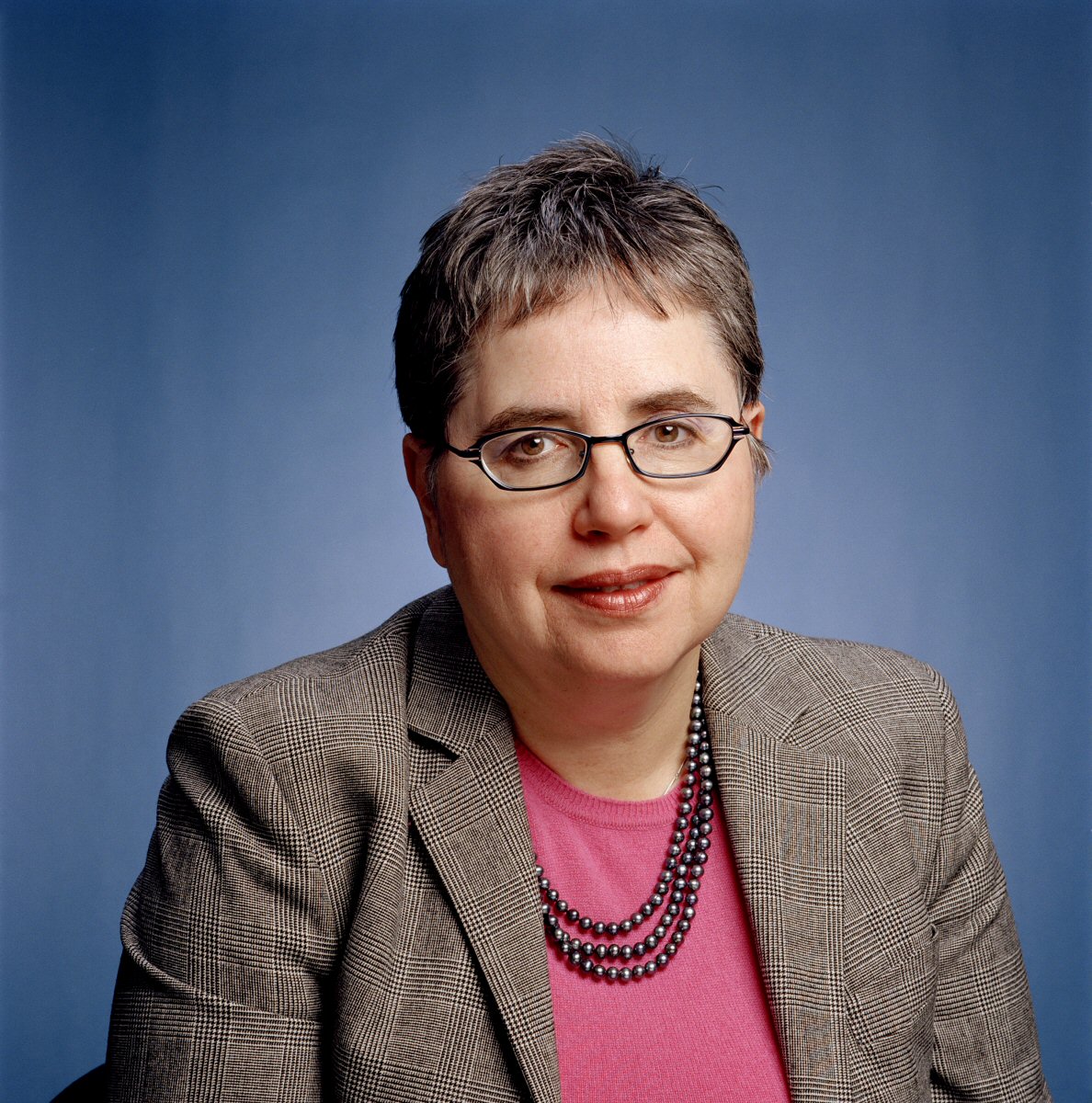
Former Senior Associate, Russia and Eurasia Program and, Co-director, al-Farabi Carnegie Program on Central Asia
Olcott is professor emerita at Colgate University, having taught political science there from 1974 to 2002. Prior to her work at the endowment, Olcott served as a special consultant to former secretary of state Lawrence Eagleburger.
Recent Work
Martha Brill Olcott
Martha Brill Olcott
Carnegie does not take institutional positions on public policy issues; the views represented herein are those of the author(s) and do not necessarily reflect the views of Carnegie, its staff, or its trustees.

Japan’s long-term security policy is driven by concerns about China, and there is little appetite for (or interest in) pursuing a confrontation with Moscow.

James D.J. Brown

Putin’s conservative staffing policies and search for ever greater control have cemented parliament’s transformation into a bureaucratic appendage of the executive branch.

Andrey Pertsev

Without a ceasefire with Ukraine on attacking each other’s energy infrastructure—to which the Kremlin is unlikely to agree—the diesel agreement between Putin and Trump is largely for show, rather than representing a genuine increase in the volumes of Russian diesel on the global market.

Sergey Vakulenko

Russian strikes are weakening the economy sustaining Ukraine’s war effort. Closing the growing funding gap will require more European support and politically contentious reforms in Kyiv.

Balázs Jarábik

Ex-president Gurbanguly Berdimuhamedov remains interested in politics, but his son Serdar, Turkmenistan’s current president, is becoming increasingly independent and willing to break with his father’s legacy. If their covert rivalry goes too far, both risk losing power.

Galiya Ibragimova