

Commentary
The European far right might fail to steer EU policy in the direction Russia wants, but they will create enough chaos inside Europe to benefit the Kremlin.
Dimitar Bechev
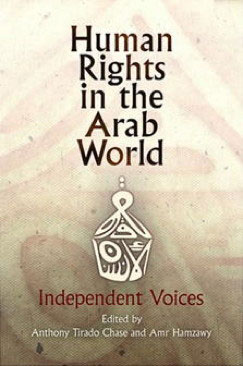
Human Rights in the Arab World: Independent Voices offers perspectives from those at the forefront of research and debate at the intersection of human rights and Islam, globalization, transnational advocacy, and the politics of key states such as Egypt, Morocco, and Yemen.
Source: University of Pennsylvania Press

Why have human rights been marginalized in the Arab world? How do we gauge the relevance of human rights in the region, given the political, social, and economic context? What are the practical and theoretical obstacles to the implementation of these rights?
Human Rights in the Arab World: Independent Voices offers perspectives from those at the forefront of research and debate at the intersection of human rights and Islam, globalization, transnational advocacy, and the politics of key states such as Egypt, Morocco, and Yemen. Some chapters provide essential historical background to current political realities, while others consider ways to confront this region's practical and theoretical challenges to human rights. By placing the question of human rights in the often tragic context of Arab politics, the very real stakes are made clear.
This book is available from University of Pennsylvania Press. To order the book from Penn Press, please click here.
Amr Hamzawy is Senior Associate at the Democracy and Rule of Law Project, Carnegie Endowment for International Peace.
Anthony Chase teaches in the Department of Diplomacy and World Affairs at Occidental College.

Director, Middle East Program
Amr Hamzawy is a senior fellow and the director of the Carnegie Middle East Program. His research and writings focus on Egypt’s and other middle powers’ involvement in regional security in the Middle East, particularly through collective diplomacy and multilateral conflict resolution
Anthony Chase
Carnegie does not take institutional positions on public policy issues; the views represented herein are those of the author(s) and do not necessarily reflect the views of Carnegie, its staff, or its trustees.

The European far right might fail to steer EU policy in the direction Russia wants, but they will create enough chaos inside Europe to benefit the Kremlin.

Dimitar Bechev

If the Russian-speaking community in Latvia cannot articulate their interests without being seen as disloyal, they could end up embracing a pro-Kremlin agenda.

Sergejs Potapkins

Russia’s ruling party would have benefited from Putin appearing as its distant patron, but as an active frontman imposing his views on the public, he has done nothing but harm both the party’s election campaign and the ruling system overall.

Andrey Pertsev

Depleted financial reserves and a shrinking tax base mean it is no longer possible to simultaneously deliver high defense spending, price stability, and economic growth.

Alexandra Prokopenko

In the tenth year of his presidency, President Mirziyoyev’s system is becoming even more personalized than that of his predecessor Karimov.

Galiya Ibragimova