

Commentary
If the Russian-speaking community in Latvia cannot articulate their interests without being seen as disloyal, they could end up embracing a pro-Kremlin agenda.
Sergejs Potapkins

REQUIRED IMAGE
In a region dominated by single-party authoritarian regimes, some experts concluded that the opposition's success in the Yemeni 2006 presidential election marked major democratic reform. But did the election truly indicate a shift toward substantial political reform, or was the regime simply allowing minor electoral freedoms while seeking to maintain the status quo?
Yemeni democratic reform was lauded following the 2006 presidential election when a credible opposition candidate captured 22 percent of the vote. In a region dominated by single-party authoritarian regimes, some experts concluded that the opposition’s success made this the most significant election in the Middle East. But did the election truly indicate a shift toward substantial political reform, or was the regime simply allowing minor electoral freedoms while seeking to maintain the status quo? What can outsiders do to help facilitate democratic reforms in Yemen?
In this Carnegie Paper, Evaluating Political Reform in Yemen, Sarah Phillips, a specialist on Yemeni politics, assesses the significance of Yemen’s limited democratic reforms since national unification and recommends steps that Yemeni and foreign actors can take to promote more meaningful reform.
Phillips contends that the regime has built its political survival on the same system that could undermine its future. If Yemen is to remain a viable state, aggressive political and economic reform must weaken the current patronage system and the legal inconstancies that stem from it—which Phillips believes are the biggest obstacles to reform.
The Yemeni government’s need for international donors opens up opportunities for foreign governments to influence further reform. “If significant political changes are to occur in Yemen, it is primarily for the Yemeni regime to choose. However, the West should still apply consistent pressure in this direction and work to build the capacity of domestic actors who share this goal,” says Phillips.
Click on icon above for the full text of this Carnegie Paper.
A limited number of print copies of this Carnegie Paper are available.
Request a copy
About the Author
Sarah Phillips is a Ph.D. candidate at the Centre for Arab and Islamic Studies, Australian National University, where she taught Arab politics. She is currently working as a consultant on regional stability and political reform dynamics, and is preparing a book manuscript from her doctoral research. Phillips specializes in Yemeni politics, political participation, democratization and reform in the Arab world, and the role of Islamists in these processes.
Sarah Phillips
Carnegie does not take institutional positions on public policy issues; the views represented herein are those of the author(s) and do not necessarily reflect the views of Carnegie, its staff, or its trustees.

If the Russian-speaking community in Latvia cannot articulate their interests without being seen as disloyal, they could end up embracing a pro-Kremlin agenda.

Sergejs Potapkins

Russia’s ruling party would have benefited from Putin appearing as its distant patron, but as an active frontman imposing his views on the public, he has done nothing but harm both the party’s election campaign and the ruling system overall.

Andrey Pertsev

In the tenth year of his presidency, President Mirziyoyev’s system is becoming even more personalized than that of his predecessor Karimov.

Galiya Ibragimova

The greater threat to Zelensky comes not from Fedorov alone, but from the convergence between the former defense minister’s political campaign and the anti-corruption investigations moving ever closer to the presidential administration.

Balázs Jarábik
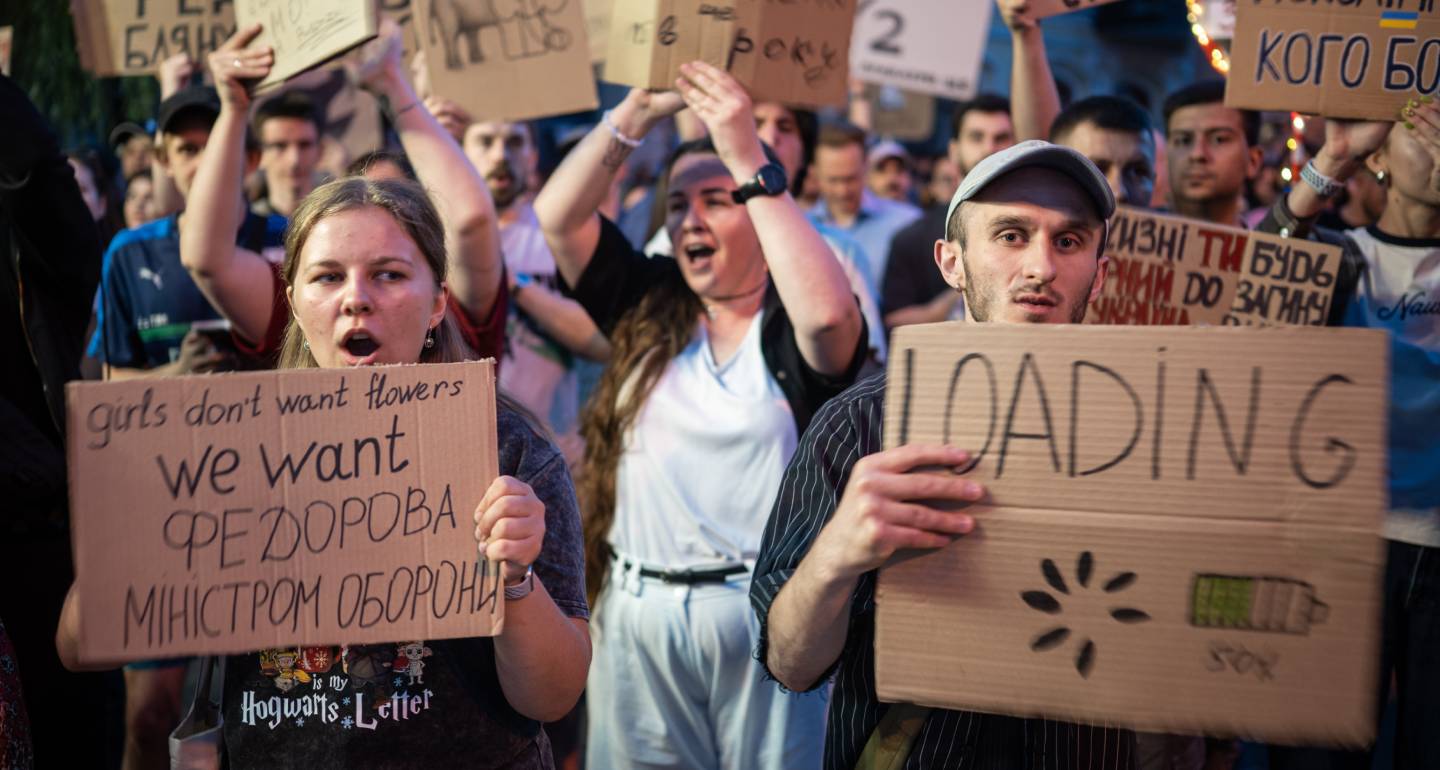
With his public call for new elections in Ukraine, ex-defense minister Mykhailo Fedorov has opened Pandora’s box.

Konstantin Skorkin