• Research
  • Politika
  • About
Carnegie Russia Eurasia center logoCarnegie lettermark logo
  • Donate
What Should We Expect from India as a Strategic Partner?
Book

What Should We Expect from India as a Strategic Partner?

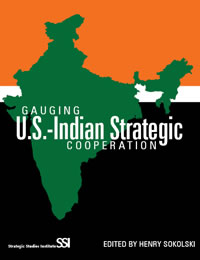
In his chapter, "What Should We Expect from India as a Strategic Partner?" Ashley J. Tellis analyzes the historical "sine wave" nature of the U.S.-India relationship and outlines the value and practical consequences of the transforming bilateral relationship.

Link Copied
By Ashley J. Tellis
Published on Mar 1, 2007

Additional Links

Chapter by Ashley J. Tellis (pdf)

Source: Strategic Studies Institute

In his chapter, "What Should We Expect from India as a Strategic Partner?" in Henry Sokolski (ed.), Gauging U.S.-Indian Strategic Cooperation (Strategic Studies Institute, March 2007), Carnegie Senior Associate Ashley J. Tellis analyzes the historical "sine wave" nature of the U.S.-India relationship and outlines the value and practical consequences of the transforming bilateral relationship. Touching on various aspects of U.S.-Indian strategic collaboration, he argues that bilateral cooperation between Washington and New Delhi is "eminently possible" on many issues vital to U.S. interests in Asia and the world.

Please click on the link to the right to read the full text of his chapter.

About the Author

Ashley J. Tellis

Former Senior Fellow

Ashley J. Tellis was a senior fellow at the Carnegie Endowment for International Peace.

    Recent Work

  • Paper
    Multipolar Dreams, Bipolar Realities: India’s Great Power Future

      Ashley J. Tellis

  • Commentary
    India Sees Opportunity in Trump’s Global Turbulence. That Could Backfire.

      Ashley J. Tellis

Ashley J. Tellis
Former Senior Fellow
North AmericaUnited StatesSouth AsiaIndiaForeign PolicyNuclear Policy

Carnegie does not take institutional positions on public policy issues; the views represented herein are those of the author(s) and do not necessarily reflect the views of Carnegie, its staff, or its trustees.

More Work from Carnegie Russia Eurasia Center

  • Commentary
    Carnegie Politika
    Why Are China and Russia Not Rushing to Help Iran?

    Most of Moscow’s military resources are tied up in Ukraine, while Beijing’s foreign policy prioritizes economic ties and avoids direct conflict.   

      • Alexander Gabuev

      Alexander Gabuev, Temur Umarov

  • Commentary
    Carnegie Politika
    Georgia’s Fall From U.S. Favor Heralds South Caucasus Realignment

    With the White House only interested in economic dealmaking, Georgia finds itself eclipsed by what Armenia and Azerbaijan can offer.

      Bashir Kitachaev

  • Commentary
    Carnegie Politika
    What Does War in the Middle East Mean for Russia–Iran Ties?

    If the regime in Tehran survives, it could be obliged to hand Moscow significant political influence in exchange for supplies of weapons and humanitarian aid.

      Nikita Smagin

  • Commentary
    Carnegie Politika
    How Trump’s Wars Are Boosting Russian Oil Exports

    The interventions in Iran and Venezuela are in keeping with Trump’s strategy of containing China, but also strengthen Russia’s position.

      • Mikhail Korostikov

      Mikhail Korostikov

  • Commentary
    Carnegie Politika
    How Far Can Russian Arms Help Iran?

    Arms supplies from Russia to Iran will not only continue, but could grow significantly if Russia gets the opportunity.

      Nikita Smagin

Get more news and analysis from
Carnegie Russia Eurasia Center
Carnegie Russia Eurasia logo, white
  • Research
  • Politika
  • About
  • Experts
  • Events
  • Contact
  • Privacy
Get more news and analysis from
Carnegie Russia Eurasia Center
© 2026 Carnegie Endowment for International Peace. All rights reserved.