

Article
Frederic Grare

Source: Getty
In attempting to hold on to power at any cost, Pervez Musharraf has alienated Pakistanis and precipitated a political crisis that could reverberate throughout the region. But in this unseemly effort the Pakistani president has found an important ally—the Bush administration.
In attempting to hold on to power at any cost, Pervez Musharraf has alienated Pakistanis and precipitated a political crisis that could reverberate throughout the region. But in this unseemly effort the Pakistani president has found an important ally—the Bush administration.
To be sure, the administration has publicly voiced demands that Musharraf end the emergency, organize elections, and take off his army uniform. But at the same time, it is quietly accepting Musharraf’s coup as a fait accompli. The end of the state of emergency will not mean restoring the Supreme Court and its chief justice to power. It will mean implicitly accepting the fiction of Musharraf’s election as president of Pakistan.
The Bush administration believes that it needs the cooperation of the Pakistani military in the “war on terror” and in its anti-Taliban operations and it has bought Musharraf’s argument that he staged the coup in order to protect the military and to enable the anti-terrorist operations to continue. But this is simply not true. Musharraf staged a coup in order to retain his own personal power over Pakistan. And by helping him do so, the United States is pursuing a policy that could undermine Pakistan’s cooperation in the war on terror.
Indeed, the Bush administration’s policies make no sense at all. By backing Musharraf’s attempt to remain in power but insisting that he take off his uniform, the United States is potentially weakening Musharraf, who has no significant constituency outside the army, to the extent that he would no longer be an effective instrument of American policy. By doing this, it would also incur the distrust of the Pakistani establishment without improving its democratic credentials. Securing his presidency in this manner will only postpone the issue of legitimacy that his regime has faced for the past six months. The current crisis cannot be blamed on the former Chief Justice Iftikar Chaudry, who by simply doing his job had become too much of an embarrassment for many people in and out of Pakistan.
Perhaps Musharraf will weather this crisis. But the consequences of his remaining in power could prove even worse than his disappearance from the political scene. Because his main opposition comes from the liberal branch of society, his political survival will depend on its ability to silence it. Silencing opposition will allow radical voices to dominate the public space. Indeed, the political crisis of the past six month has been misunderstood. The same liberal forces that oppose Musharraf because he is a military dictator supported him when he moved against the radicals who had found refuge in the Red Mosque in Islamabad. These liberals support democracy and reject Islamic radicalism. By suppressing them, Musharraf will make it more difficult to mobilize the population in the fight against terrorism. And mainstream politicians of every affiliation will be increasingly uneasy about cooperating with the United States.
The present situation offers Washington a unique opportunity to help a smooth and gradual transition toward a more effective and representative government that could aid the United States in the war on terror while maintaining its control over Pakistan’s nuclear weapons. Indeed, no civilian government, nor the Pakistani army, for that matter, will question the need to maintain strong links and cooperation with the United States. How can this opportunity be seized?
It’s clear what the United States should not try to do. It should not try to work out a backroom deal with either Musharraf or his potential successors. Such deals will inevitably be rejected by the Pakistani people. The solution lies in the restoration of both the Pakistani constitutional process and the Supreme Court. That should be the primary demand of the international community. Everything else, including the restoration of a level playing field for all political parties, will follow.
For sure Pakistan will not become a Jeffersonian democracy overnight. What can reasonably be expected is at best something close to the 1988 situation, when the army voluntarily decided to withdraw behind the scenes while continuing to manipulate the game. This would offer the potential for opening up new political space. It would then be up to the Pakistanis themselves to gradually develop the structural reforms that will put Pakistan back on track. In this process, Washington’s best course of action would be to remove its support for the Musharraf regime.
Former Nonresident Senior Fellow, South Asia Program
Frédéric Grare was a nonresident senior fellow at the Carnegie Endowment for International Peace, where his research focuses on Indo-Pacific dynamics, the search for a security architecture, and South Asia Security issues.
Recent Work
Frederic Grare
Frederic Grare
Carnegie does not take institutional positions on public policy issues; the views represented herein are those of the author(s) and do not necessarily reflect the views of Carnegie, its staff, or its trustees.

Depleted financial reserves and a shrinking tax base mean it is no longer possible to simultaneously deliver high defense spending, price stability, and economic growth.

Alexandra Prokopenko

In the tenth year of his presidency, President Mirziyoyev’s system is becoming even more personalized than that of his predecessor Karimov.

Galiya Ibragimova

With the growth in points of friction between the great powers, organizations like the SCO will continue to play a role in the strategic adaptation of the smaller powers caught between them.

Temur Umarov
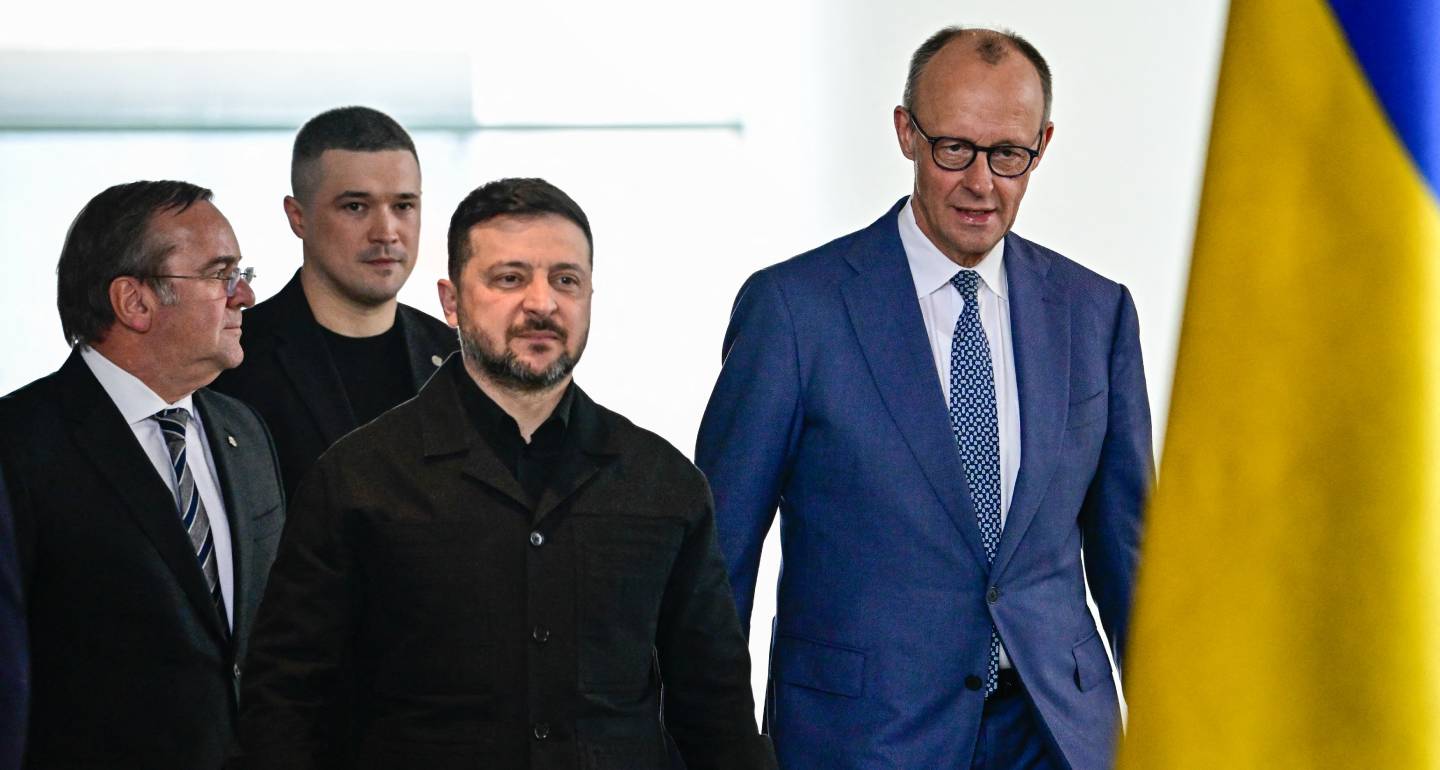
The greater threat to Zelensky comes not from Fedorov alone, but from the convergence between the former defense minister’s political campaign and the anti-corruption investigations moving ever closer to the presidential administration.

Balázs Jarábik
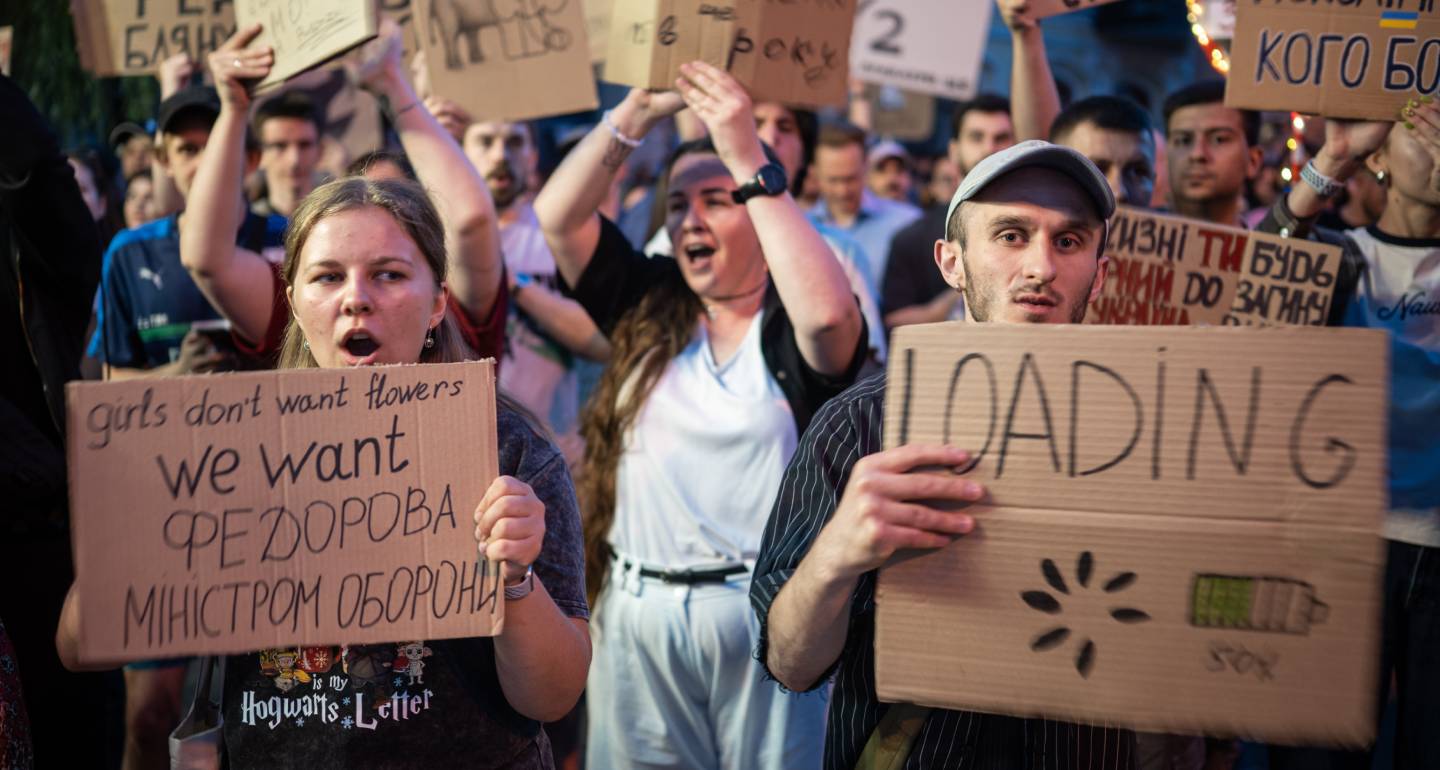
With his public call for new elections in Ukraine, ex-defense minister Mykhailo Fedorov has opened Pandora’s box.

Konstantin Skorkin