

With the White House only interested in economic dealmaking, Georgia finds itself eclipsed by what Armenia and Azerbaijan can offer.
Bashir Kitachaev
Source: Getty
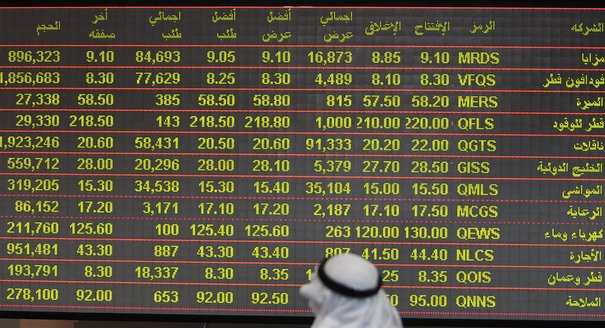
Rethinking the wisdom of relying on unstable Western economies for growth, the Arab world is increasingly focused on the diversification of its own economies.
Western political and economic leaders, seeking desperately needed capital for their faltering economies, have put aside many of their concerns over Arab sovereign wealth funds (SWFs). But the Arab world is questioning the wisdom of building its financial future on the shaky foundations of Western economies, and increasingly focusing on the development and diversification of its own economies.
In this Carnegie Paper, produced in cooperation with the Arab Reform Initiative, editors Sven Behrendt and Bassma Kodmani, and a group of Arab economists, discuss the economic, political, and social influences that will determine Arab funds’ investment behavior in the years to come.
Key points:
Behrendt concludes:
“Moving forward, the investment strategies of Arab SWFs will most likely be based on a more holistic approach. Ideally, this would include taking into account the long-term financial needs of their societies, the long-term development and diversification strategies of their economies, as well as the long-term opportunities of select industries to serve in global markets in transition.”
Former Visiting Scholar, Middle East Center
Behrendt is an expert in global issues, international negotiations, conflict resolution, and corporate strategy. He previously served at the World Economic Forum in various management positions.
Bassma Kodmani
Carnegie does not take institutional positions on public policy issues; the views represented herein are those of the author(s) and do not necessarily reflect the views of Carnegie, its staff, or its trustees.
With the White House only interested in economic dealmaking, Georgia finds itself eclipsed by what Armenia and Azerbaijan can offer.
Bashir Kitachaev
The Russian army is not currently struggling to recruit new contract soldiers, though the number of people willing to go to war for money is dwindling.
Dmitry Kuznets
What should happen when sanctions designed to weaken the Belarusian regime end up enriching and strengthening the Kremlin?
Denis Kishinevsky
Geological complexity and years of mismanagement mean the Venezuelan oil industry is not the big prize officials in Moscow and Washington appear to believe.
Sergey Vakulenko
The paradox of the European Commission’s decision is that the main victims will not be those it formally targets. Major Russian businesses associated with the Putin regime have long adapted to sanctions with the help of complex schemes involving third countries, offshore companies, and nonpublic entities.
Alexandra Prokopenko







