

Commentary
Putin’s conservative staffing policies and search for ever greater control have cemented parliament’s transformation into a bureaucratic appendage of the executive branch.
Andrey Pertsev
Source: Getty
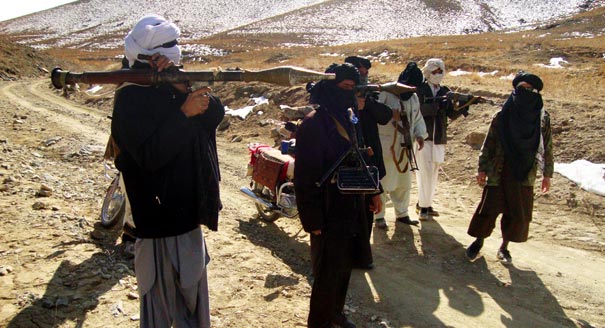
Afghanistan's hybrid form of governance, which draws on a mix of formal institutions and warlord-administered informal power, may be the only viable model for Afghanistan at present.
Afghanistan’s weak central government and limited resources make the informal networks employed by local warlords a viable option for governance. The country’s former warlords, made powerful governors by President Hamid Karzai, use both formal and informal powers to achieve security objectives and deliver development in their provinces.
Based on substantial in-country research and interviews, Dipali Mukhopadhyay examines the performance of two such governors, Atta Mohammed Noor and Gul Agha Sherzai, who govern the northern province of Balkh, and the eastern province of Nangarhar, respectively.
Key points:
Mukhopadhyay concludes:
“A ‘good enough’ governor, who can demonstrate success in counternarcotics, security, and economic and infrastructural development, becomes a valuable asset in the absence of unlimited resources, troops, and political will,” writes Mukhopadhyay. “Acknowledgment of hybrid governance need not mean the abandonment of formal institutional capacity building on the part of international, intervening organizations. Rather, they must adopt more realistic expectations of formal institutions.”
For a longer version of the arguments put forward in this paper, see Warlords, Strongman Governors, and the State in Afghanistan by Dipali Mukhopadhyay, available at http://www.amazon.com/Warlords-Strongman-Governors-State-Afghanistan/dp/1107023920.
Dipali Mukhopadhyay
Carnegie does not take institutional positions on public policy issues; the views represented herein are those of the author(s) and do not necessarily reflect the views of Carnegie, its staff, or its trustees.

Putin’s conservative staffing policies and search for ever greater control have cemented parliament’s transformation into a bureaucratic appendage of the executive branch.

Andrey Pertsev

Without a ceasefire with Ukraine on attacking each other’s energy infrastructure—to which the Kremlin is unlikely to agree—the diesel agreement between Putin and Trump is largely for show, rather than representing a genuine increase in the volumes of Russian diesel on the global market.

Sergey Vakulenko

Ex-president Gurbanguly Berdimuhamedov remains interested in politics, but his son Serdar, Turkmenistan’s current president, is becoming increasingly independent and willing to break with his father’s legacy. If their covert rivalry goes too far, both risk losing power.

Galiya Ibragimova

Despite a new textbook, an influx of Russian teachers and managers, and an end to the teaching of Ukrainian, the Kremlin is unlikely to have “reprogrammed” locals.

Konstantin Skorkin

Cargo traffic through Russia’s Northern Sea Route has increased because of the disruption caused by the conflict in the Middle East, the Ukraine war, and U.S.-China tensions.

Mikhail Korostikov