• Research
  • Politika
  • About
Carnegie Russia Eurasia center logoCarnegie lettermark logo
  • Donate
At Last, Iraqi Lawmakers Agree on the 2010 Election Law

Source: Getty

Article

At Last, Iraqi Lawmakers Agree on the 2010 Election Law

On December 6, 2009, the Iraqi parliament finally passed an election law for the 2010 elections. The law deals with the most controversial issues regarding the election.

Link Copied
Published on Dec 14, 2009

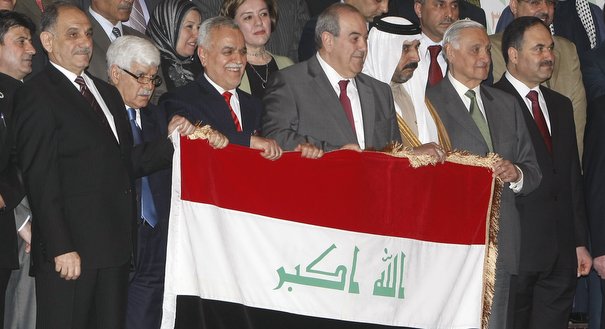
On Sunday, December 6, 2009, the Iraqi parliament finally passed an election law for the 2010 elections. The Presidency Council swiftly approved the measure, the result of sensitive negotiations among Iraq’s top legislators.

 The most controversial issues were the distribution of parliamentary seats among provinces, and the number and distribution of minority and compensatory seats, which are apportioned to parties too small to win election in any single province, but that win a large enough share of the national vote to earn a seat in parliament.
  • The 325-seat parliament will consist of 310 seats for the provinces, eight seats for minority groups, and seven compensatory seats.
     
  • Provincial seats will be distributed on the basis of the 2005 Ministry of Trade’s population numbers (based on food ration cards), with 2.8% population growth added for all provinces. 
     
  • Iraqis living abroad will vote for representatives of their home provinces, with no special status attributed to them.
     
  • Minority seats will be distributed as follows: five Christian seats will be contested within a single national district reserved for Christians. In addition, Yazidis will have one reserved seat in Nineveh, Saibis one in Baghdad, and Shabakis one in Nineveh. 
     
  • The seven remaining compensatory seats will be distributed among parties that fare well on the national level but do not gain any seats on the provincial level
 
Province2005 Elections2010 Elections
Baghdad5968
Nineveh1931
Basra1624
Dhi Qar1218
Babil1116
Sulaymaniya 1517
Anbar 914
Irbil 1314
Diyala 1013
Kirkuk 912
Salahaddin 812
Najaf 812
Wasit 811
Qadisiyah 811
Maysan710
Dohuk 710
Karbala 610
Muthanna 57
Compensatory Seats4515
Total275325
IraqPolitical ReformDemocracy

Carnegie does not take institutional positions on public policy issues; the views represented herein are those of the author(s) and do not necessarily reflect the views of Carnegie, its staff, or its trustees.
More Work from Carnegie Russia Eurasia Center

  • Commentary
    Carnegie Politika
    The Kremlin Is Destroying Its Own System of Coerced Voting

    The use of technology to mobilize Russians to vote—a system tied to the relative material well-being of the electorate, its high dependence on the state, and a far-reaching system of digital control—is breaking down.

      Andrey Pertsev

  • Commentary
    Carnegie Politika
    Notes From Kyiv: Is Ukraine Preparing for Elections?

    As discussions about settlement and elections move from speculation to preparation, Kyiv will have to manage not only the battlefield, but also the terms of political transition. The thaw will not resolve underlying tensions; it will only expose them more clearly.

      Balázs Jarábik

  • Commentary
    Carnegie Politika
    Where Does the Split in the Ruling Tandem Leave Kyrgyzstan?

    Despite its reputation as an island of democracy in Central Asia, Kyrgyzstan appears to be on the brink of becoming a personalist autocracy.

      Temur Umarov

  • Commentary
    Carnegie Politika
    In Uzbekistan, the President’s Daughter Is Now His Second-in-Command

    Having failed to build a team that he can fully trust or establish strong state institutions, Mirziyoyev has become reliant on his family.

      Galiya Ibragimova

  • Commentary
    Carnegie Politika
    Japan’s “Militarist Turn” and What It Means for Russia

    For a real example of political forces engaged in the militarization of society, the Russian leadership might consider looking closer to home.

      James D.J. Brown

Get more news and analysis from
Carnegie Russia Eurasia Center
Carnegie Russia Eurasia logo, white
  • Research
  • Politika
  • About
  • Experts
  • Events
  • Contact
  • Privacy
Get more news and analysis from
Carnegie Russia Eurasia Center
© 2026 Carnegie Endowment for International Peace. All rights reserved.