

Commentary
If the Russian-speaking community in Latvia cannot articulate their interests without being seen as disloyal, they could end up embracing a pro-Kremlin agenda.
Sergejs Potapkins
Source: Getty
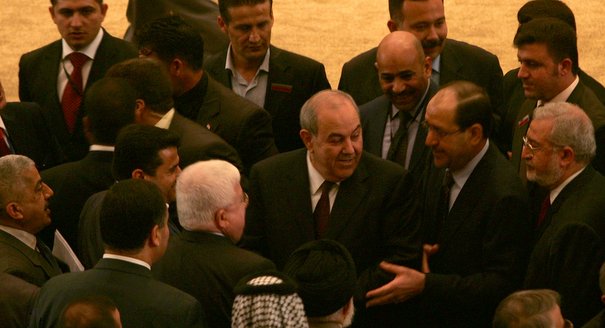
Moqtada al-Sadr’s decision to support Nouri al-Maliki’s quest for a second term as Iraqi prime minister has given new impetus to negotiations over the formation of a new government but it has not solved any of the underlying obstacles preventing the creation of a politically viable government.
The announcement on October 1 that Moqtada al-Sadr had decided to support Nouri al-Maliki’s quest for a second term as prime minister has given rise to expectations that Iraq is about to break the impasse that has prevented the formation of a new government for over six months. In reality, the expectations are premature. Sadr’s support makes it easier for Maliki to gain the numerical majority in parliament he needs to form a government, but is not sufficient to produce a politically viable alliance. The problem today is the same that has prevented the formation of a new government all along: a politically viable government needs the backing of Shi’i, Sunni, and Kurdish parties. Securing an agreement between Prime Minister Maliki and Iraqiya leader Awad Allawi, who has come to represent the Sunni vote, remains as difficult as ever. Furthermore, all major parties and coalitions are divided internally, with different factions issuing contradictory statements.
Although Maliki and his supporters in the State of Law coalition continue to express optimism that the formation of a government is imminent, other parties are skeptical. In particular, high-ranking representatives of the Islamic Supreme Council (ISCI) and the Kurdistan Alliance, Adel Abdul Mahdi and Roz Nouri Shaweis, respectively, have expressed their belief that a functioning government was still far from reach, with negotiations possibly extending into the new year. Both ISCI and the Kurdish Alliance are working toward the formation of a government that includes all major parties.
Since Sadr’s announcement that he will back Maliki, Iraqi politics has seen greater movement, although most developments remain confusing and inconclusive. Ayad Allawi, who stands little chance of becoming prime minister even if Maliki is defeated, does not want to give up completely: On October 12, Iraqiya’s spokesman Haidar Malla announced that Iraqiya would form a 130-seat alliance with ISCI, Fadilah, and the Center Alliance (newly formed by Tawafuq and the Unity Alliance of Iraq) in order to nominate Abdul Mahdi for the prime minister seat; two days later on October 14, Hani Ashour, Iraqiya’s media adviser contended instead that Allawi’s chances of becoming prime minister were rising once more. Nonetheless, talks between Iraqiya and ISCI are continuing, and Abdul Mahdi himself and several Iraqiya members characterize the relationship between the two parties as one aiming to further an “advance project.” Given ISCI’s insistence on an inclusive government, the “advance project” would probably entail the formation of a government of national unity.
ISCI is adding another layer of ambiguity to the situation. While openly in talks with Iraqiya, opposing a second term for Maliki, and pushing instead the candidacy of Adel Abdul Mahdi, ISCI representatives stress that they remain part of the National Alliance between State of Law and the INA. Furthermore, the leadership of ISCI does not speak with a single voice. Abdul Mahdi sees himself as the likely next prime minister, while Ammar Al-Hakim has backed him but continues to stresses that ISCI will not stand in the way of any nominee who could achieve the required number of seats. ISCI leaders are unanimous about the necessity of forming an inclusive government, however. Another member of the INA, thus of the National Alliance, Fadilah, is also sending contradictory signals. It originally opposed Maliki’s nomination, then backtracked and is now vague about its support for or opposition to Maliki’s nomination.
The Kurdish parties are not committing to either side. Instead, they are playing hard ball, stressing that they will support any nominee who accepts their nineteen demands, which aim at strengthening the autonomy of the Kurdish region and holding the referendum in Kirkuk in the hope of annexing it to the Kurdish region.
The Kurdish parties are in serious negotiations with both State of Law and Iraqiya. They have set aside their long-standing suspicion of the Sunni nationalist elements in Iraqiya who in the past expressed their opposition to Kurdish autonomy and declared that the presidency, now held by PUK leader Jalal Talabani, must in the future go to an Arab. As a result, negotiations between Iraqiya and the Kurdish parties got off to a rocky start after the elections.
At present, Iraqiya leaders are going out of their way to show that they are supportive of the Kurds’ autonomy and of their nineteen demands. But Iraqiya is less forthcoming on the issue of the presidency, which some within the bloc would like to go a Sunni leader. According to Iraqi press reports, Iraqiya has even promised that the new government will implement Article 140 of the Constitution in return for the presidency, but Kurds are demanding both.
As a result, negotiations between Iraqiya and the Kurdish parties are proceeding slowly. Neither Iraqiya nor the Kurds appear to be speaking with a single voice. A meeting on October 13, for example, was lauded by both Iraqiya and some Kurdish leaders as positive, going beyond past exploratory talks to engage in detailed negotiations. But Kurdish spokesman Mahmoud Othman claimed instead that Iraqiya did not seem prepared to discuss Kurdish demands in detail and had requested the postponement of the discussion until a later date. Despite the continuing difficulties, talks continue because Iraqiya and Kurdish parties need each other. Iraqiya needs Kurdish support if it wants to form a government. The Kurds, in turn, cannot tackle many of the difficult issues concerning Kirkuk and other disputed areas without some cooperation from Iraqiya, which has the support of Arabs and Turkmen in the mixed areas on the border of Kurdistan.
The intense domestic bargaining among the parties has been accompanied by equally intense regional diplomacy. Maliki travelled to Syria in order to rekindle relations frozen since Maliki accused Damascus of being behind the Black Friday terrorist attacks in 2009. While in Syria, Maliki also signed an oil and gas “strategic agreement” with Syria involving the building of additional pipelines. Kurdish leader Mahmoud Othman was quick to accuse Maliki, who is head of a caretaker government, of overstepping his authority in signing international agreements.
Maliki’s trip to Damascus was notable because the prime minister had previously neglected ties with Arab countries. Visits by other leaders to Arab capitals also intensified after Sadr’s announcement, but such visits were not unusual. Ammar al-Hakim visited Syria and Egypt, for example, while Iraqiya representatives fanned out to Turkey, Kuwait, Saudi Arabia, Jordan, and Egypt.
The United States, too, also became more involved in the process of government formation. A combination of impatience with lack of progress, the presence of a new, activist ambassador, and genuine dismay at the prospect that Moqtada Sadr may become an influential player in a new Maliki government has revitalized U.S. efforts. It remains unclear whether greater involvement will translate into greater influence.
Moqtada Sadr’s defection to the Maliki camp has given new impetus to negotiations in Iraq but it has not solved any of the underlying obstacles to a successful conclusion. As a result, Iraq is experiencing much movement, but little real progress.
Former Senior Associate, Middle East Program
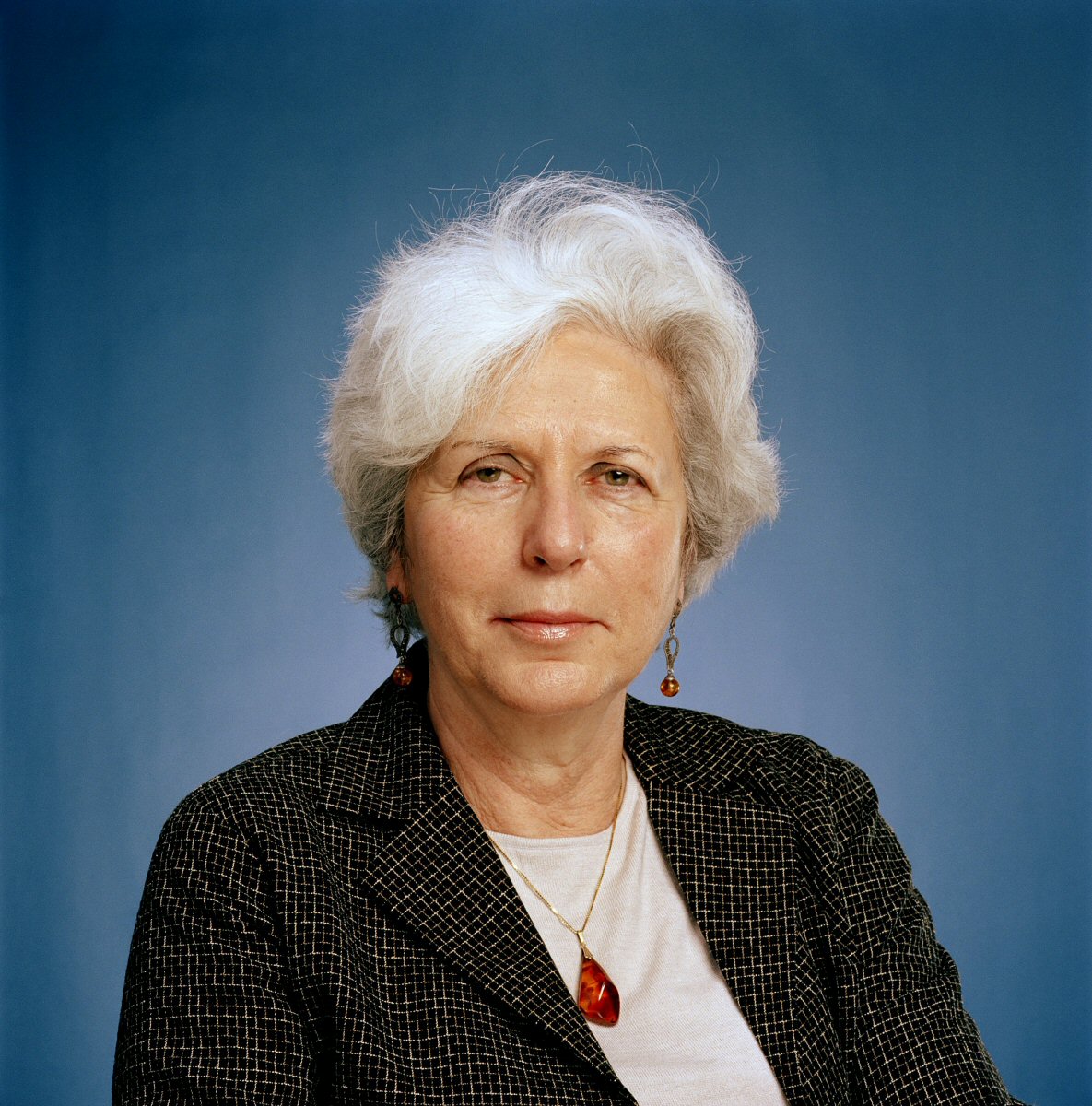
Before joining the Endowment, Ottaway carried out research in Africa and in the Middle East for many years and taught at the University of Addis Ababa, the University of Zambia, the American University in Cairo, and the University of the Witwatersrand in South Africa.
Danial Anas Kaysi
Carnegie does not take institutional positions on public policy issues; the views represented herein are those of the author(s) and do not necessarily reflect the views of Carnegie, its staff, or its trustees.

If the Russian-speaking community in Latvia cannot articulate their interests without being seen as disloyal, they could end up embracing a pro-Kremlin agenda.

Sergejs Potapkins

Russia’s ruling party would have benefited from Putin appearing as its distant patron, but as an active frontman imposing his views on the public, he has done nothing but harm both the party’s election campaign and the ruling system overall.

Andrey Pertsev

In the tenth year of his presidency, President Mirziyoyev’s system is becoming even more personalized than that of his predecessor Karimov.

Galiya Ibragimova
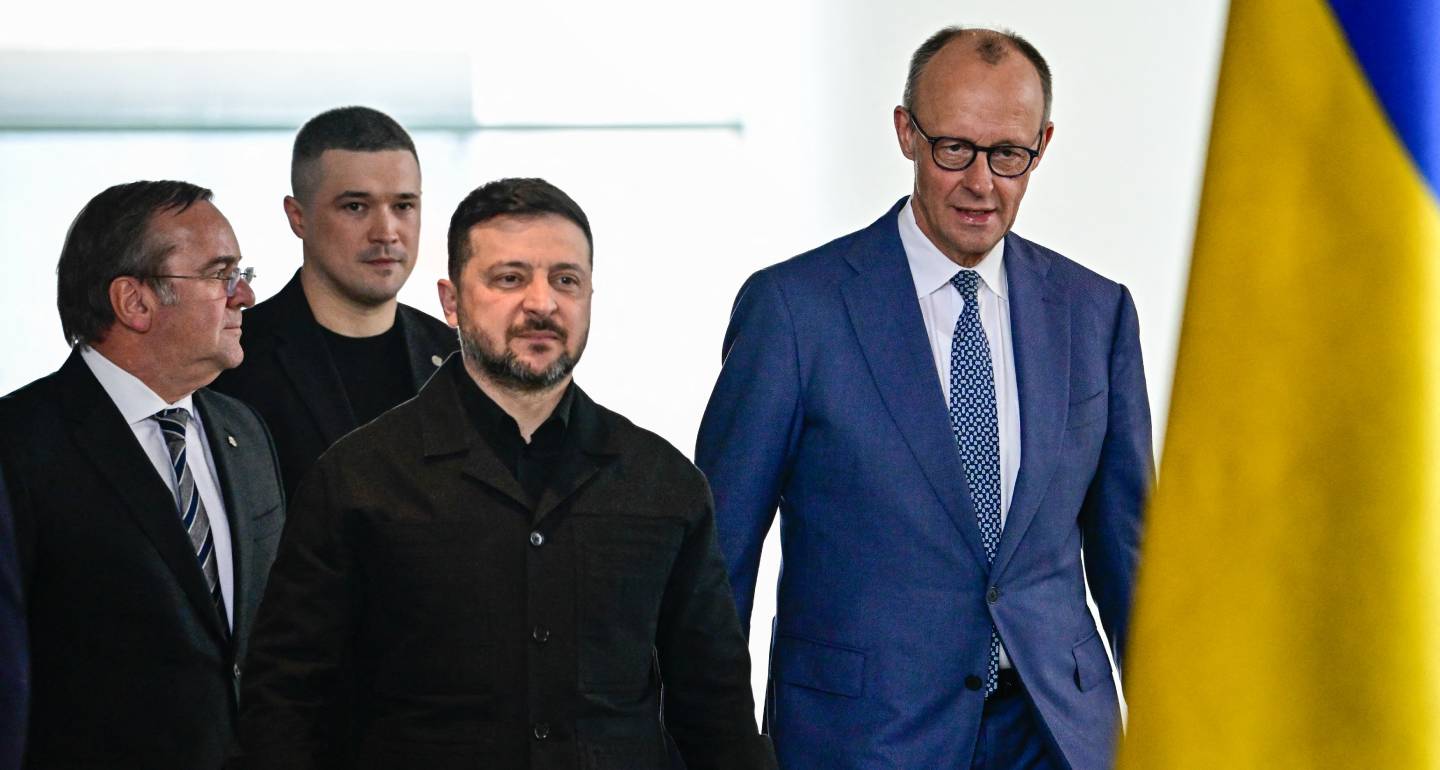
The greater threat to Zelensky comes not from Fedorov alone, but from the convergence between the former defense minister’s political campaign and the anti-corruption investigations moving ever closer to the presidential administration.

Balázs Jarábik
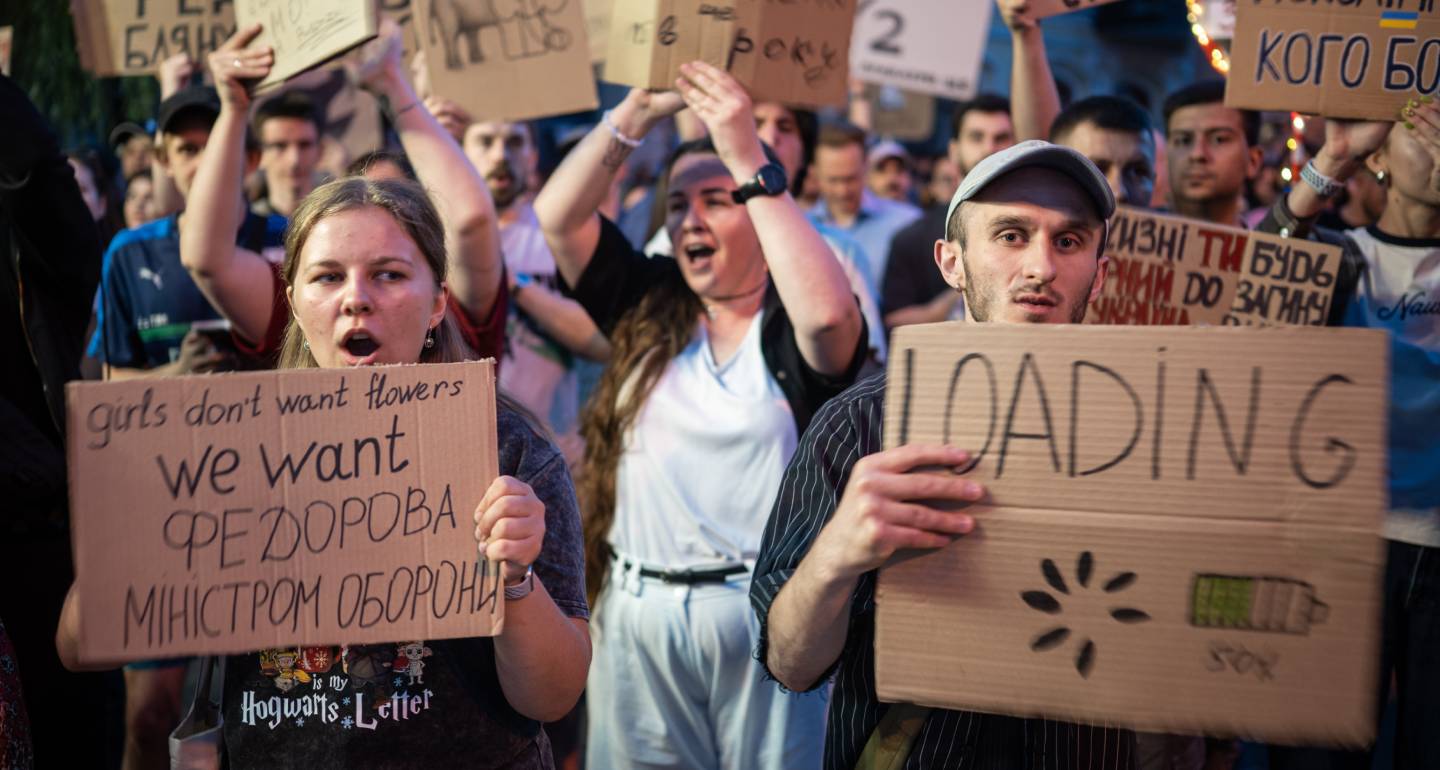
With his public call for new elections in Ukraine, ex-defense minister Mykhailo Fedorov has opened Pandora’s box.

Konstantin Skorkin