

Paper
Adam Baczko, Gilles Dorronsoro, Arthur Quesnay
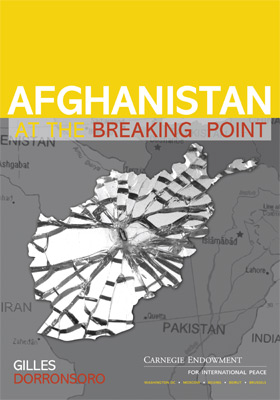
The United States should pursue a political, rather than military, solution to the conflict in Afghanistan that includes a cease-fire and negotiations with the insurgents.
The current strategy of defeating the Taliban militarily is unrealistic. The coalition is on the defensive across much of Afghanistan and, with current troop levels, can at most only contain the insurgency. On present course, the coalition is swiftly heading toward an impasse.
Just to retain the areas currently controlled by the coalition would require significant additional troops next year. Many more than that would be required for the coalition, with heavy losses, to adopt an offensive stance and win back territory. Such an escalation, though, is politically untenable given the impending departure of European forces and dwindling public support for the war. A new strategy is required.
Rather than committing more troops, the United States should instead pursue a political solution to the conflict, including a cease-fire and negotiations with the insurgents. By insisting on power-sharing among the various Afghan factions and reserving the right to intervene militarily to prevent Afghanistan from becoming a sanctuary for extremist groups, the United States can still accomplish the more limited objective of preventing the return of al-Qaeda.
However, the United States must act quickly. Given the rapidly deteriorating security situation, every passing month strengthens the position of the Taliban. A viable exit strategy is still possible, but time is not on America’s side.
President Obama and U.S. military leaders must keep five important truths in mind as they review the Afghanistan war strategy:
Former Nonresident Scholar, South Asia Program
Dorronsoro’s research focuses on security and political development in Afghanistan. He was a professor of political science at the Sorbonne in Paris and the Institute of Political Studies of Rennes.
Recent Work
Adam Baczko, Gilles Dorronsoro, Arthur Quesnay
Gilles Dorronsoro
Carnegie does not take institutional positions on public policy issues; the views represented herein are those of the author(s) and do not necessarily reflect the views of Carnegie, its staff, or its trustees.

With the growth in points of friction between the great powers, organizations like the SCO will continue to play a role in the strategic adaptation of the smaller powers caught between them.

Temur Umarov

When faced with fuel shortages in the past, Central Asian governments could always count on additional supplies from Moscow. That safety net no longer exists.

Galiya Ibragimova

Two divergent trends—Putin’s hardline vision of how to prosecute the war in Ukraine, and a growing desire for change in Russia—could tear the regime apart.

Tatiana Stanovaya

Andrey Melnichenko’s essay offers no answer to the fundamental question of how, under any kind of negotiated settlement, Europe can protect itself from the Russian ressentiment that is inevitable in all scenarios except for an outright victory for Putin.

Leonid Bershidsky

Despite unhappiness on the ground, Moscow is determined to use both carrot and stick to ensure there is record support for United Russia in occupied Ukraine.

Konstantin Skorkin