

Paper
Adam Baczko, Gilles Dorronsoro, Arthur Quesnay
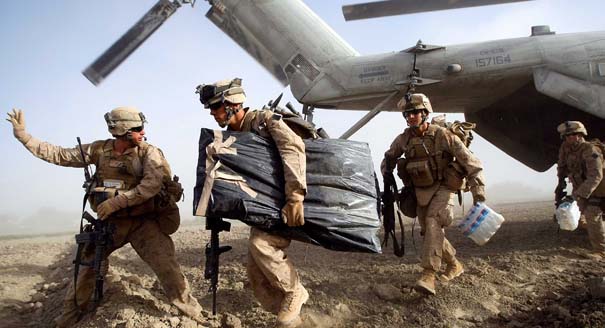
Source: Getty
A combination of two critical problems threatens to undermine the mission of the United States–led coalition in Afghanistan: the failure of the counterinsurgency strategy and a disconnect between political objectives and military operations.
A combination of two critical problems threatens to undermine the mission of the United States–led coalition in Afghanistan: the failure of the counterinsurgency strategy and a disconnect between political objectives and military operations. If anything, the current strategy is making a political solution less likely, notably because it is antagonizing Pakistan without containing the rise of the armed opposition. That has put the coalition in a paradoxical situation, in which it is being weakened militarily by a non-negotiated and inevitable withdrawal while at the same time alienating potential negotiating partners.
The Obama administration has made new appointments to head the defense and intelligence agencies, and, in Afghanistan, has installed a new leadership to oversee U.S. military forces and named a new ambassador. The U.S. administration must take advantage of these appointments to establish greater coherence in both policy and operations:
Former Nonresident Scholar, South Asia Program
Dorronsoro’s research focuses on security and political development in Afghanistan. He was a professor of political science at the Sorbonne in Paris and the Institute of Political Studies of Rennes.
Recent Work
Adam Baczko, Gilles Dorronsoro, Arthur Quesnay
Gilles Dorronsoro
Carnegie does not take institutional positions on public policy issues; the views represented herein are those of the author(s) and do not necessarily reflect the views of Carnegie, its staff, or its trustees.

Russia’s AI-driven propaganda campaigns operate in a fragmented, chaotic, and often illogical manner. That’s not necessarily a problem for the Kremlin, though: It’s much easier to mimic genuine public debate that way.

Ilya Klishin

Without a ceasefire with Ukraine on attacking each other’s energy infrastructure—to which the Kremlin is unlikely to agree—the diesel agreement between Putin and Trump is largely for show, rather than representing a genuine increase in the volumes of Russian diesel on the global market.

Sergey Vakulenko

Russian strikes are weakening the economy sustaining Ukraine’s war effort. Closing the growing funding gap will require more European support and politically contentious reforms in Kyiv.

Balázs Jarábik

Despite a new textbook, an influx of Russian teachers and managers, and an end to the teaching of Ukrainian, the Kremlin is unlikely to have “reprogrammed” locals.

Konstantin Skorkin

Cargo traffic through Russia’s Northern Sea Route has increased because of the disruption caused by the conflict in the Middle East, the Ukraine war, and U.S.-China tensions.

Mikhail Korostikov