

Other
Anders Aslund
{
  "authors": [
    "Anders Aslund"
  ],
  "type": "legacyinthemedia",
  "centerAffiliationAll": "dc",
  "centers": [
    "Carnegie Endowment for International Peace"
  ],
  "collections": [],
  "englishNewsletterAll": "ctw",
  "nonEnglishNewsletterAll": "",
  "primaryCenter": "Carnegie Endowment for International Peace",
  "programAffiliation": "russia",
  "programs": [
    "Russia and Eurasia"
  ],
  "projects": [],
  "regions": [
    "Caucasus",
    "Russia"
  ],
  "topics": [
    "Economy",
    "Trade"
  ]
}
REQUIRED IMAGE
After initial consolidation and restructuring, Russian industry is on the verge of a big change. While the first steps to gain productivity required specific Russian skills, Russian businessmen understand that the future calls for foreign technologies and skills. Some are bringing in managerial and technical expertise, and others are selling their companies to foreign bidders.
Source: Financial Times
Originally printed in the Financial Times, October 9, 2002
For the past three years, Russia has enjoyed an average annual economic growth of 6.5 per cent. While some pundits attribute Russia's growth to devaluation and recovery from crisis, such explanations miss the larger point. Compared with pre-crisis January 1998, Russia has seen a productivity boom that makes US productivity growth appear lethargic.
Russia's industrial transformation runs counter to prevailing ideas about enterprises after communism. Many thought big Soviet industrial enterprises so hopeless that they were best abandoned, as widely occurred in central Europe. Russia's mass privatisation was condemned as an economic disaster. Instead, it was thought that the new economy should be based on small businesses, as in Poland.
But Russia has put all this conventional wisdom into question. A score of large business groups are quickly transforming its heavy industry and they are all led by Russian citizens, mostly engineers in their thirties but of mixed backgrounds. The names of the business groups are often international: Alfa, Basic Element, Interros, Severstal, Sibneft, Sistema, Unitrans, Wimm-Bill-Dann, Yukos.
These enterprise groups are usually conglomerates, with oil or metals assets generating cash, which they ploughed into manufacturing companies bought at fire sale prices, many of them after the Russian financial crash of 1998. Although each group owns banks, these play a small role. These companies look like Asian-style conglomerates but they are trading companies. The new owners usually see themselves as private equity investors, aiming to fix the companies up and sell them at a profit.
Privatisation is the root cause of Russia's enterprise restructuring. Whereas only 10 years ago Russia's industry was fully state-owned, today 90 per cent of it is privatised and 61 per cent of the companies have one controlling shareholder group. All of the success stories are private enterprises.
State-owned companies remain a remarkable failure. Despite devaluation and recovery from crisis, Gazprom is barely able to keep production at current levels; and Russia's state-owned electricity and telecommunications sectors are only slightly better. If Russia had not privatised, all its industry would remain mismanaged.
So far, Russians have dominated big enterprise restructuring for many reasons. They know how to deal with regional governors and social commitments and can dismiss four-fifths of the labour force when necessary. They also understand how old Soviet enterprises work and know how to uproot age-old criminality in them, while utilising valuable technology.
These new owners are obviously not saints. They invariably fought a ruthless battle to gain control of their companies, often trampling on property rights and preferring to see the government weak, but ownership has changed their incentives. In recent years they have backed radical tax reforms and judicial reform and they have supported President Vladimir Putin's new alliance with the west.
After initial consolidation and restructuring, Russian industry is on the verge of a further big change. While the first steps to gain productivity have required specific Russian skills, Russian businessmen understand that the future calls for foreign technologies and skills. Some are bringing in managerial and technical expertise, and others are selling their companies to foreign bidders. Many will end up doing both.
Anders Aslund is a senior associate of the Carnegie Endowment for International Peace and author of Building Capitalism: The Transformation of the Former Soviet Bloc. Peter Boone is director of research at Brunswick UBS Warburg in Moscow.
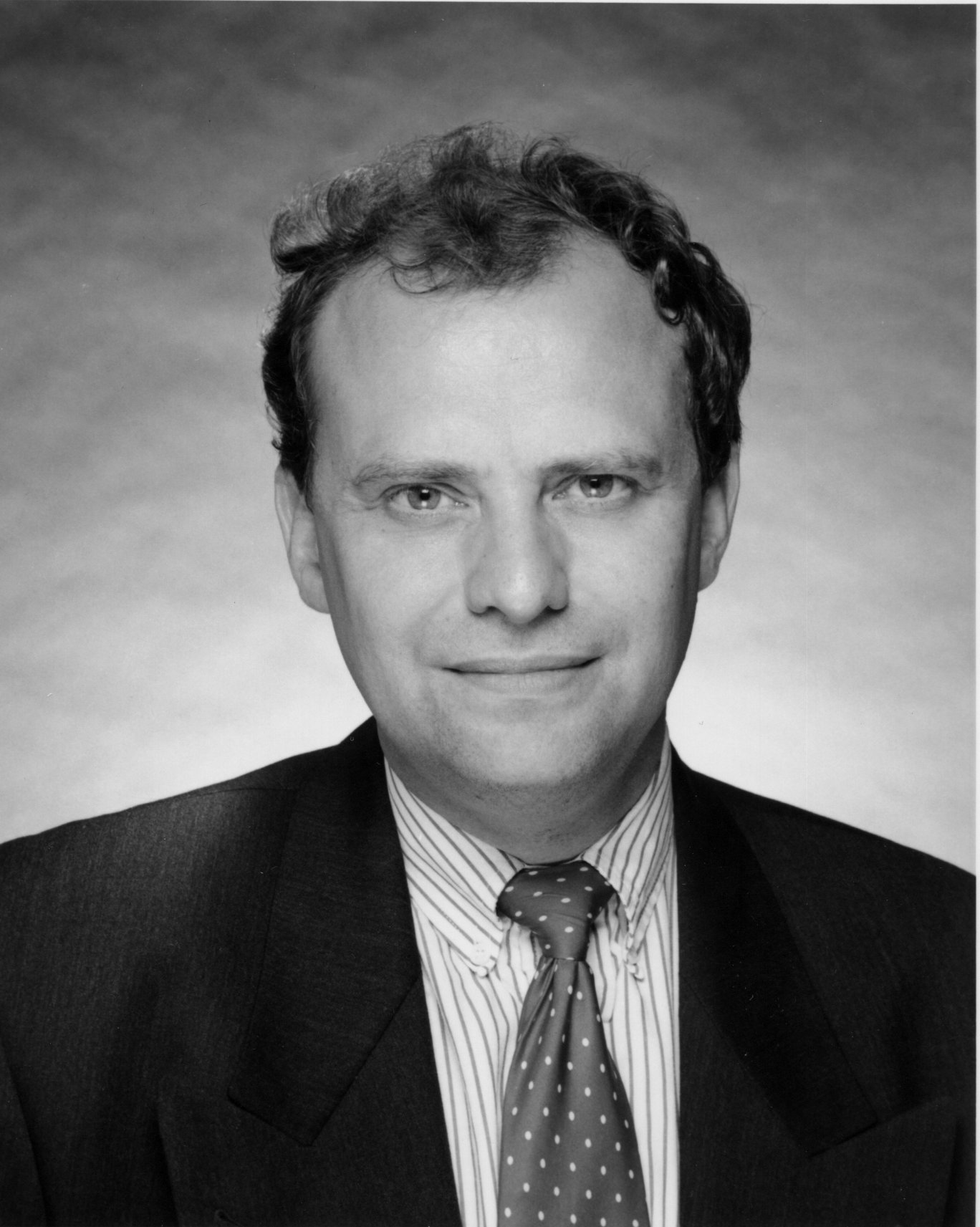
Former Senior Associate, Director, Russian and Eurasian Program
Recent Work
Anders Aslund
Anders Aslund

China’s banking crisis in the 2000s was resolved by transferring the costs to households through financial repression—a decision that recapitalized the banks while exacerbating the structural imbalances that continue to shape the Chinese economy today.

Michael Pettis

In the latest Five-Year Plan, the Chinese president cements the shift to an innovation-driven economy over a consumption-driven one.

Damien Ma

Regulation, not embargo, allows Beijing to shape how other countries and firms adapt to its terms.
Alvin Camba
Rather than climate ambitions, compatibility with investment and exports is why China supports both green and high-emission technologies.
Mathias Larsen
“Involution” is a new word for an old problem, and without a very different set of policies to rein it in, it is a problem that is likely to persist.
Michael Pettis