

Commentary
Amal Saad-Ghorayeb
{
  "authors": [
    "Amal Saad-Ghorayeb"
  ],
  "type": "other",
  "centerAffiliationAll": "dc",
  "centers": [
    "Carnegie Endowment for International Peace",
    "Malcolm H. Kerr Carnegie Middle East Center"
  ],
  "collections": [],
  "englishNewsletterAll": "menaTransitions",
  "nonEnglishNewsletterAll": "",
  "primaryCenter": "Carnegie Endowment for International Peace",
  "programAffiliation": "MEP",
  "programs": [
    "Middle East"
  ],
  "projects": [],
  "regions": [
    "Middle East",
    "Iran",
    "Israel",
    "Lebanon",
    "Syria"
  ],
  "topics": [
    "Political Reform",
    "Security",
    "Military",
    "Foreign Policy"
  ]
}
REQUIRED IMAGE
An in-depth look into the mindset of Hizbollah’s leadership, including their priorities, justifications for continued armament, and animosity towards the U.S. Through unprecedented access to high-ranking Hizbollah officials, including Hizbollah’s Deputy Secretary General.
Source: Carnegie Endowment
United States Director of National Intelligence John Negroponte testified before Congress last week that an emboldened Hizbollah, backed by Syria and Iran and perceiving success in its war with Israel last summer, is a growing danger to the United States. Hizbollah’s influence in Lebanon and the surrounding region continues to hold major implications for Middle East policy – yet how widely understood are Hizbollah’s political ambitions and strategies among global audiences?
In this Carnegie Policy Outlook, In Their Own Words: Hizbollah’s Strategy in the Current Confrontation, visiting scholar Amal Saad-Ghorayeb provides an in-depth look into the mindset of Hizbollah’s leadership, including their priorities, justifications for continued armament, and animosity towards the United States. Through unprecedented access to high-ranking Hizbollah officials, including Hizbollah’s Deputy Secretary General, Saad-Ghorayeb summarizes numerous interviews to provide a unique glimpse into this complex organization’s goals and tactics.
Hizbollah views the current political crisis as an extension of the July war, waged against it by the U.S. and Israel. "By challenging the Siniora government Hizbollah sees itself as confronting the U.S.-Israeli plan to disarm the Resistance and redraw the face of Lebanon and the region.Hizbollah is determined to fight this political battle with the same zeal and determination that it displayed in the military war with Israel. Put simply, Hizbollah feels that if it loses this political conflict, it loses not only its political power and the type of Lebanon that it envisages, but also its arms," writes Saad-Ghorayeb.
Perhaps the most revealing insight into Hizbollah uncovered by the interviews is that the organization, despite its belligerence, is determined to ensure that the country does not plunge into civil war. Hizbollah considers national stability key to its mission of confronting Israel, and has encouraged its followers to refrain from being dragged into an internal conflict.
This is a web-only publication.
Click on the link above for the full text of this Carnegie publication.
About the Author
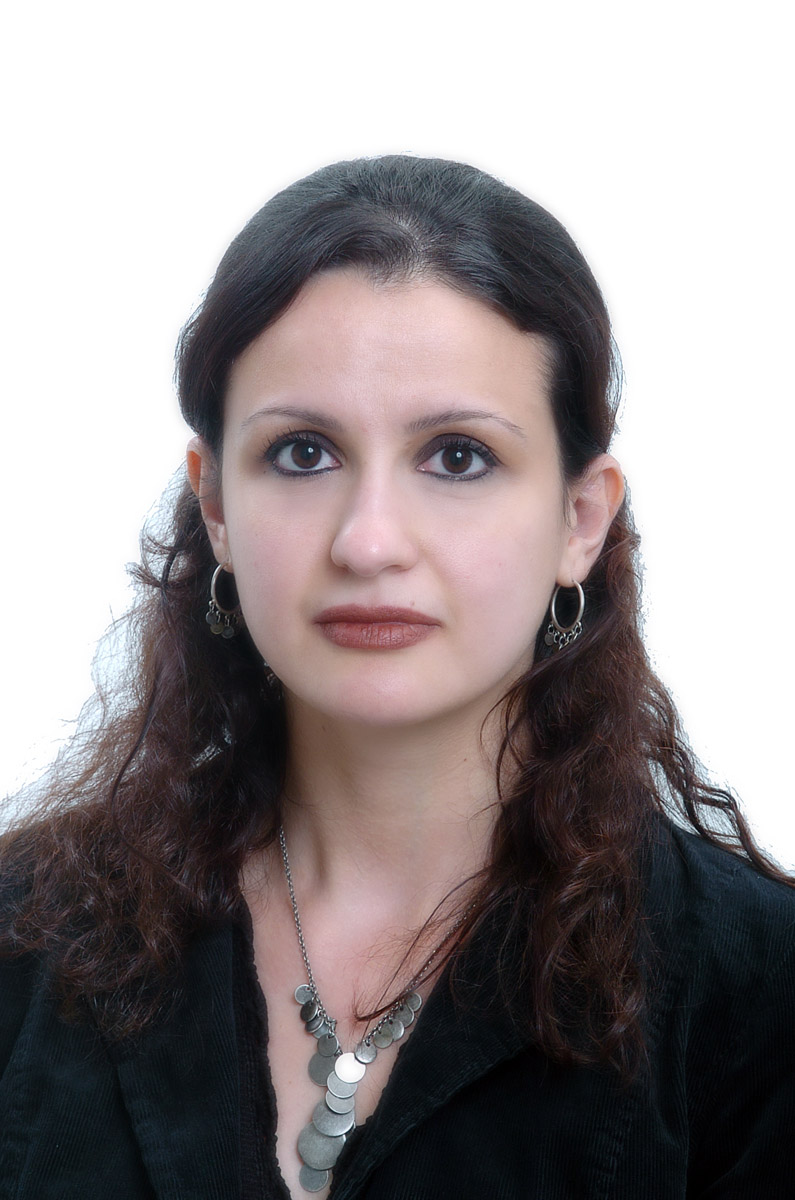
Amal Saad-Ghorayeb is a visiting scholar in the Carnegie Middle East Center. A leading expert on Hizbollah, she has written extensively about Lebanon’s Shiites and Lebanese politics.
Former Visiting Scholar
Recent Work
Amal Saad-Ghorayeb
Amal Saad-Ghorayeb
Carnegie does not take institutional positions on public policy issues; the views represented herein are those of the author(s) and do not necessarily reflect the views of Carnegie, its staff, or its trustees.

But their "principal to principal" model will only be as effective as the political strength of each leader back home.

Damien Ma

U.S. unpredictability has allowed China to capitalize on its positioning as the “responsible great power”. Paradoxically, the more China wins the perception game, the more likely expectations will rise for Beijing to deliver not just words but to demonstrate with its deeds.

Chong Ja Ian

Hanoi and Beijing have long treated each other as distant cousins rather than comrades in arms. That might be changing as both sides draw closer to hedge against uncertainty and America’s erratic behavior.

Nguyễn Khắc Giang

Across Asia, China is better positioned to withstand energy shocks from the fallout of the Iran war. Its abundant coal capacity can ensure stability in the near term. Yet at the same time, the country’s energy transition away from coal will make it even less vulnerable during the next shock.
Damien Ma

Malaysia’s chairmanship sought to fend off short-term challenges while laying the groundwork for minimizing ASEAN’s longer-term exposure to external stresses.

Elina Noor