

Commentary
Amal Saad-Ghorayeb
{
  "authors": [
    "Amal Saad-Ghorayeb"
  ],
  "type": "commentary",
  "blog": "Sada",
  "centerAffiliationAll": "",
  "centers": [
    "Carnegie Endowment for International Peace",
    "Malcolm H. Kerr Carnegie Middle East Center"
  ],
  "collections": [],
  "englishNewsletterAll": "",
  "nonEnglishNewsletterAll": "",
  "primaryCenter": "Carnegie Endowment for International Peace",
  "programAffiliation": "",
  "programs": [],
  "projects": [],
  "regions": [
    "Lebanon",
    "Middle East"
  ],
  "topics": []
}

REQUIRED IMAGE
There is no easy solution to the predicament of Hezbollah's armed status. Thus far, the organization and the new Lebanese government have resisted calls by the United States and the international community to implement United Nations Security Council Resolution 1559, which urges the state to disarm all militias.
There is no easy solution to the predicament of Hezbollah's armed status. Thus far, the organization and the new Lebanese government have resisted calls by the United States and the international community to implement United Nations Security Council Resolution 1559, which urges the state to disarm all militias. If anything, Hezbollah's resolve to keep hold of its weapons indefinitely has only hardened over the past months, with the party now claiming that its resistance role surpasses that of mere “liberation” and includes ongoing strategic “defense,” while rejecting any notion of subsuming its arms under the central command of the Lebanese army. For its part, the Lebanese government has followed the path of its predecessors by endorsing the resistance in its policy statement, thereby perpetuating the uneasy yet thus far stable formula of an armed group that is at once auxiliary and extraneous to the Lebanese army.
In response, the Bush administration has anchored its demands for Hezbollah's demilitarization within the framework of its democracy agenda for the region, by repeating the “there can only be one authority in a democracy” mantra while continuing to brand the movement a terrorist organization. Yet, as problematic as the preservation of Hezbollah's arms is, the prospect of attempting to disarm the organization against its will through the use of force or immense political pressure risks further radicalizing the organization and the Shiite community behind it. Such a development would not bode well for Lebanon's stability, or by extension for the U.S. democratic initiative in the region.
The paradox is that Hezbollah's arms actually have been conducive to its full political integration and resultant moderation in several ways. The need to legitimize its resistance was one of the principal motivations that induced Hezbollah to enter the political mainstream in 1992, when it contested the first post-war parliamentary elections. With the recent withdrawal of Syrian forces from Lebanon and the consequent loss of Syrian political cover, Hezbollah's arms lay exposed to the pressure brought on by Resolution 1559. In order to transform the Lebanese state into a substitute security net that could allow Hezbollah to shield its resistance to Western diktat, Hezbollah was compelled to reach out to other groups during the latest parliamentary elections, for example striking electoral alliances with constituent groups of the Sunni-Christian-Druze coalition in exchange for securing their public pledges to support its resistance priority. In this connection, Hezbollah opened up to all major forces across the political spectrum, even reconciling with the right-wing Christian Lebanese Forces, a one-time ally of Israel. Hezbollah then took the unprecedented step of participating in the Lebanese government both indirectly, through a minister close to the party and directly, by appointing a minister from within its own ranks. In effect, the preservation of Hezbollah's arms has necessitated its adoption of a two-pronged strategy of full submersion in the democratic arena and rapprochement with groups of all political persuasions.
If Hezbollah's arms are the condition for, rather than the obstacle to, its political moderation, it logically follows that any attempt to bring about the group's involuntary disarmament will deprive it of an incentive to maintain this stance. Subjected to strong pressure to disarm, the party might threaten to pursue radical changes in the political system such as redressing Shiite political under-representation by pursuing the abolition of political confessionalism, a move sure to meet with strong protest from Lebanese Christians. It is also possible that Hezbollah and the Shiite community might not content themselves with political steps to resist disarmament, or might decide that no political measures could compensate for the loss of arms. Hezbollah's armed activities have fostered a culture of resistance among the Shiites, some 95 percent of whom support the resistance according to a survey conducted in June by the Beirut Centre for Research and Information. Hezbollah leaders have repeatedly raised the specter of renewed civil war should the organization be driven underground.
So long as the United States actively pursues the disarmament of Hezbollah alongside its promotion of democratic reforms, it runs the risk of achieving neither. Hezbollah's disarmament should be the voluntary result of an internal Lebanese dialogue that is free from foreign intervention. Such a dialogue can only come about once the justification for Hezbollah's arms—the ongoing Arab-Israeli conflict—is resolved via a comprehensive regional peace agreement.
Amal Saad Ghorayeb is Assistant Professor at the Lebanese American University and author of Hizbullah: Politics and Religion (Pluto Press, 2002).
Former Visiting Scholar
Recent Work
Amal Saad-Ghorayeb
Amal Saad-Ghorayeb
Carnegie does not take institutional positions on public policy issues; the views represented herein are those of the author(s) and do not necessarily reflect the views of Carnegie, its staff, or its trustees.
Can economic ties help contain conflict between Egypt and Israel, or do they simply postpone confrontation? Drawing on the German-Russian experience, the article examines how the gas deal creates mutual dependence, keeps channels of cooperation open, and raises the cost of conflict, without necessarily delivering lasting peace.

Nourhan Hefzy
Is the Gulf moving beyond the dollar? This article examines how China is expanding the renminbi's role across Gulf markets, what that means for regional finance, and why the future of global currencies is more complex than the de-dollarization debate suggests.

Andrew Bonney
Syria's transition promised a fresh start. But are old habits of power making a comeback? This analysis looks at the warning signs and what it will take to build a more accountable state.

Sima Beitinjaneh
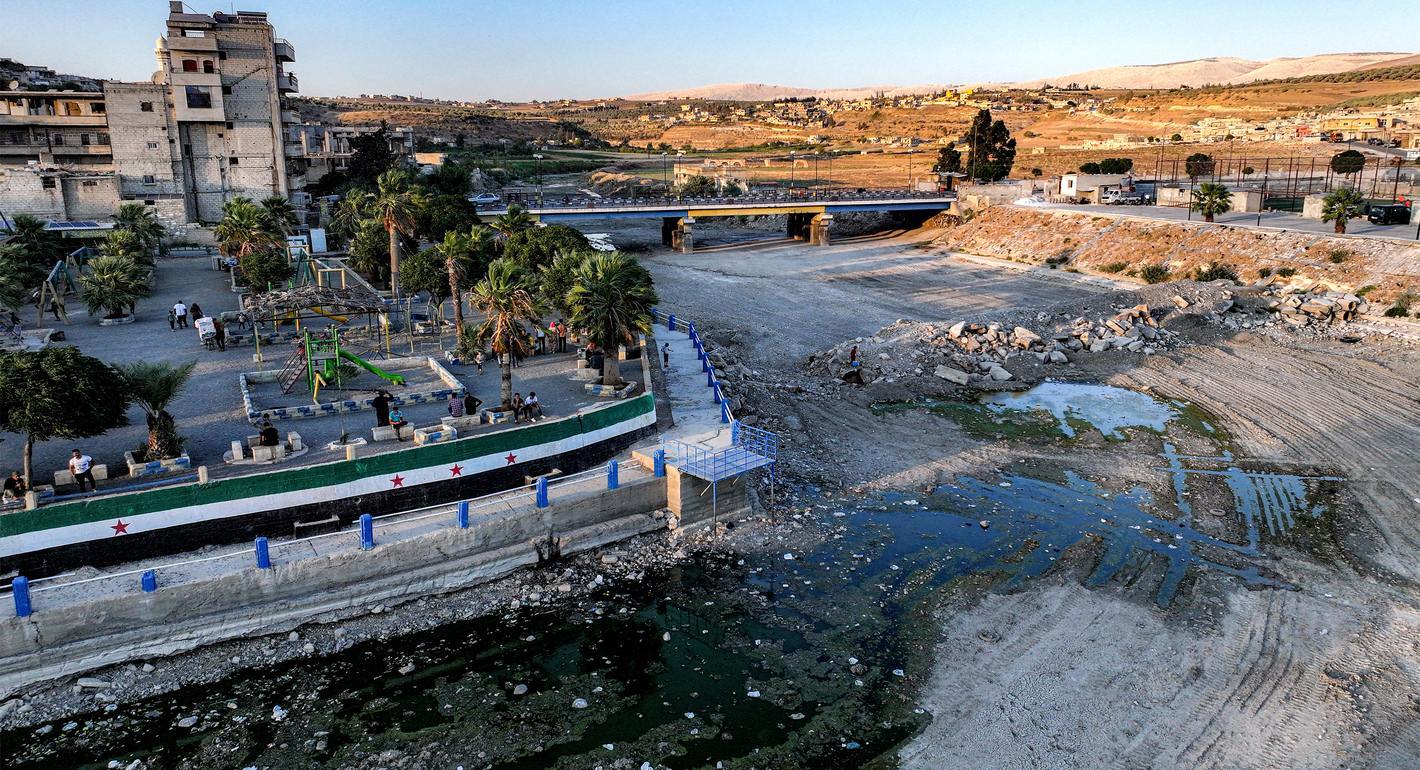
Syria’s worsening drought is no longer a seasonal crisis. This report explains what climate change is doing to rainfall, groundwater, and food security, and what solutions experts say are still possible.
Milia Esper
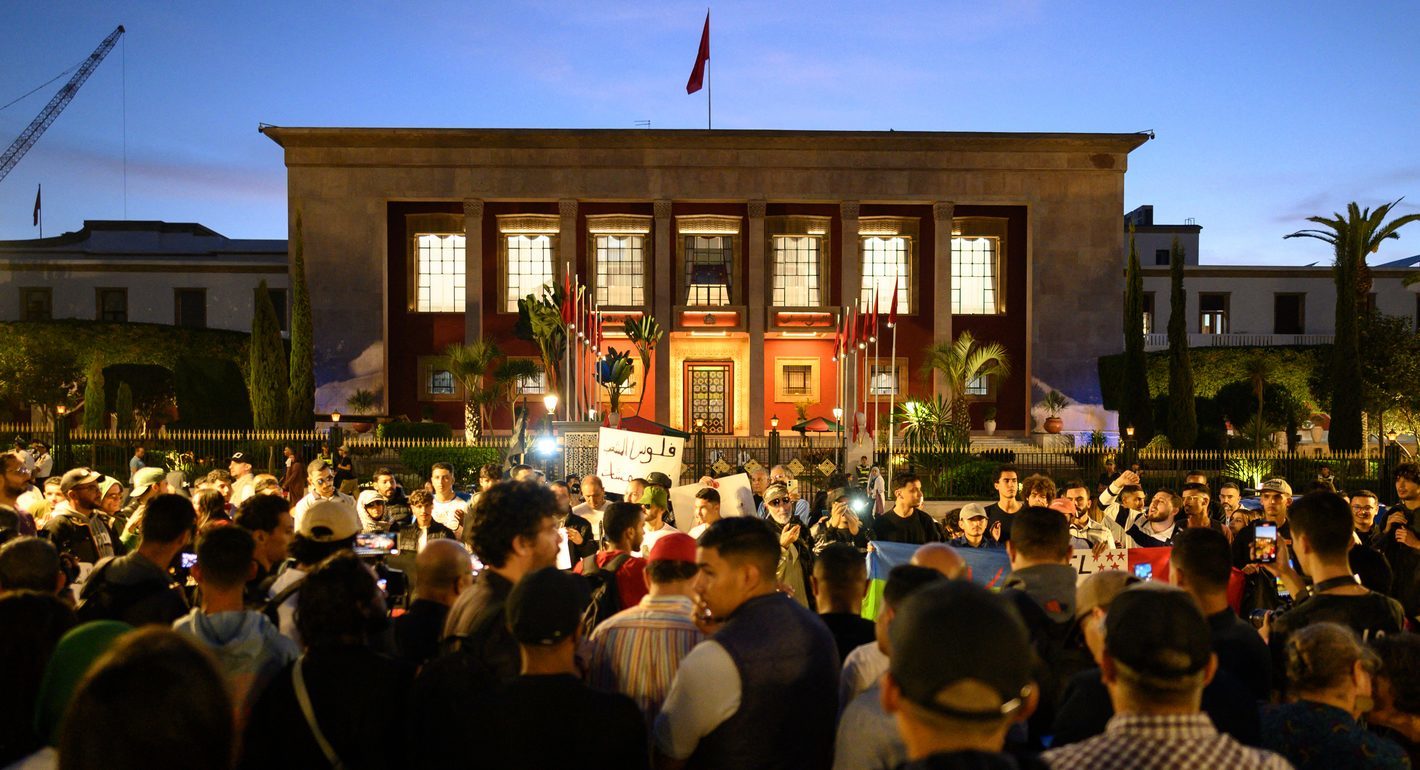
From anime heroes to online gaming communities, Morocco’s Gen Z is building a new protest culture. What does this digital imagination reveal about youth politics, and how should institutions respond?
Abdelilah Farah