

Commentary
Maria Lipman
{
  "authors": [
    "Maria Lipman"
  ],
  "type": "legacyinthemedia",
  "centerAffiliationAll": "",
  "centers": [
    "Carnegie Endowment for International Peace",
    "Carnegie Russia Eurasia Center"
  ],
  "collections": [],
  "englishNewsletterAll": "",
  "nonEnglishNewsletterAll": "",
  "primaryCenter": "Carnegie Russia Eurasia Center",
  "programAffiliation": "",
  "programs": [],
  "projects": [],
  "regions": [
    "Caucasus",
    "Russia"
  ],
  "topics": [
    "Foreign Policy"
  ]
}
Source: Getty
Source: The Washington Post

Yeltsin was the first Russian politician whose legitimacy rested on the genuine popular support of the masses -- and he brought public politics to a country where for centuries politics had been confined to the czars' court intrigues and Politburo fights behind the curtain.
Unlike his predecessor Mikhail Gorbachev and his successor, Vladimir Putin, Yeltsin was able to overcome his Soviet background. After rising to a high-ranking position in the Communist Party, he reformed into a staunch anti-communist and associated himself with Russia's liberals and Westernizers, including prominent Soviet dissident Andrei Sakharov. Yeltsin was a statesman with a clear vision and a strong sense of purpose: He committed himself to ridding Russia of communism and attaining freedom for his country, whose people had always lived in fear of the state.
Yeltsin achieved both goals: He made his victory over communism irreversible, and he turned Russia into a free nation. The coup in 1991 was above all a revolution -- even if it proved short-lived -- of public attitudes. The Russian people overcame their fear, they came to believe in freedom and in themselves, and they united to change the country's direction.
Yeltsin was very much a Russian character -- unrestrained and unrestrainable, very emotional, even passionate. He was a natural politician, a tenacious warrior and a survivor who loved risk and excelled in times of crisis. In a way, his rule was a permanent crisis, as he faced fierce, irreconcilable opposition from the Communist Party that disrupted every move he sought to make. His drinking bouts and bizarre escapades were probably the only relief he had from the terrible strain.
Yeltsin made many mistakes. Some were inevitable; some probably could have been avoided. But he took responsibility for all that he did. He probably tormented himself more than any of his harshest critics did. He yearned to make his country a better place and gave his heart, which was already weak, to his people. But he was running against time: The hardship and turmoil of the early post-communist years left the Russian people frustrated and disillusioned, and they came to hate him as fiercely as they had loved him only a few years earlier. His compatriots, having no experience with freedom, failed to use their newfound options to make their lives better; they expected him to be their benefactor, and when he failed to deliver they resented and condemned him. His efforts to establish a multiparty system, representative government, and an independent media and judiciary remain unappreciated, and during the rule of his successor, the phrase "the chaos of the '90s" has been firmly tied to Yeltsin's tenure.
Though Yeltsin set the path for democracy and freedom, he failed to secure them and was forced to step down in December 1999 and anoint a successor rather than democratically transfer authority. The new president, Putin, remained personally loyal to Yeltsin: Within hours of Yeltsin's death Monday, Putin spoke movingly about his legacy and ensured that the nation would pay due tribute to its first president. Putin even postponed his state of the country address and announced a day of national mourning.
But Putin's policies have largely destroyed what was left of Yeltsin's political achievement. While Yeltsin was an innovator seeking to create and nurture a free Russia with public participation and a limited role for the state, Putin scrapped the fledgling institutions and political freedoms and pushed Russia back toward its traditional track: loyal bureaucrats instead of statesmen; and an omnipotent and forbidding state and an impotent society, deeply alienated from each other.
The defeat of communism is mostly regarded now as but an episode in a struggle for power at the top. Most of those inebriated with joy and a sense of achievement back in August 1991 today feel ashamed of their naivete and idealism. From the early days of his tenure, Putin strongly dissociated himself from Yeltsin's efforts. In a series of symbolic moves after he became president, Putin got rid of the new state anthem that Yeltsin had adopted and brought back the old Soviet one. He also stopped the celebration of the new Russian national holiday Yeltsin had introduced.
Throughout his presidency, though, Yeltsin was the master of political symbols. The sight of him atop a tank has become the most recognized image of the end of communism. His death just one week after a small, peaceful political rally in Moscow was extinguished by 9,000 riot policemen -- complete with beatings and unlawful detentions -- looks like a symbolic protest against the trampling of freedom, a cause to which he devoted himself.
Masha Lipman, editor of the Carnegie Moscow Center's Pro et Contra journal, writes a monthly column for The Post.
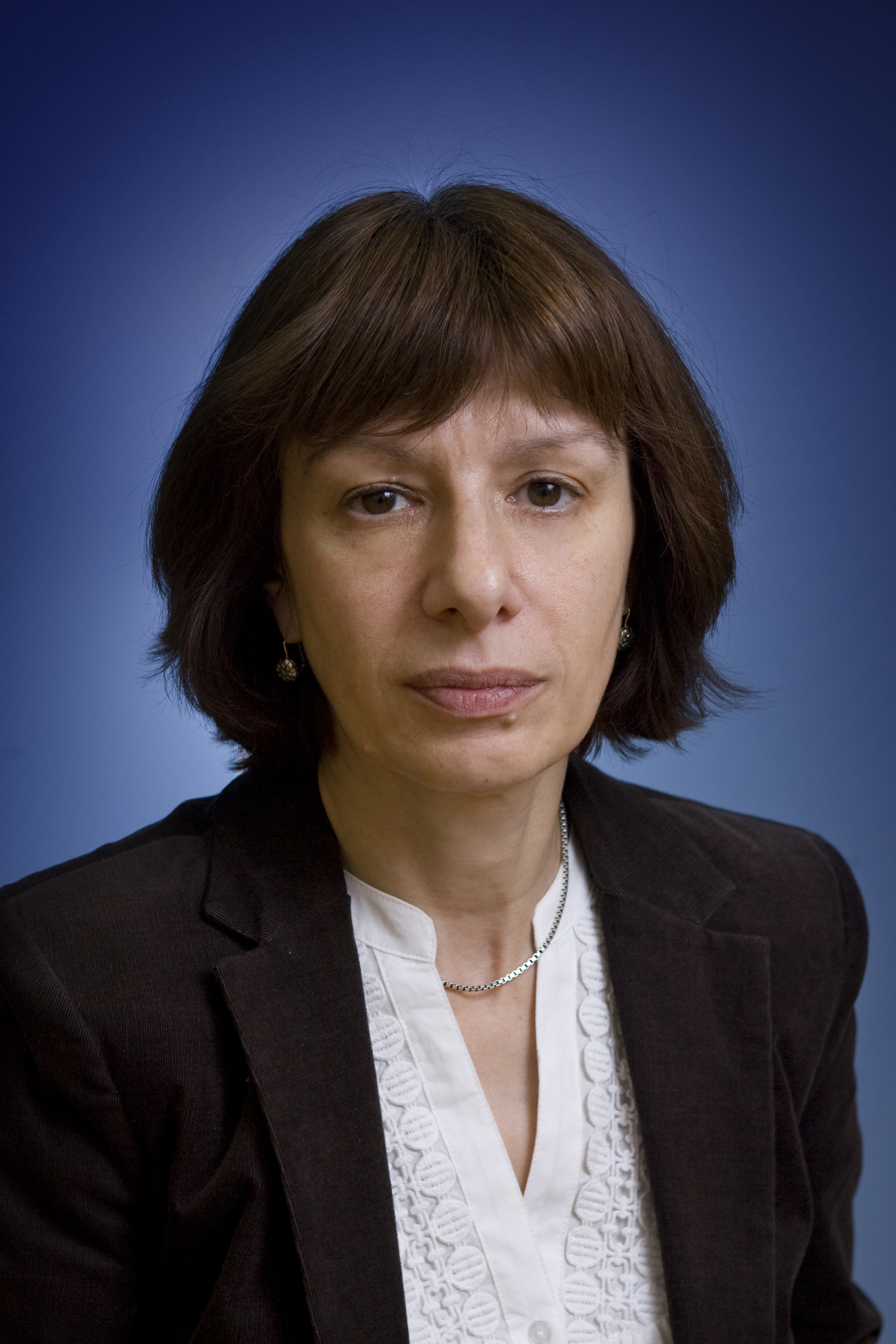
Former Scholar in Residence, Society and Regions Program, Editor in Chief, Pro et Contra, Moscow Center
Lipman was the editor in chief of the Pro et Contra journal, published by the Carnegie Moscow Center. She was also the expert of the Carnegie Moscow Center’s Society and Regions Program.
Recent Work
Maria Lipman
Maria Lipman
Carnegie does not take institutional positions on public policy issues; the views represented herein are those of the author(s) and do not necessarily reflect the views of Carnegie, its staff, or its trustees.

But their "principal to principal" model will only be as effective as the political strength of each leader back home.

Damien Ma

U.S. unpredictability has allowed China to capitalize on its positioning as the “responsible great power”. Paradoxically, the more China wins the perception game, the more likely expectations will rise for Beijing to deliver not just words but to demonstrate with its deeds.

Chong Ja Ian

Hanoi and Beijing have long treated each other as distant cousins rather than comrades in arms. That might be changing as both sides draw closer to hedge against uncertainty and America’s erratic behavior.

Nguyễn Khắc Giang

Across Asia, China is better positioned to withstand energy shocks from the fallout of the Iran war. Its abundant coal capacity can ensure stability in the near term. Yet at the same time, the country’s energy transition away from coal will make it even less vulnerable during the next shock.
Damien Ma

Malaysia’s chairmanship sought to fend off short-term challenges while laying the groundwork for minimizing ASEAN’s longer-term exposure to external stresses.

Elina Noor