• Commentary
  • Research
  • Experts
  • Events
Carnegie China logoCarnegie lettermark logo
{
  "authors": [
    "Dmitri Trenin"
  ],
  "type": "legacyinthemedia",
  "centerAffiliationAll": "",
  "centers": [
    "Carnegie Endowment for International Peace",
    "Carnegie Russia Eurasia Center"
  ],
  "collections": [],
  "englishNewsletterAll": "",
  "nonEnglishNewsletterAll": "",
  "primaryCenter": "Carnegie Russia Eurasia Center",
  "programAffiliation": "",
  "programs": [],
  "projects": [],
  "regions": [
    "Caucasus",
    "Russia"
  ],
  "topics": [
    "Foreign Policy",
    "Nuclear Policy"
  ]
}

Source: Getty

In The Media
Carnegie Russia Eurasia Center

Russian President Toughens Nuclear Stance

Link Copied
By Dmitri Trenin
Published on Jun 4, 2007

Source: The Newshour with Jim Lehrer

In an appearance on The Newshour with Jim Lehrer, Carnegie Endowment Senior Associate Dmitri Trenin discussed Russian President Vladimir Putin’s threat to aim nuclear weapons at European targets in response to a planned U.S. missile defense program in Europe.  Trenin and Aaron Friedberg, former deputy assistant for national security affairs for U.S. Vice President Cheney, discussed the timing, implications, and reaction to the announcement.

Click here to listen to the broadcast.

About the Author

Dmitri Trenin

Former Director, Carnegie Moscow Center

Trenin was director of the Carnegie Moscow Center from 2008 to early 2022.

    Recent Work

  • Commentary
    Mapping Russia’s New Approach to the Post-Soviet Space

      Dmitri Trenin

  • Commentary
    What a Week of Talks Between Russia and the West Revealed

      Dmitri Trenin

Dmitri Trenin
Former Director, Carnegie Moscow Center
Foreign PolicyNuclear PolicyCaucasusRussia

Carnegie does not take institutional positions on public policy issues; the views represented herein are those of the author(s) and do not necessarily reflect the views of Carnegie, its staff, or its trustees.

More Work from Carnegie China

  • Commentary
    China’s Energy Security Doesn’t Run Through Hormuz but Through the Electrification of Everything

    Across Asia, China is better positioned to withstand energy shocks from the fallout of the Iran war. Its abundant coal capacity can ensure stability in the near term. Yet at the same time, the country’s energy transition away from coal will make it even less vulnerable during the next shock.


      • Damien Ma

      Damien Ma

  • Commentary
    Malaysia’s Year as ASEAN Chair: Managing Disorder

    Malaysia’s chairmanship sought to fend off short-term challenges while laying the groundwork for minimizing ASEAN’s longer-term exposure to external stresses.

      Elina Noor

  • Commentary
    When It Comes to Superpower Geopolitics, Malaysia Is Staunchly Nonpartisan

    For Malaysia, the conjunction that works is “and” not “or” when it comes to the United States and China.

      Elina Noor
  • Commentary
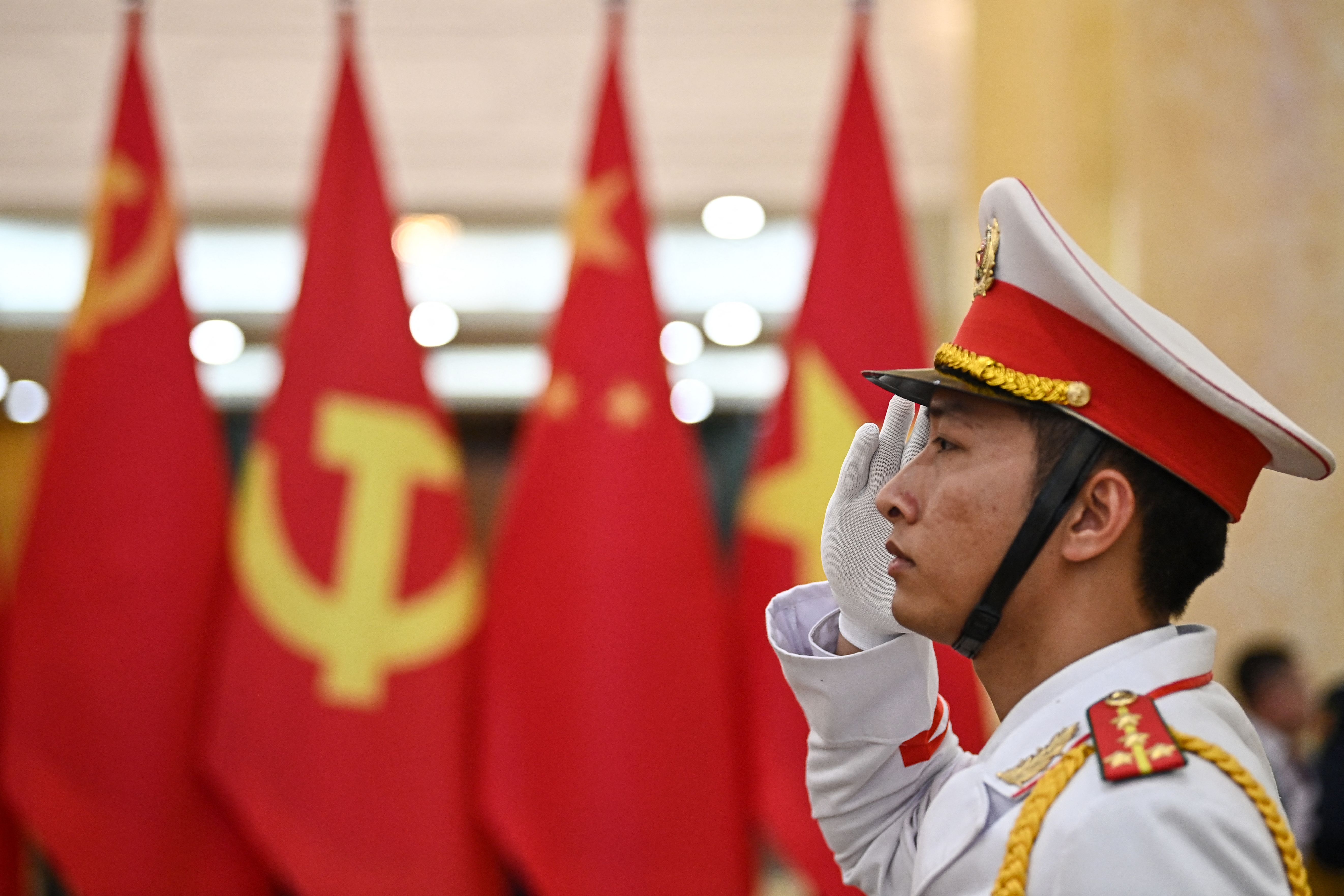
    Neither Comrade nor Ally: Decoding Vietnam’s First Army Drill with China

    In July 2025, Vietnam and China held their first joint army drill, a modest but symbolic move reflecting Hanoi’s strategic hedging amid U.S.–China rivalry.

      • Nguyen-khac-giang

      Nguyễn Khắc Giang

  • Commentary
    China’s Mediation Offer in the Thailand-Cambodia Border Dispute Sheds Light on Beijing’s Security Role in Southeast Asia

    The Thai-Cambodian conflict highlights the limits to China's peacemaker ambition and the significance of this role on Southeast Asia’s balance of power.

      Pongphisoot (Paul) Busbarat

Get more news and analysis from
Carnegie China
Carnegie China logo, white
Keck Seng Tower133 Cecil Street #10-01ASingapore, 069535Phone: +65 9650 7648
  • Research
  • About
  • Experts
  • Events
  • Contact
  • Careers
  • Privacy
  • For Media
Get more news and analysis from
Carnegie China
© 2026 Carnegie Endowment for International Peace. All rights reserved.