

Commentary
Nikolay Petrov
{
  "authors": [
    "Nikolay Petrov"
  ],
  "type": "legacyinthemedia",
  "centerAffiliationAll": "",
  "centers": [
    "Carnegie Endowment for International Peace",
    "Carnegie Russia Eurasia Center"
  ],
  "collections": [],
  "englishNewsletterAll": "",
  "nonEnglishNewsletterAll": "",
  "primaryCenter": "Carnegie Russia Eurasia Center",
  "programAffiliation": "",
  "programs": [],
  "projects": [],
  "regions": [
    "Caucasus",
    "Russia"
  ],
  "topics": [
    "Political Reform",
    "Democracy",
    "Economy"
  ]
}
Source: Getty
For a second week now, people are discussing Tatarstan President Mintimer Shaimiyev's call to reinstate direct elections for governors and to strip the Russian president of the power to disband regional parliaments if they reject the gubernatorial candidate he submits for their approval. Shaimiyev's ideas come across as more proactive than reactive, and as a forecaster of future shifts in the political landscape, the occupant of Kazan's Kremlin appears to be more talented than the experts in the other Kremlin.
Source: The Moscow Times

In the heated debate, Shaimiyev received support from his colleague, Bashkortostan President Murtaza Rakhimov. Coming out against Shaimiyev's call, however, were regional leaders, such as Sergei Katanandov of Karelia, Aman Tuleyev of Kemerovo, Vyacheslav Pozgalev of Vologda and Alexander Khloponin of Krasnoyarsk. Others spoke out more vehemently against the idea, including Dmitry Kozak, the architect of the current system of appointing governors, and Constitutional Court Chairman Valery Zorkin, who defended the appointments as constitutional.
Most observers think Shaimiyev made his unusually bold remarks in self-defense, perhaps in reaction to the latest in a series of rumors that the Kremlin wants to replace him.
The issue, however goes well beyond Shaimiyev and Tatarstan. The fact that the normally cautious and discrete Tatarstan president made such remarks bear witness to far deeper change in the country's political climate -- perhaps even on the presidential and prime ministerial level.
On the other hand, the fact that only a few of the more than 80 regional leaders were courageous enough to express their opinions on the issue is a sign of the uncertainty of the political situation. In addition, it confirms that most of the regional heads are happy with the existing system.
There has been no real discussion of the issue itself -- just a series of statements and counter-statements, with both sides making vague speculations about whether the Kremlin will return to the regions some of the authority it had appropriated for itself.
Moreover, there is no serious analysis of the effectiveness of appointing regional heads, which then-President Vladimir Putin introduced following the Beslan hostage crisis in 2004. And nobody is giving much attention to Shaimiyev's second suggestion -- no less audacious than the first -- to strip the Kremlin's power to disband regional parliaments if they reject the president's gubernatorial appointee. The parliaments are indeed an important piece of the political puzzle because so many of their members are affiliated with United Russia.
How will the situation develop further?
It is inevitable that the current method of installing governors will change. This is primarily because the regional heads appointed by the Kremlin are often seen as interlopers, and are therefore ineffective. They have only weak control -- or no control at all -- over the ruling elites in the regions. Some of the governors did little more than mark time during Putin's second term, and the Kremlin showed little concern over it -- except in special cases such as Ingushetia. Now the situation has changed. The government has extensive plans to implement large-scale economic and social reforms, and this will be impossible without changing the system of governance that links the federal and regional elites.
Moreover, for Putin, who heads United Russia but no longer holds undisputed reign over the Kremlin, it might be advantageous to switch to a different system of organizing regional authority. The process could even be the same as that used in the presidential election. United Russia names its candidate, while the other parties jump through all the electoral hoops by collecting the enormously large number of signatures required by law to register candidates followed by verifying the authenticity of every one of them for the Central Elections Commission.
In this context, Shaimiyev's ideas come across as more proactive than reactive, and as a forecaster of future shifts in the political landscape, the occupant of Kazan's Kremlin appears to be more talented than the experts in the other Kremlin.
Nikolai Petrov is a scholar in residence at the Carnegie Moscow Center.
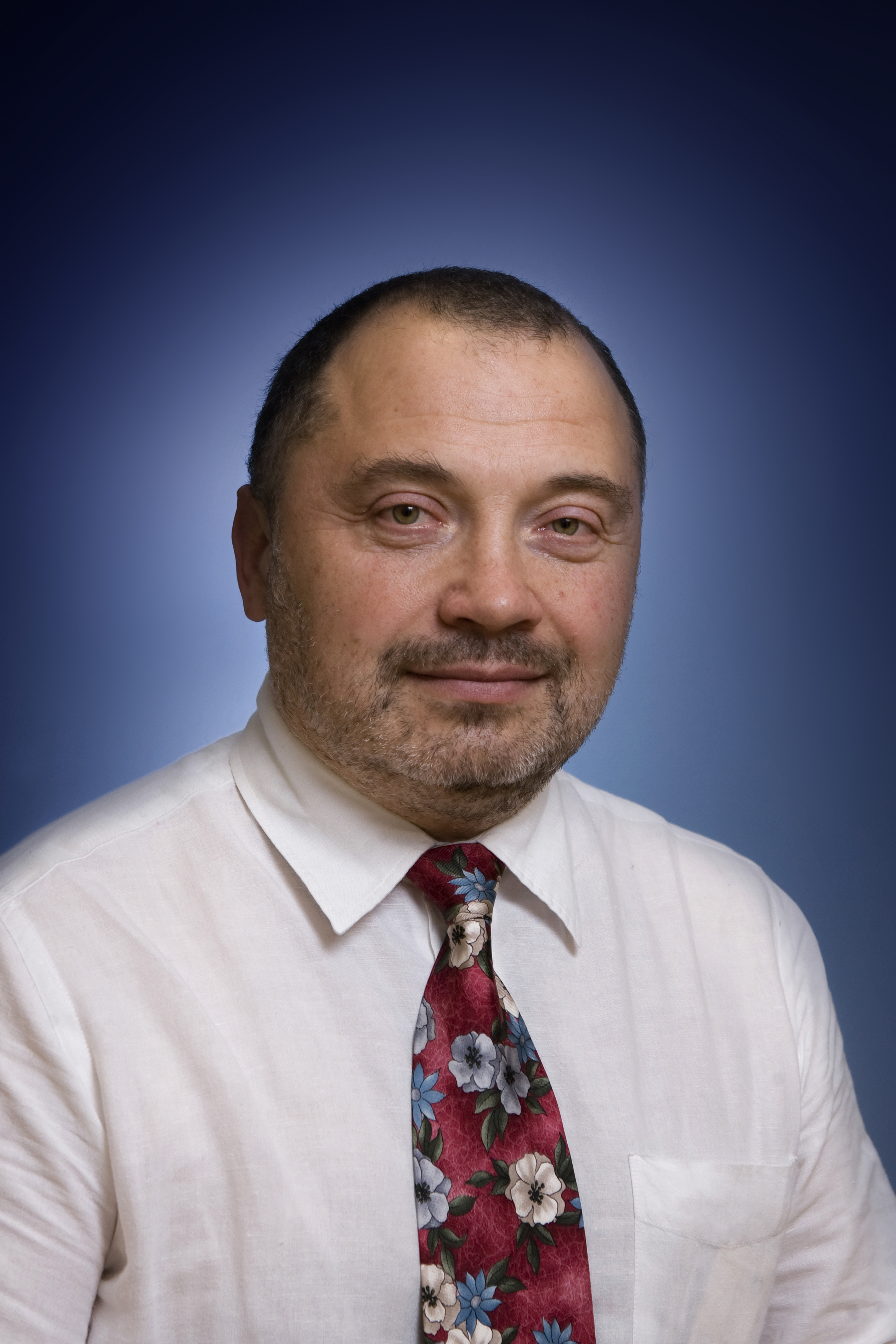
Former Scholar-in-Residence, Society and Regions Program, Moscow Center
Nikolay Petrov was the chair of the Carnegie Moscow Center’s Society and Regions Program. Until 2006, he also worked at the Institute of Geography at the Russian Academy of Sciences, where he started to work in 1982.
Recent Work
Nikolay Petrov
Nikolay Petrov
Carnegie does not take institutional positions on public policy issues; the views represented herein are those of the author(s) and do not necessarily reflect the views of Carnegie, its staff, or its trustees.

In the latest Five-Year Plan, the Chinese president cements the shift to an innovation-driven economy over a consumption-driven one.

Damien Ma
Rather than climate ambitions, compatibility with investment and exports is why China supports both green and high-emission technologies.

Mathias Larsen
“Involution” is a new word for an old problem, and without a very different set of policies to rein it in, it is a problem that is likely to persist.

Michael Pettis
While China's investment story seems contradictory from the outside, the real answers to Beijing's high-quality growth ambitions are hiding in plain sight across the nation's cities.
Yuhan Zhang
China's stimulus addiction cannot go on forever. Beijing still has policy space to clean up the country's massive debt issue, but time is running short.
Michael Pettis