

Paper
Paul Salem
{
  "authors": [
    "Paul Salem"
  ],
  "type": "legacyinthemedia",
  "centerAffiliationAll": "dc",
  "centers": [
    "Carnegie Endowment for International Peace",
    "Malcolm H. Kerr Carnegie Middle East Center"
  ],
  "collections": [],
  "englishNewsletterAll": "menaTransitions",
  "nonEnglishNewsletterAll": "",
  "primaryCenter": "Malcolm H. Kerr Carnegie Middle East Center",
  "programAffiliation": "MEP",
  "programs": [
    "Middle East"
  ],
  "projects": [],
  "regions": [
    "Middle East",
    "Iran",
    "Israel",
    "Lebanon",
    "Syria"
  ],
  "topics": [
    "Political Reform",
    "Security",
    "Foreign Policy"
  ]
}
Source: Getty
Lebanon is not likely to know real stability until the Lebanese state is able to integrate or dominate non-state militias, and until some of the raging confrontations in Lebanon’s immediate environment are calmed.
Source: Daily Times

There is much speculation about the reasoning behind the government’s decisions in May to dismiss the pro-Hezbollah chief of airport security and investigate Hezbollah’s private telecommunications network, which sparked the confrontations. The government had been under longstanding international pressure to honour at least some of its international commitments to contain Hezbollah, and it wrongly calculated that the group would only respond in a limited way. Most importantly, the government mistakenly reckoned that Hezbollah would not risk Shia-Sunni clashes in Beirut.
Similar questions surround Hezbollah’s reasoning in unleashing large-scale action that risked sectarian warfare and jeopardised its moral high ground. But it has largely achieved its aims. Militarily, it has nipped in the bud any potential armed militia in West Beirut that could hinder its movement beyond the southern suburbs. It also secured key highways south and east of Beirut that Druze leader Walid Junblatt previously dominated and reasserted its access to the capital’s airport and seaports.
Politically, Hezbollah abandoned its policy of waiting out the government, in favour of pushing it to the breaking point and quickly fashioning a new status quo. Now it has strong influence with the new president whom it helped bring to power, a blocking veto in the next government, and it has drawn a clear line in the sand regarding the untouchability of its arms and its communication and operational infrastructure.
Hezbollah and its main backer, Iran, were motivated by two concerns: fear of the next Israeli attack, which Hezbollah believes is inevitable, and concern over Syrian-Israeli peace talks that, if successful, could leave Hezbollah without its main bridge to Iran. Hezbollah has been rearming and redeploying since the 2006 war; the actions of May further consolidate its position in and around Beirut. By reasserting its access to the airport and seaports, and by consolidating the political situation in the country, Hezbollah can better survive a shift in Syrian policy: the United States and Israel can no longer ask Syria to “deliver” Hezbollah as part of any peace deal over the Golan.
Moreover, by resuscitating the weak institutions of the Lebanese state, Hezbollah gains important political protection from external attack. It will be hard for Israel to launch a large-scale attack on Hezbollah if it is participating in a semi-stable Lebanese state headed by an internationally recognised president, with a pro-Western prime minister and a democratically elected parliament, teeming with tourists, and buffered by 10,000 UNIFIL troops in the south. In other words, Hezbollah’s survival strategy partly depends on the protective shell of a rickety Lebanese state.
Hezbollah’s moves were clearly a defeat for the US and Saudi Arabia. However, when they saw that Hezbollah had limited demands and wanted Lebanon’s Western-backed coalition to continue to lead the government, they chose to make advantage out of adversity. The US and Saudi Arabia welcomed the Doha Agreement and the election of the new president, and Secretary of State Condoleezza Rice flew to Beirut to express US support for the president and the Lebanese state.
Qatar’s role in bringing about a resolution, alongside that of Turkey in mediating Syrian-Israeli talks, signals a return to pragmatism in Middle East relations. It also indicates the dead-end to which the ideological politics of the US, Iran, and Saudi Arabia has led. Although the Doha agreement papers over serious political and institutional contradictions, it reinforces the emergence of a pragmatic approach toward managing the region’s crises. Lebanon now limps forward carrying the contradictions of internal and regional politics with it.
The Doha agreement might allow a number of months, or years, of relative calm. But until the Lebanese state is able to integrate or dominate non-state militias, and until some of the raging confrontations in Lebanon’s immediate environment are calmed, Lebanon is not likely to know real stability.
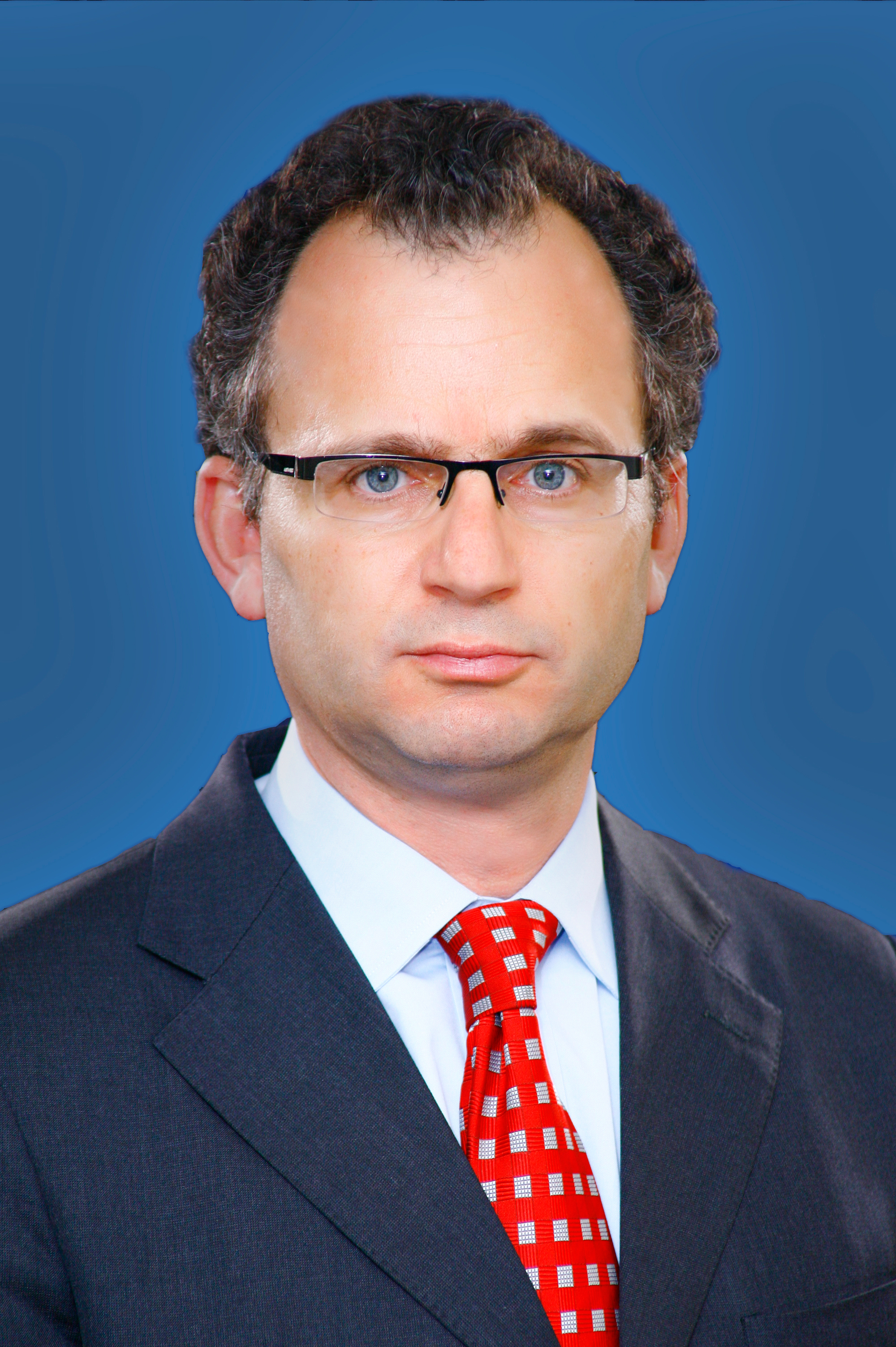
Senior Fellow at the Middle East Institute
Paul Salem is a senior fellow at the Middle East Institute.
Recent Work
Paul Salem
Paul Salem
Carnegie does not take institutional positions on public policy issues; the views represented herein are those of the author(s) and do not necessarily reflect the views of Carnegie, its staff, or its trustees.

But their "principal to principal" model will only be as effective as the political strength of each leader back home.

Damien Ma

U.S. unpredictability has allowed China to capitalize on its positioning as the “responsible great power”. Paradoxically, the more China wins the perception game, the more likely expectations will rise for Beijing to deliver not just words but to demonstrate with its deeds.

Chong Ja Ian

Hanoi and Beijing have long treated each other as distant cousins rather than comrades in arms. That might be changing as both sides draw closer to hedge against uncertainty and America’s erratic behavior.

Nguyễn Khắc Giang

Across Asia, China is better positioned to withstand energy shocks from the fallout of the Iran war. Its abundant coal capacity can ensure stability in the near term. Yet at the same time, the country’s energy transition away from coal will make it even less vulnerable during the next shock.
Damien Ma

Malaysia’s chairmanship sought to fend off short-term challenges while laying the groundwork for minimizing ASEAN’s longer-term exposure to external stresses.

Elina Noor