• Commentary
  • Research
  • Experts
  • Events
Carnegie China logoCarnegie lettermark logo
{
  "authors": [
    "Nikolay Petrov"
  ],
  "type": "legacyinthemedia",
  "centerAffiliationAll": "",
  "centers": [
    "Carnegie Endowment for International Peace",
    "Carnegie Russia Eurasia Center"
  ],
  "collections": [],
  "englishNewsletterAll": "",
  "nonEnglishNewsletterAll": "",
  "primaryCenter": "Carnegie Russia Eurasia Center",
  "programAffiliation": "",
  "programs": [],
  "projects": [],
  "regions": [
    "Caucasus",
    "Russia"
  ],
  "topics": [
    "Political Reform"
  ]
}
Source: Getty

In The Media
Carnegie Russia Eurasia Center

The Kremlin's New Man in the Far East

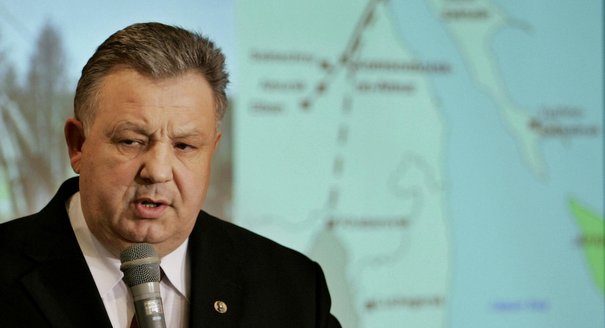
By appointing Khabarovsk Governor Viktor Ishayev as the presidential envoy to the Far East Federal District the Kremlin is establishing a powerful and competent government lobbyist for the interests of the Far East.

Link Copied
By Nikolay Petrov
Published on May 12, 2009

Source: The Moscow Times

The Kremlin's New Man in the Far EastShortly before passing the benchmark of his first year in office, President Dmitry Medvedev made a staffing decision that was his fourth change to a presidential envoy position and his 15th affecting a governorship. Khabarovsk Governor Viktor Ishayev became the first person appointed as presidential envoy to a federal district after serving as governor. 

What was the logic behind the Kremlin's decision to name Ishayev as presidential envoy to the Far East Federal District? More than one reason might apply here. Sometimes officials are appointed as presidential envoys in an effort to resolve problems affecting the whole region, but more often this assignment is meant as an "honorable discharge." The Far East is a tangled web of serious political and economic problems that have only deepened during the crisis. It is no coincidence that presidential envoys there have been switched with such frequency -- Ishayev is the fourth. Only the presidential envoys to Russia's southern district have been switched more often. 
 
Ishayev is not only a successful manager who has served as the regional head for almost two decades, but also heads the Association for Economic Cooperation of the Far East and Zabaikalsky Regions and is a member of the Academy of Sciences in economics. In addition, Ishayev developed an alternative government program for the country's economic development and has successfully lobbied for more attention for the Far East. 
 
It would seem that Ishayev has the necessary tools to help develop the Far East Federal District. What's more, Vladivostok is slated to host the Asia-Pacific Economic Cooperation summit in 2012, but preparations for the event lag far behind schedule. The region needs a leader who can provide serious oversight of Primorye's political and economic elite. Who is better to fulfill that role than a local leader experienced with the rough and tumble of the region's competing groups? 
 
But there is a more compelling reason why the Kremlin named Ishayev to the presidential envoy post. In 2004, Ishayev headed a movement against the government's plan for the monetization of benefits. That action greatly upset the Kremlin and became the deciding factor in then-President Vladimir Putin's decision -- announced shortly after the Beslan hostage crisis ended on Sept. 3, 2004 -- to switch from the direct elections of governors to a system of appointing them from Moscow. But the Kremlin was unwilling and unable to simply remove such a powerful and popular governor from his post. 
 
There was a similar incident in February. The Khabarovsk parliamentary speaker was removed from his post for expressing an opinion to Moscow not in line with the Kremlin's position. Strangely enough, immediately after the speaker lost his position, Ishayev took him on as the deputy chairman of his government. 
 
In moving Ishayev from the governor's post to the presidential envoy spot in the same region, the Kremlin sets a precedent and achieves several goals at once. The Kremlin creates a powerful and competent government lobbyist for the interests of the Far East, someone who is capable of preventing mistakes like the poorly designed decision to raise duties on used cars imported from Japan. In addition, the Kremlin will be able to apply pressure on Primorye with the goals of preparing for the APEC summit and preventing a situation like the mass protests in December. 
 
The next Kremlin move could very well be the replacement of Primorye Governor Sergei Darkin.
 
This comment first appeared in The Moscow Times.

About the Author

Nikolay Petrov

Former Scholar-in-Residence, Society and Regions Program, Moscow Center

Nikolay Petrov was the chair of the Carnegie Moscow Center’s Society and Regions Program. Until 2006, he also worked at the Institute of Geography at the Russian Academy of Sciences, where he started to work in 1982.

    Recent Work

  • Commentary
    Moscow Elections: Winners and Losers

      Nikolay Petrov

  • Commentary
    September 8 Election As a New Phase of the Society and Authorities' Coevolution

      Nikolay Petrov

Nikolay Petrov
Former Scholar-in-Residence, Society and Regions Program, Moscow Center
Nikolay Petrov
Political ReformCaucasusRussia

Carnegie does not take institutional positions on public policy issues; the views represented herein are those of the author(s) and do not necessarily reflect the views of Carnegie, its staff, or its trustees.
More Work from Carnegie China

  • Commentary
    Is China Willing to Influence Russia on the Ukraine War?

    Beijing is trying to navigate the overall situation regarding Ukraine, especially the substance of interactions between Washington and Moscow.
      • Ellen Nakashima
      • Zhao Long
      • +1

      Ellen Nakashima, Zhao Long, Pavlo Klimkin, …
  • Commentary
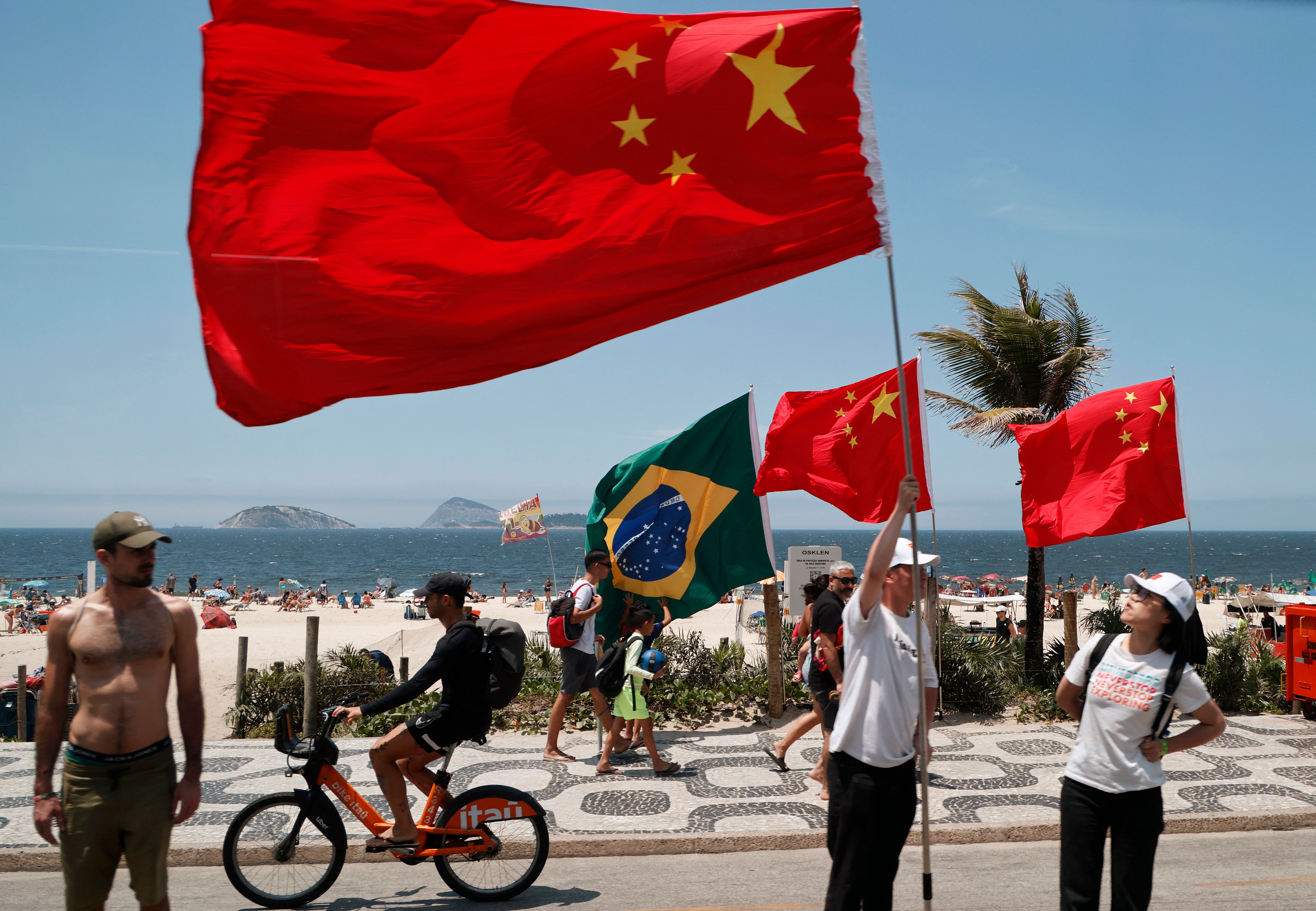
    The Challenges Behind China’s Global South Policies

    While China will remain a significant political and economic force in the Global South, its ambition to leverage the Global South as a counterbalance to the United States and the Global North is far from assured.

      Xue Gong
  • Commentary
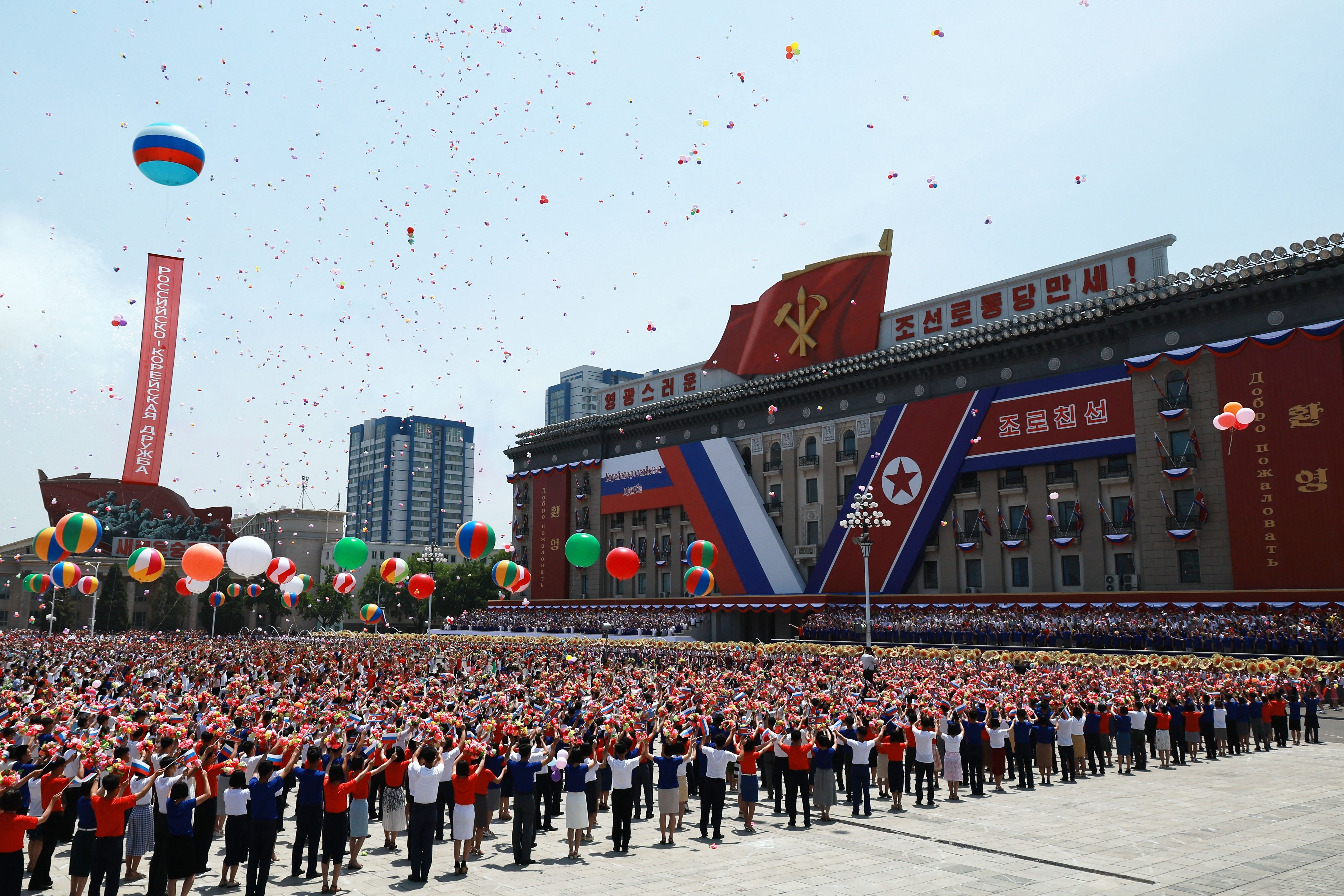
    Beyond the Putin-Kim Alliance: How Can the International Community Engage China to Contain Nuclear Risks Over the Korean Peninsula?

    Faced with an increase in strategic maneuvering by Moscow and Pyongyang, Beijing will not sit idly by and allow Putin and Kim to shape the security environment on its behalf.

      Tong Zhao
  • Commentary
    What Does Xi Jinping Want From Central Asia?

    China’s growing attention to Central Asia is perceived as a harbinger of tectonic shifts in regional geopolitics.

      Temur Umarov
  • Commentary
    China-Europe Relations, Two Years After Russia Invaded Ukraine

    The Russian invasion of Ukraine is a turning point in the EU-China relationship, and evolution of the China-Russia relationship will continue to impact EU-China relations.

      Yifan Ding, Alice Ekman

Get more news and analysis from
Carnegie China
Carnegie China logo, white
Keck Seng Tower133 Cecil Street #10-01ASingapore, 069535Phone: +65 9650 7648
  • Research
  • About
  • Experts
  • Events
  • Contact
  • Careers
  • Privacy
  • For Media
Get more news and analysis from
Carnegie China
© 2026 Carnegie Endowment for International Peace. All rights reserved.