

Commentary
Dmitri Trenin
{
  "authors": [
    "Dmitri Trenin"
  ],
  "type": "legacyinthemedia",
  "centerAffiliationAll": "dc",
  "centers": [
    "Carnegie Endowment for International Peace",
    "Carnegie Europe",
    "Carnegie Russia Eurasia Center"
  ],
  "collections": [],
  "englishNewsletterAll": "ctw",
  "nonEnglishNewsletterAll": "",
  "primaryCenter": "Carnegie Russia Eurasia Center",
  "programAffiliation": "NPP",
  "programs": [
    "Nuclear Policy"
  ],
  "projects": [
    "U.S.-Russia Bilateral Presidential Commission"
  ],
  "regions": [
    "Caucasus",
    "Russia"
  ],
  "topics": [
    "Nuclear Policy",
    "Nuclear Energy"
  ]
}
Source: Getty
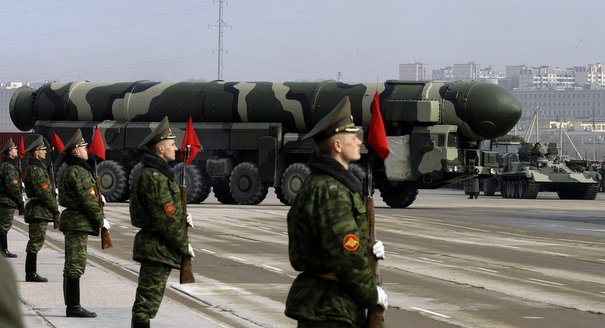
While Russian leaders support the idea of a world free of nuclear weapons in theory, the Russian security community is still committed to the principle of nuclear deterrence.
Source: eJournal USA

Nearly a quarter-century later, the Russian leadership has returned to reliance upon the doctrine of nuclear deterrence. While Russian leaders do not challenge President Obama’s long-term vision of a world free of nuclear weapons, and Russia continues to negotiate new agreements to reduce nuclear weapons stockpiles, nuclear deterrence is even more entrenched in the thinking of the Russian security community today than during the Cold War. There are at least two reasons for this.
First, Russia is a relatively weak conventional military power. In Gorbachev’s days, the Soviet Union deployed more tanks than the rest of the world’s countries combined and kept half a million men in a high state of readiness in Eastern Europe. A decade later, when Russian leader Vladimir Putin wished to suppress Chechen separatism, he found amid a million-strong military that the genuinely capable force numbered only about 65,000. Since the end of the Soviet Union, China has been buying many more Russian combat aircraft than Russia’s own air force.
Russia’s current military reform is far more successful at dismantling the existing military organization than at building its 21st-century successor. For the first time ever, Russia is a conventional military underdog on both of its strategic flanks, in Europe and Asia. Nuclear deterrence is Moscow’s answer to that strategic dilemma.
Second, Russia insists on retaining the strategic independence that characterizes a great power. This requires a rough equality between U.S. and Russian nuclear arsenals. Absent nuclear weapons, the Russo-American military equation becomes heavily skewed in favor of the United States.
To put it differently: If other factors remain unchanged, a world free of nuclear weapons is a world safe for U.S. conventional military hegemony. Less obvious but equally true, Russia’s nuclear advantage over its Chinese neighbor balances China’s increasing conventional strength. The price of “great-powerdom,” for Russia, is dependence on nuclear weapons, acceptance of the inherent insecurity they bring, and reliance upon nuclear deterrence. But advances in military technology hold the potential to upset this equation.
Russia therefore links its endorsement of strategic arms reductions to constraints on new technologies such as missile defenses and what it calls “weaponization of space.” Both are areas where the United States is perceived as holding the advantage. Russia also advocates expanding the U.S.-Russian strategic dialogue to include China.
A crucial step here would be to link U.S. and Russian missile defenses in a joint system. This would obviate reliance on mutually assured destruction. Deterrence would, at last, become a thing of the past. In principle, the Russian government favors cooperation toward this goal. For the moment, however, it lacks a clear strategy of reaching the new strategic world.
A world free from nuclear weapons would be a world transformed. Such a world would require mutual trust among the major powers (above all, the United States, Russia, and China), cooperation on strategic defenses, and a wide-ranging security collaboration among them that would consign conventional military balances (and imbalances) to history.
This is a tall order by any standard. Yet without it a world free from nuclear weapons will remain a dream — or a nightmare.
Former Director, Carnegie Moscow Center
Trenin was director of the Carnegie Moscow Center from 2008 to early 2022.
Recent Work
Dmitri Trenin
Dmitri Trenin
Carnegie does not take institutional positions on public policy issues; the views represented herein are those of the author(s) and do not necessarily reflect the views of Carnegie, its staff, or its trustees.
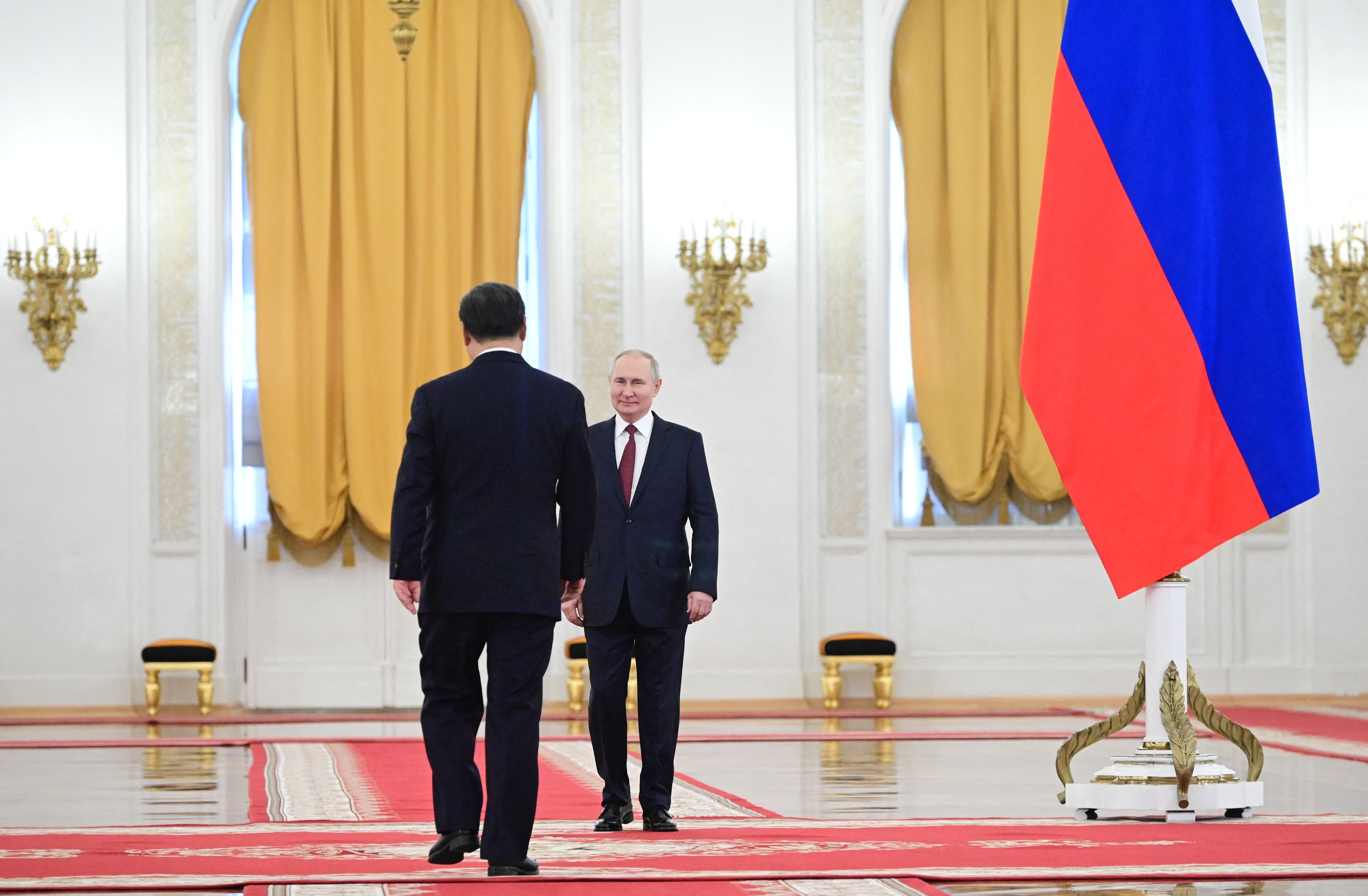
Beijing is trying to navigate the overall situation regarding Ukraine, especially the substance of interactions between Washington and Moscow.
Ellen Nakashima, Zhao Long, Pavlo Klimkin, …
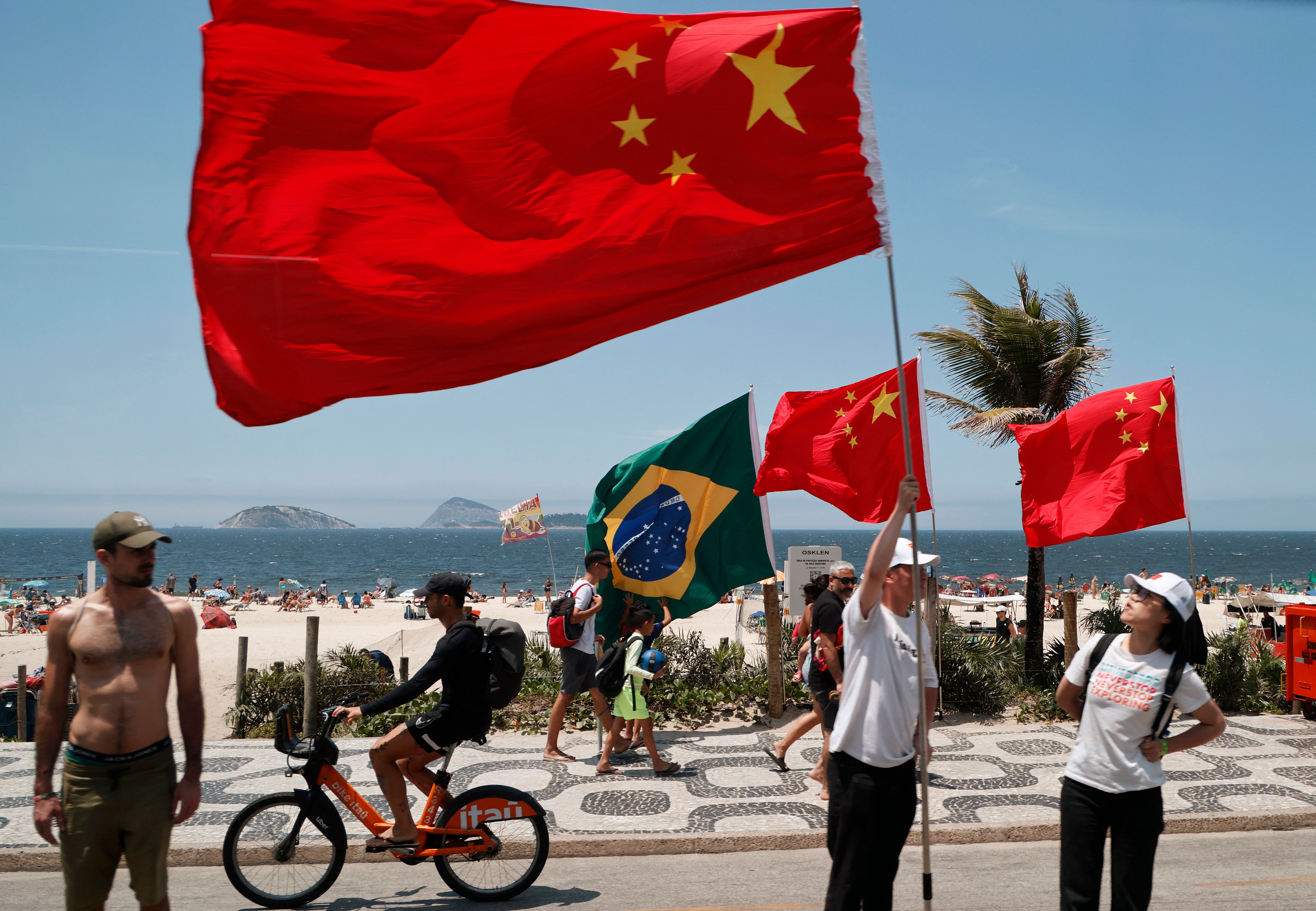
While China will remain a significant political and economic force in the Global South, its ambition to leverage the Global South as a counterbalance to the United States and the Global North is far from assured.

Xue Gong
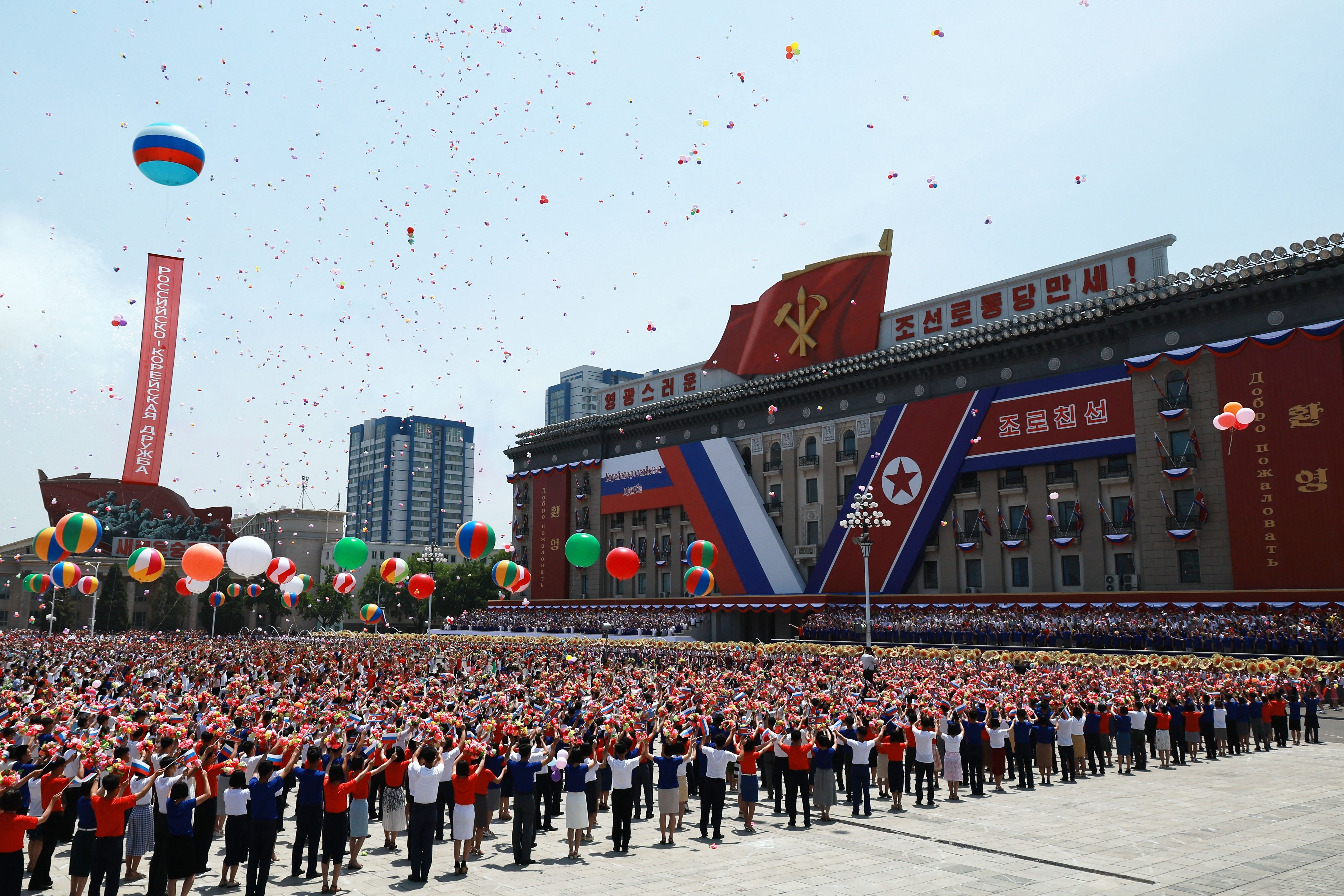
Faced with an increase in strategic maneuvering by Moscow and Pyongyang, Beijing will not sit idly by and allow Putin and Kim to shape the security environment on its behalf.

Tong Zhao
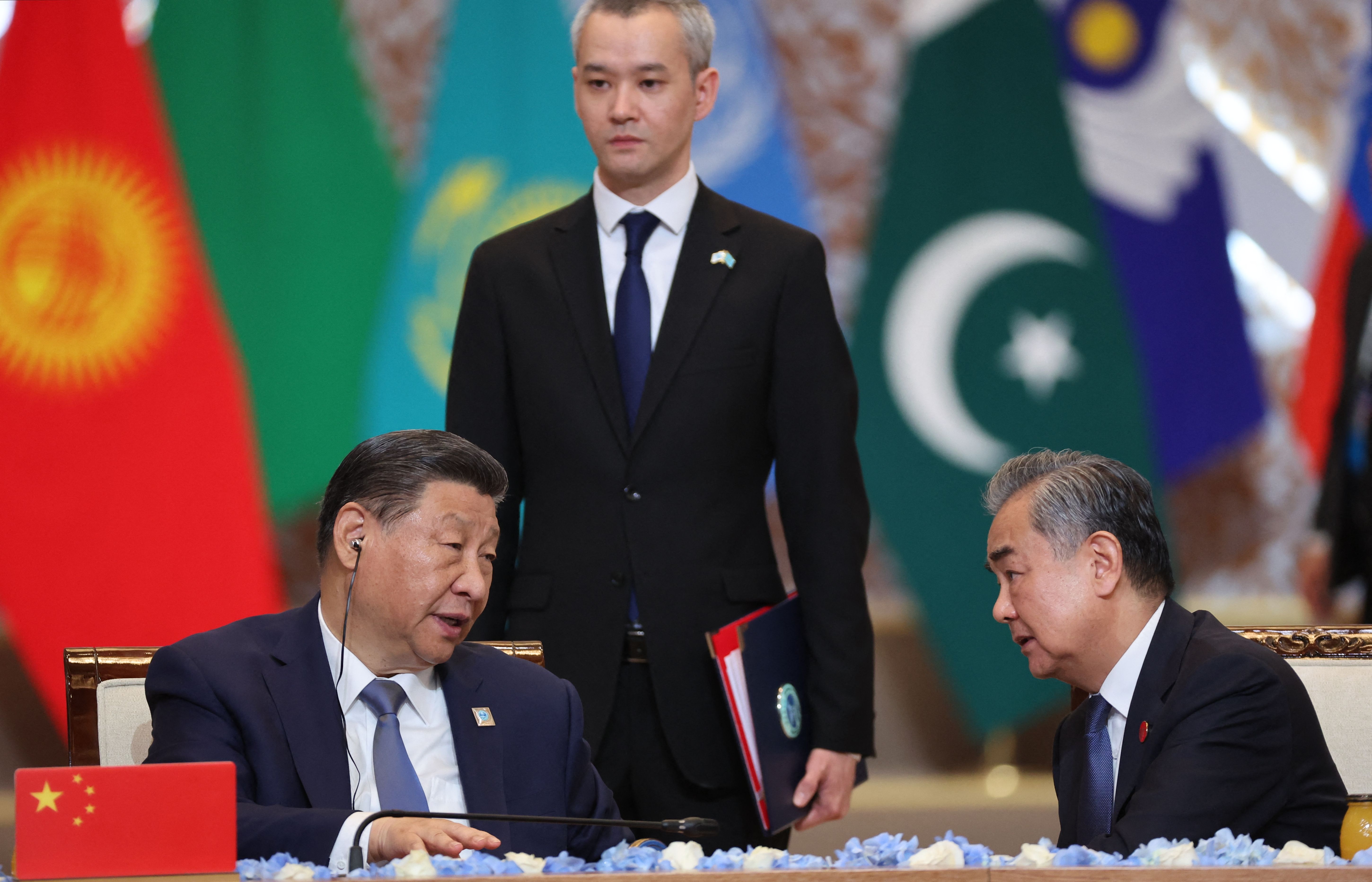
China’s growing attention to Central Asia is perceived as a harbinger of tectonic shifts in regional geopolitics.

Temur Umarov
The Russian invasion of Ukraine is a turning point in the EU-China relationship, and evolution of the China-Russia relationship will continue to impact EU-China relations.
Yifan Ding, Alice Ekman