

Commentary
Thomas de Waal
{
  "authors": [
    "Thomas de Waal"
  ],
  "type": "legacyinthemedia",
  "centerAffiliationAll": "dc",
  "centers": [
    "Carnegie Endowment for International Peace",
    "Carnegie Europe",
    "Carnegie Russia Eurasia Center"
  ],
  "collections": [],
  "englishNewsletterAll": "ctw",
  "nonEnglishNewsletterAll": "",
  "primaryCenter": "Carnegie Europe",
  "programAffiliation": "russia",
  "programs": [
    "Russia and Eurasia"
  ],
  "projects": [],
  "regions": [
    "Caucasus",
    "Azerbaijan",
    "Armenia"
  ],
  "topics": [
    "Security"
  ]
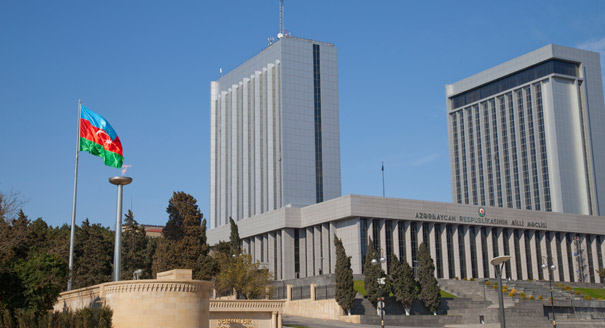
}
Source: Getty
While war is not likely to break out over Nagorno-Karabakh in the near future, there is a growing possibility that escalation in the tension between Azerbaijan and Armenia could kill the peace process.
Source: NEWS.am

Unfortunately there is no basis to believe that there will be a political breakthrough in the talks on Nagorno-Karabakh in Astana. Rather the opposite. Ever since the freezing of the Armenia-Turkey process earlier this year, the Karabakh talks have been dead and the situation on the Line of Contact has worsened. Also, domestic public opinion in both Azerbaijan and on the Armenian side is pushing against compromise and peace which makes it even harder for Presidents Aliyev and Sarkisian to agree to the Basic Principles, even if they wish to. This means that the only pressure on the two leaders to make peace must come from abroad, but the basic problem remains that the international powers do not have a high enough level of interest or resources to push Armenians and Azerbaijanis to sign an agreement. Local factors are much stronger than geopolitical ones in this conflict.
There is an opinion that the negotiations will last till Azerbaijan launches a war. What do you think is war likely to break out in the Karabakh conflict zone?
I don’t believe there is a strong likelihood of a war over Karabakh, in the next two or three years at least, although the logic of Azerbaijan’s military build-up makes it a danger in the long term. My main worry is that another bad incident on the Line of Contact could escalate, result in the death of a few dozen young men and kill off the current peace process. That would make the situation much more difficult and the Line of Contact much more dangerous. That is why I believe the priority is to strengthen the ceasefire regime around Nagorno-Karabakh.
Will the negotiations bring to final solution to the conflict or they pursue another goal, for instance freezing of the conflict?
The current negotiation process looks more like “conflict management” than a substantial peace process. Of course a frozen conflict is better than war but I don’t believe that Azerbaijan will allow this conflict to be frozen in the long term without at least the return of the five territories east of Nagorno-Karabakh. So I believe it is better to begin confidence-building-measures that will restore trust between the two sides and that will reduce the likelihood of conflict.

Senior Fellow, Carnegie Europe
Thomas de Waal is a senior fellow at Carnegie Europe, specializing in Eastern Europe and the Caucasus.
Recent Work
Thomas de Waal
Thomas de Waal
Carnegie does not take institutional positions on public policy issues; the views represented herein are those of the author(s) and do not necessarily reflect the views of Carnegie, its staff, or its trustees.

The Thai-Cambodian conflict highlights the limits to China's peacemaker ambition and the significance of this role on Southeast Asia’s balance of power.

Pongphisoot (Paul) Busbarat
Beijing believes that Washington is overestimating its own leverage and its ability to handle the trade war’s impacts.


Rick Waters, Sheena Chestnut Greitens
Tapping our network of China experts in the region, Carnegie China offers this latest “China Through a Southeast Asian Lens” report to offer preliminary assessments of whether the U.S. effort to reshape the global trading order will lead countries in the region to tilt toward Beijing.



Selina Ho, Khin Khin Kyaw Kyee, Joseph Ching Velasco, …
Because strategic, economic, and ideological perceptions of China contain multiple, sometimes contradictory facets in Southeast Asia, receptions of and responses to Beijing diverge across and within state lines.



Evan A. Feigenbaum, Chong Ja Ian, Elina Noor
Most Southeast Asian states behave as if the actions of their Northeast Asian neighbors and the Philippines will be sufficient to maintain a regional status quo from which they can benefit.
Chong Ja Ian