

Commentary
Dmitri Trenin
{
  "authors": [
    "Dmitri Trenin"
  ],
  "type": "legacyinthemedia",
  "centerAffiliationAll": "",
  "centers": [
    "Carnegie Endowment for International Peace",
    "Carnegie Russia Eurasia Center"
  ],
  "collections": [],
  "englishNewsletterAll": "",
  "nonEnglishNewsletterAll": "",
  "primaryCenter": "Carnegie Russia Eurasia Center",
  "programAffiliation": "",
  "programs": [],
  "projects": [],
  "regions": [
    "Caucasus",
    "Russia"
  ],
  "topics": [
    "Political Reform"
  ]
}
Source: Getty
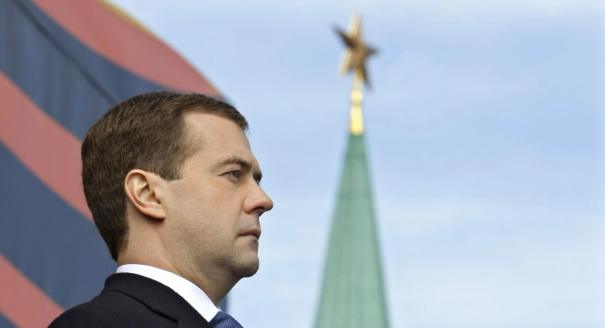
Dmitry Medvedev’s four years of presidency were a missed opportunity in terms of modernizing the country. His most important achievements were in foreign policy, not in domestic policy.
Source: Valdai Discussion Club

The political reform is actually the product of social movement in Russia, which resulted in mass demonstrations in Moscow. And it was in response to those demonstrations that Medvedev laid out his political reform. The reform would have been so much more credible had Medvedev been able to introduce it during his first couple of years as President. And yet he temporized. Again, the reason for temporizing is that Medvedev was not fully free to operate as the President of the Russian Federation. During his time as President, he was very much an agent of his mentor, Vladimir Putin. Will the political reform have consequences? I think it will. Are those consequences positive? I suppose on balance they will be. Is this a step in the right direction? It is. Is this enough? No. Will the political process in Russia move forward? It will. Will political competition in Russia rise? It will. Not so much as a function of the reform though, rather as a function of the growing social and political maturity of the Russian people.
It was more a window dressing. They changed the name, but did not change much in terms of substance. Clearly, there’s more focus on the police, people are becoming less tolerant of what they see as corruption, first of all, in the police force, the brutal methods that the police are using. But the reform itself did not go very deep. The rot is very significant in the police department, so, the reform is still ahead of us. If we want to have modern police the reform still needs to be carried out.
The “reset” of U.S.-Russian relations has been largely successful. The problem with the “reset” is that it is not a policy, it is not a strategy, it is more a clearing operation which allows you to formulate the future framework of cooperation, which allows you to do away with the irritants to the relationship and move forward to grasp at some of the more low-hanging fruit. And those achievements of the “reset”, have been quite real but again quite limited. I mean the New START Treaty, for example, or the WTO accession, or the 1-2-3 Agreement on nuclear energy cooperation with the United States.
What awaits us in the U.S.-Russia relations, is a broader reassessment of why Russia needs the United States and why the United States needs Russia. The leaders in Russia and the United States will proceed with the relationship, and after the U.S. elections, they will need to come up with broad strategies and policies to implement those strategies that would lead to a far less adversarial, progressively more demilitarized, and essentially more productive relationship between the two countries. This is the way to go, but not a prediction.
It is difficult to say, because Dmitry Medvedev said many things, he outlined many projects but the problem is that none of them were brought to a conclusion. Medvedev was a constrained president. He had to operate in the shadow of his mentor and he remains very loyal to Vladimir Putin. Needless to say that he was more successful in foreign policy than in domestic politics. In domestic politics, he might have become an agent of change had he not decided to, let’s say, submit himself to the will of Vladimir Putin and had not abdicated last September. Again he’s someone who meant well, he still has a political future as Prime Minister and hopefully he will become eventually more autonomous as a politician who is able to stand on his own feet. Anyway, I hope so. I don’t believe that at this point we can talk about the three initiatives because he hasn’t seen them through to the end and that’s what counts in politics. One does not become famous for a speech, one’s presidency is not graded according to one’s vocabulary, it’s graded according to one’s accomplishments. So far there has not been a sufficient number of those accomplishments, especially in domestic politics.
This interview originally appeared on the Valdai Discussion Club site.
Former Director, Carnegie Moscow Center
Trenin was director of the Carnegie Moscow Center from 2008 to early 2022.
Recent Work
Dmitri Trenin
Dmitri Trenin
Carnegie does not take institutional positions on public policy issues; the views represented herein are those of the author(s) and do not necessarily reflect the views of Carnegie, its staff, or its trustees.
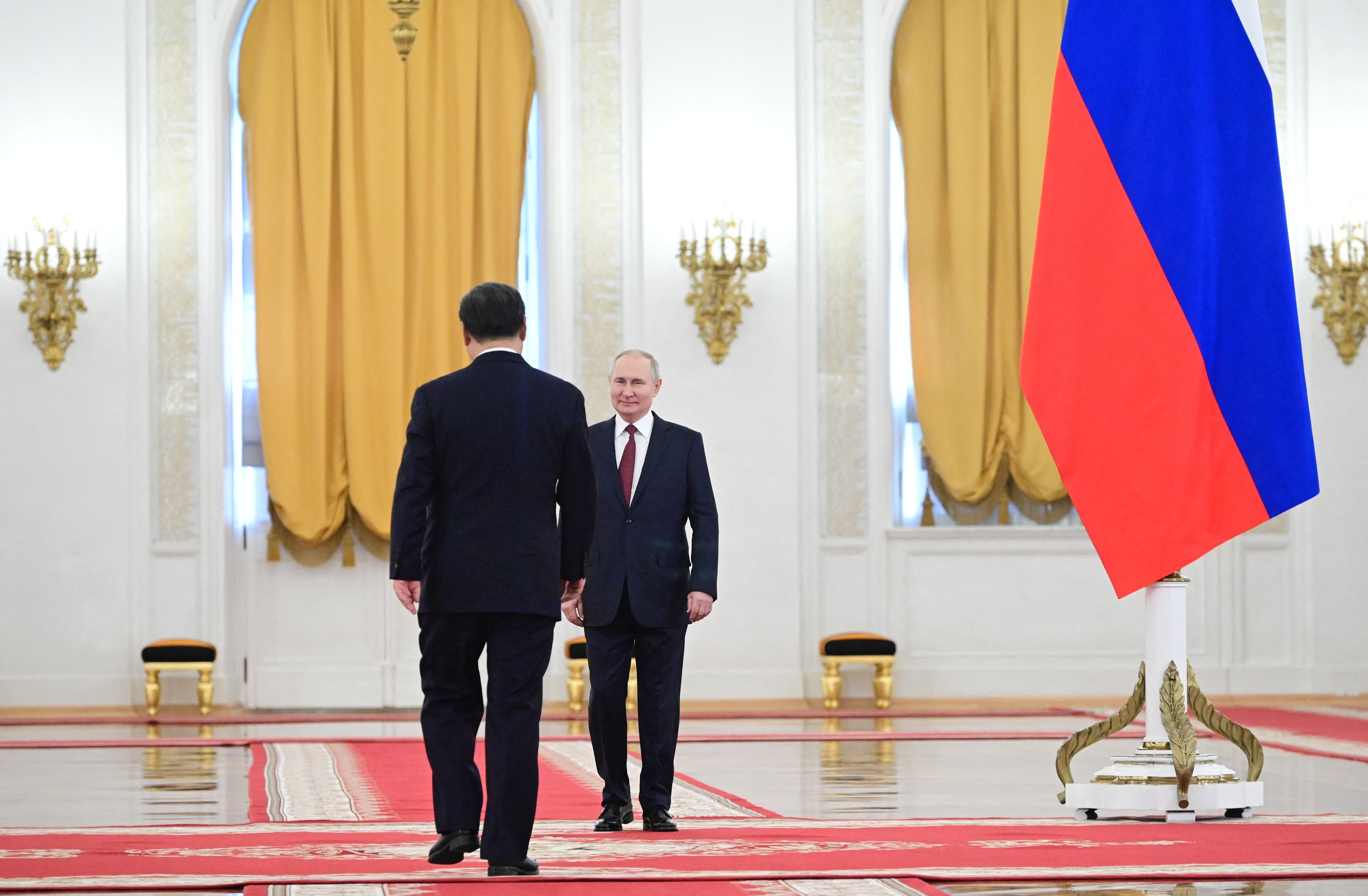
Beijing is trying to navigate the overall situation regarding Ukraine, especially the substance of interactions between Washington and Moscow.
Ellen Nakashima, Zhao Long, Pavlo Klimkin, …
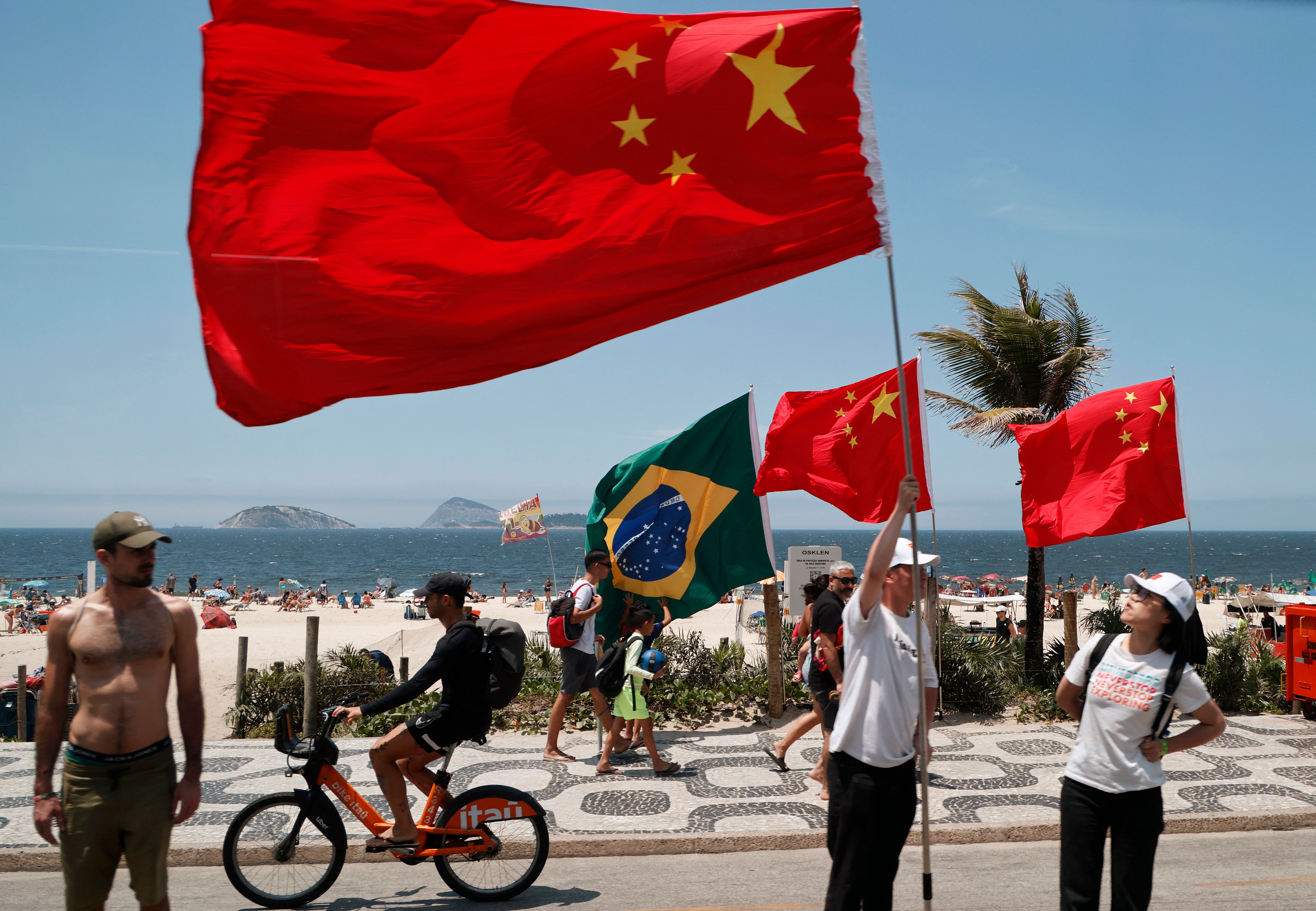
While China will remain a significant political and economic force in the Global South, its ambition to leverage the Global South as a counterbalance to the United States and the Global North is far from assured.

Xue Gong
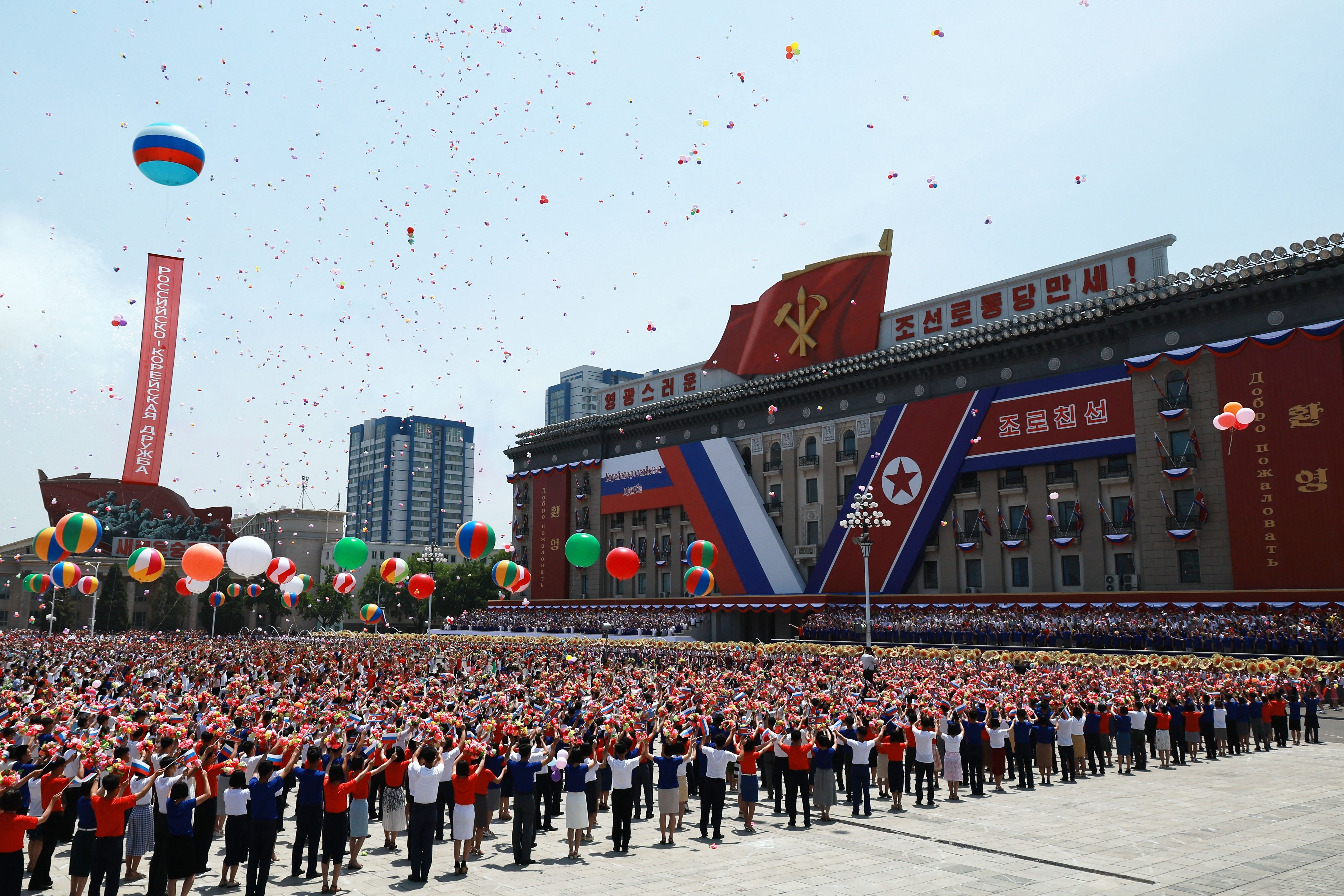
Faced with an increase in strategic maneuvering by Moscow and Pyongyang, Beijing will not sit idly by and allow Putin and Kim to shape the security environment on its behalf.

Tong Zhao
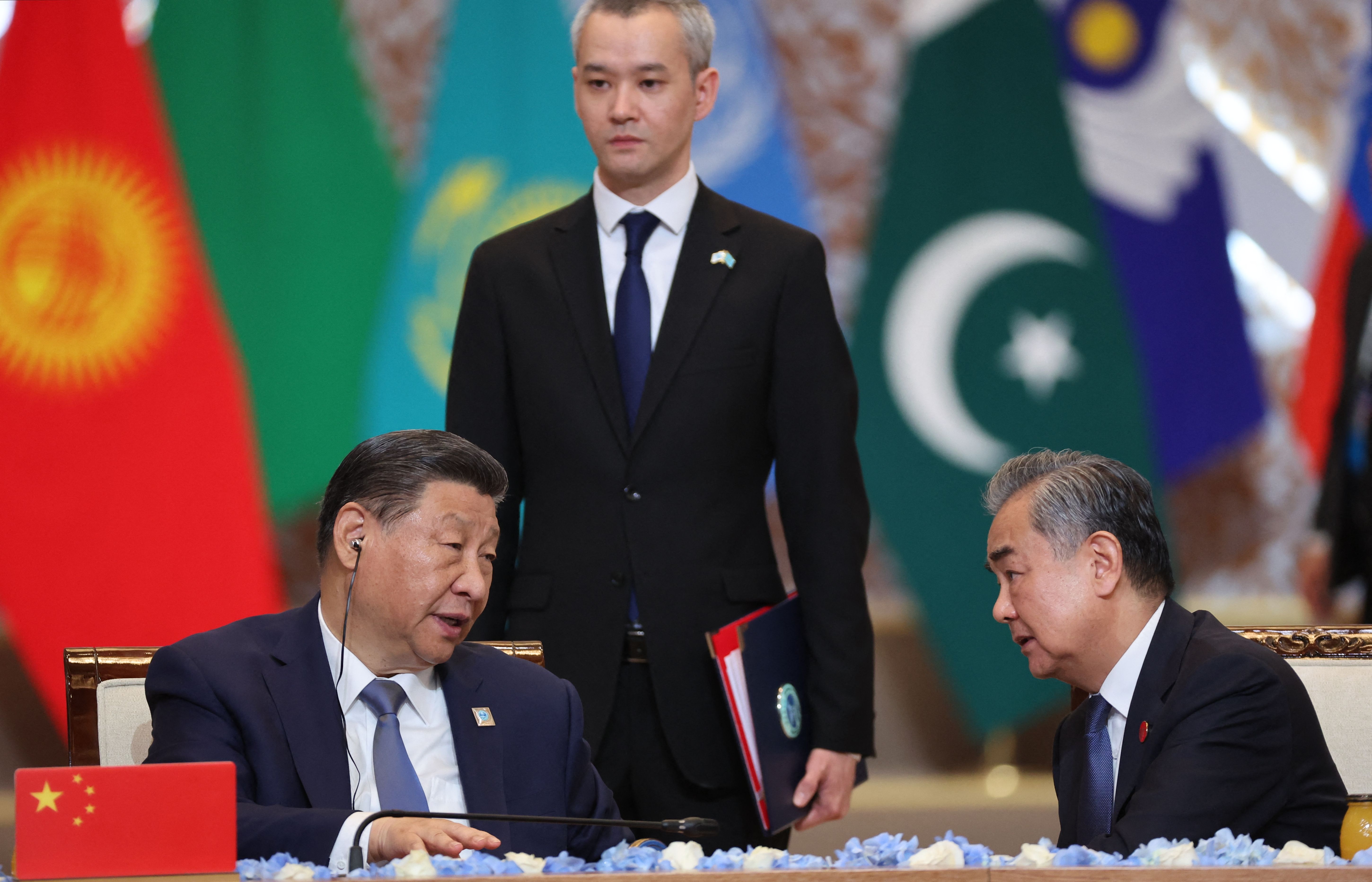
China’s growing attention to Central Asia is perceived as a harbinger of tectonic shifts in regional geopolitics.

Temur Umarov
The Russian invasion of Ukraine is a turning point in the EU-China relationship, and evolution of the China-Russia relationship will continue to impact EU-China relations.
Yifan Ding, Alice Ekman