

In The Media
Lilia Shevtsova
{
  "authors": [
    "Lilia Shevtsova"
  ],
  "type": "legacyinthemedia",
  "centerAffiliationAll": "",
  "centers": [
    "Carnegie Endowment for International Peace",
    "Carnegie Russia Eurasia Center"
  ],
  "collections": [],
  "englishNewsletterAll": "",
  "nonEnglishNewsletterAll": "",
  "primaryCenter": "Carnegie Russia Eurasia Center",
  "programAffiliation": "",
  "programs": [],
  "projects": [],
  "regions": [
    "North America",
    "United States",
    "Russia"
  ],
  "topics": [
    "Political Reform",
    "Foreign Policy"
  ]
}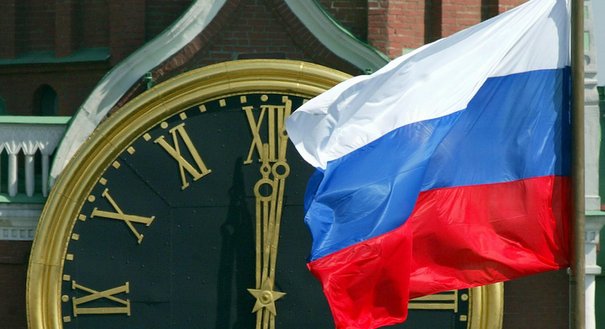
Source: Getty
It is understandable that Western leaders prefer to strike tactical deals with the Kremlin and hope Russia does not go down on their watch. But there is another approach: stop helping the Kremlin.
Source: Financial Times
For a prime example of a state with a split personality, watch Russia. On one hand, President Vladimir Putin writes to US counterpart Barack Obama, expressing hopes that their “relationship will move ahead in various areas”. On the other, the Kremlin returns to the mantra of “unique Russian civilisation” and does its best to close the country to the west. Western observers may shrug, saying they’ve seen it all before. But actually, things have changed.
First, Mr Putin’s team no longer cares what the west thinks. Second, the Kremlin has switched from imitating democracy to deterring European values. Anyone who thinks this shift will not affect Russian foreign policy is wrong. It is already having an impact. Look at Kremlin defence spending and Moscow’s attempts to create a Eurasian Union from former Soviet states.But what, asks the optimist, about the partnerships of state-controlled energy group Rosneft with ExxonMobil and BP? Mr Putin needs western business to prolong his petrostate but the fate of Shell and BP in Russia proves they are at the mercy of the Kremlin’s moods.
The Kremlin is offering new rules that sound like an ultimatum. Accept the concept of total state sovereignty, allowing any regime (Syria included) to treat its people as it sees fit. Co-operate on trade, investment and other areas of mutual interest. Do not obstruct our elite’s activities in your countries, which means forgetting about the Magnitsky act barring Russian officials accused of human rights violations from the US. Accept that we have a “sphere of interests”. And no lectures about democracy.
The west can remain a strategic partner if it accepts these rules, and if the “strategy” means giving the regime life-support. As with the US-Russian reset at the start of Mr Obama’s first term, the west will be free to play “Let’s pretend”, but without much help from Moscow.
Why now? After the popular protests of 2011-12, the Kremlin resorted to repression. Hoping coercion will keep the protests from growing, Mr Putin has tried to avoid mass violence – but sooner or later he will have to escalate repression.
To lend legitimacy to its repressive policies, the Kremlin must turn to containment of the west as a hostile civilisation. Unlike Soviet leaders, Mr Putin is not ready to adopt a policy of isolation and confrontation. Note that Moscow, while retaliating against the Magnitsky act, took no steps that would substantially worsen relations with the US. It did not suspend participation in the transit deal with the coalition in Afghanistan, nor cause problems for US investors in Russia. Instead, it came up with a law prohibiting American adoptions, showing the US and Europe it has selected its targets and is prepared to inflict pain.
Today the Kremlin is holding orphans hostage. Next time, perhaps, it will deny the opposition exit visas and proceed with political trials. The Putin regime is testing not military might but the west’s determination to follow its principles. The Kremlin has always been able to reach agreement with western leaders, and it is confident they will choose not to pester it this time.
Russia is now ruled by people with a greater propensity to violence than the aged leadership of the final days of the Soviet Union. Who knows whether a regime already cracking down on its citizens will hold back from a confrontational stance to the outside world? The west’s traditional methods of dealing with Russia (from realpolitik to reset) have stopped working. It faces a state that preserves ambiguity – whose elite is now integrated into its own societies and helps promote some of its interests but is at the same time fighting western principles at home.
It is understandable that western leaders prefer to strike tactical deals with the Kremlin and hope Russia does not go down on their watch. But there is another approach: stop helping the Kremlin. How? Practise what you preach. Deploy conditionality to the Russian elite integrated into the west (your enjoyment of our benefits depends on how you behave at home). Stop playing “Let’s pretend” in order to appease the Kremlin. In this way the west, while reclaiming its own principles, can also help Russian society transform itself.

Former Senior Associate, Russian Domestic Politics and Political Institutions Program, Moscow Center
Shevtsova chaired the Russian Domestic Politics and Political Institutions Program at the Carnegie Moscow Center, dividing her time between Carnegie’s offices in Washington, DC, and Moscow. She had been with Carnegie since 1995.
Recent Work
Lilia Shevtsova
Lilia Shevtsova
Carnegie does not take institutional positions on public policy issues; the views represented herein are those of the author(s) and do not necessarily reflect the views of Carnegie, its staff, or its trustees.

But their "principal to principal" model will only be as effective as the political strength of each leader back home.

Damien Ma

U.S. unpredictability has allowed China to capitalize on its positioning as the “responsible great power”. Paradoxically, the more China wins the perception game, the more likely expectations will rise for Beijing to deliver not just words but to demonstrate with its deeds.

Chong Ja Ian

Hanoi and Beijing have long treated each other as distant cousins rather than comrades in arms. That might be changing as both sides draw closer to hedge against uncertainty and America’s erratic behavior.

Nguyễn Khắc Giang

Across Asia, China is better positioned to withstand energy shocks from the fallout of the Iran war. Its abundant coal capacity can ensure stability in the near term. Yet at the same time, the country’s energy transition away from coal will make it even less vulnerable during the next shock.
Damien Ma

Malaysia’s chairmanship sought to fend off short-term challenges while laying the groundwork for minimizing ASEAN’s longer-term exposure to external stresses.

Elina Noor