

In The Media
Lilia Shevtsova
{
  "authors": [
    "Lilia Shevtsova"
  ],
  "type": "legacyinthemedia",
  "centerAffiliationAll": "",
  "centers": [
    "Carnegie Endowment for International Peace",
    "Carnegie Russia Eurasia Center"
  ],
  "collections": [],
  "englishNewsletterAll": "",
  "nonEnglishNewsletterAll": "",
  "primaryCenter": "Carnegie Russia Eurasia Center",
  "programAffiliation": "",
  "programs": [],
  "projects": [],
  "regions": [
    "Russia",
    "Eastern Europe",
    "Ukraine",
    "Western Europe"
  ],
  "topics": [
    "Political Reform",
    "Foreign Policy"
  ]
}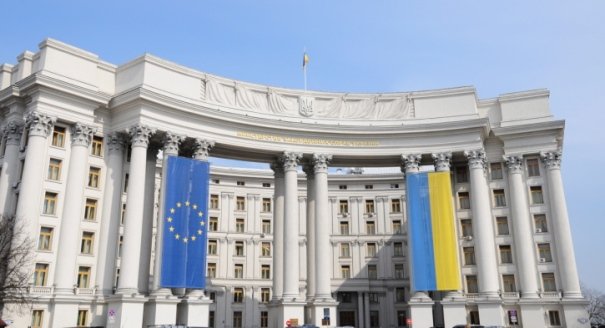
Source: Getty
Ukraine’s future will offer answers not only to the question of whether or not Russia will continue to see itself as an empire, but also to the question of how committed Europe is to the values it espouses and how far the West is prepared to expand its influence.
Source: American Interest
Over the past year we have witnessed three global developments that have demonstrated the limits not only of the current world order but also of Western civilization and its ability to confront challenges to that order. All three developments—the Syrian civil war, the Iranian nuclear problem, and the new Ukrainian rebellion—have demonstrated that at best the West can offer only partial solutions to global problems, if indeed it chooses to face up to those problems in the first place.
One might be tempted at first to pick the first two of these three developments, Syria and Iran, as the ones with the greatest possible impact. But in fact, of all three it is Ukraine’s destiny, the destiny of a European nation of 48 million people that could hold the key to the future of Russia and other “Eurasian” states, which has tremendous civilizational importance. What I mean by this is that Ukraine and its near- to medium-term future will give us answers not only to the question of whether or not Russia will continue to see itself as an empire, but also to the questions of how committed Europe is to the values it espouses, and how far the West is prepared to expand its influence, if it is to expand at all.The recent Eastern Partnership saga, culminating with Ukraine’s decision to ditch the Association Agreement (AA) with Europe at the Vilnius EU summit on November 29, is a dramatic story with many plot twists: desperate clinging to power, bluffing, predatory instincts, attempts to survive by bullying, naiveté, a lack of strategic thinking, and the drive for dignity and freedom. The lessons of this saga must still be learned if its disastrous repercussions are to be avoided. Indeed we have already seen those repercussions begin to unfold in Kiev, where the riot police brutally dispersed a peaceful “EuroMaidan” rally on November 30, and where, the next day, protesters (some believe they were provocateurs) attacked the presidential administration and the Prime Minister’s office, and occupied city council. The question is this: Is President Yanukovych ready to turn into a Ukrainian Lukashenko, or a Ukrainian Putin? The answer could have geopolitical consequences for the whole region.
To understand the “Vilnius story”, one must first put aside the debates about “winners” and “losers” that currently dominates the discussion. The reasons behind this story and the trends it highlighted are far more important. One must be ready to rethink yesterday’s conventional truths; the popular explanation of why Ukraine made an apparent U-turn after it seemed ready to hit the European on-ramp is that Putin’s pressure tactics were successful. The truth is more complicated. ...
Read the full text of this article in the American Interest.
Former Senior Associate, Russian Domestic Politics and Political Institutions Program, Moscow Center
Shevtsova chaired the Russian Domestic Politics and Political Institutions Program at the Carnegie Moscow Center, dividing her time between Carnegie’s offices in Washington, DC, and Moscow. She had been with Carnegie since 1995.
Recent Work
Lilia Shevtsova
Lilia Shevtsova
Carnegie does not take institutional positions on public policy issues; the views represented herein are those of the author(s) and do not necessarily reflect the views of Carnegie, its staff, or its trustees.

But their "principal to principal" model will only be as effective as the political strength of each leader back home.

Damien Ma

U.S. unpredictability has allowed China to capitalize on its positioning as the “responsible great power”. Paradoxically, the more China wins the perception game, the more likely expectations will rise for Beijing to deliver not just words but to demonstrate with its deeds.

Chong Ja Ian

Hanoi and Beijing have long treated each other as distant cousins rather than comrades in arms. That might be changing as both sides draw closer to hedge against uncertainty and America’s erratic behavior.

Nguyễn Khắc Giang

Across Asia, China is better positioned to withstand energy shocks from the fallout of the Iran war. Its abundant coal capacity can ensure stability in the near term. Yet at the same time, the country’s energy transition away from coal will make it even less vulnerable during the next shock.
Damien Ma

Malaysia’s chairmanship sought to fend off short-term challenges while laying the groundwork for minimizing ASEAN’s longer-term exposure to external stresses.

Elina Noor