

Commentary
But their "principal to principal" model will only be as effective as the political strength of each leader back home.
Damien Ma
{
  "authors": [
    "Akio Kawato"
  ],
  "type": "commentary",
  "centerAffiliationAll": "",
  "centers": [
    "Carnegie Endowment for International Peace",
    "Carnegie Russia Eurasia Center"
  ],
  "collections": [],
  "englishNewsletterAll": "",
  "nonEnglishNewsletterAll": "",
  "primaryCenter": "Carnegie Russia Eurasia Center",
  "programAffiliation": "",
  "programs": [],
  "projects": [],
  "regions": [
    "North America",
    "United States",
    "East Asia",
    "China",
    "Japan",
    "Russia"
  ],
  "topics": [
    "Security",
    "Military",
    "Foreign Policy"
  ]
}
Source: Getty
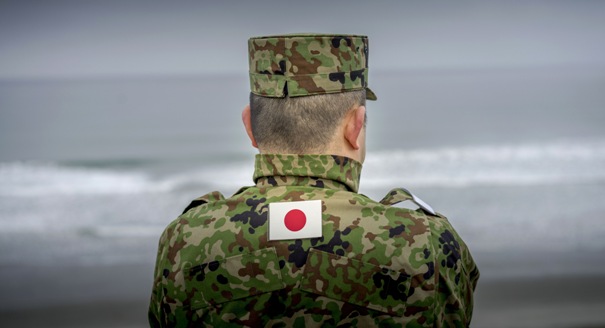
Japan’s new guidelines for overseas operation by the country’s Self-Defense Forces are not aimed at Russia. On the contrary, Japan’s pro-active policy serves the maintenance of balance of power in North-East Asia, which in its turn fits the interest of Russia.
On July 1 Japan’s Cabinet of Ministers adopted new guidelines for overseas operation by the country’s Self-Defense Forces. The decision, in a nutshell, means that if a foreign country, which has close relations with Japan, comes under armed attack in a way that threatens the existence of Japan, the Japanese government—even under the current Constitution—can use a minimum of military force to remove the threat. Some media claim that this is a 180 degrees turn in Japan’s security policy, because, they allege, the ninth article of Japan’s post-WWII Constitution forbids the country from having armed forces, not to speak of sending them abroad.
True, the Constitution states that “the Japanese people forever renounce war as a sovereign right of the nation and the threat or use of force as means of settling international disputes,” and that “in order to accomplish the aim of the preceding paragraph, land, sea, and air forces, as well as other war potential, will never be maintained. The right of belligerency of the state will not be recognized.” The reality, however, is different: Japan, the Constitution notwithstanding, de facto possesses modern and highly efficient Self-Defense Forces.
After the end of the Cold War the United States’ commitment to Japan’s security became more relative, and Japan started to augment its contribution to the U.S. security efforts, in order to keep the Japan-U.S. alliance intact. In 1992, Japan passed a law, which allowed sending the Self Defense Forces abroad for UN peace-keeping operations. During the Iraq War the Japanese government had a special law adopted by the Parliament designed to allow deployment of the Self Defense Forces to Iraq to take part in the the multi-national force authorized by the UN.
Therefore, the decision made on July 1 is not so much a 180 degree turn in Japan’s policy as an extension of the changes that have been taking place after the Cold War. The main motive is to secure the alliance with the United States in front of the growing military imbalance with China, and to raise Japan’s position in the world from that of “concubine of the United States” to at least that of “United States’ poodle.” The decision is not final, because it cannot be invoked in real action without amending and adopting related laws, which will certainly become an issue of hot political contention toward next spring. And next spring Japan is holding nation-wide elections for local municipalities, in which the Koumei Party, the LDP’s partner in the ruling coalition, will be obliged to take a “dovish” posture in order to placate its pacifism-oriented supporters.
Will the new laws make it possible for Tokyo to independently send the Self-Defense Forces to any country which has “close relations” with Japan? I doubt it, because that would become a real 180 degree turn in our security policy. Perhaps some activity may be needed to secure high-seas maritime security, but any act beyond it may incur large negative repercussion both at home and abroad.
Japan’s new initiative is not aimed at Russia. On the contrary, Japan’s pro-active policy serves the maintenance of balance of power in North-East Asia, which in its turn fits the interest of Russia.
Last but not least, the balance in nuclear armament in the region around Japan should also be put to the agenda in the future. Japan is obliged not to possess any nuclear weapons, while its neighbors are building up huge potentials. It is paramount that China should be invited to take part in the nuclear weapons reduction talks.
Akio Kawato
Writer
Akio Kawato is a former Japanese diplomat and blogger.
Carnegie does not take institutional positions on public policy issues; the views represented herein are those of the author(s) and do not necessarily reflect the views of Carnegie, its staff, or its trustees.

But their "principal to principal" model will only be as effective as the political strength of each leader back home.

Damien Ma

U.S. unpredictability has allowed China to capitalize on its positioning as the “responsible great power”. Paradoxically, the more China wins the perception game, the more likely expectations will rise for Beijing to deliver not just words but to demonstrate with its deeds.

Chong Ja Ian

Hanoi and Beijing have long treated each other as distant cousins rather than comrades in arms. That might be changing as both sides draw closer to hedge against uncertainty and America’s erratic behavior.

Nguyễn Khắc Giang

Across Asia, China is better positioned to withstand energy shocks from the fallout of the Iran war. Its abundant coal capacity can ensure stability in the near term. Yet at the same time, the country’s energy transition away from coal will make it even less vulnerable during the next shock.
Damien Ma
In the latest Five-Year Plan, the Chinese president cements the shift to an innovation-driven economy over a consumption-driven one.
Damien Ma