
• Commentary
  • Research
  • Experts
  • Events
Carnegie China logoCarnegie lettermark logo
{
  "authors": [
    "Mikhail Krutikhin"
  ],
  "type": "commentary",
  "centerAffiliationAll": "",
  "centers": [
    "Carnegie Endowment for International Peace",
    "Carnegie Russia Eurasia Center"
  ],
  "collections": [],
  "englishNewsletterAll": "",
  "nonEnglishNewsletterAll": "",
  "primaryCenter": "Carnegie Russia Eurasia Center",
  "programAffiliation": "",
  "programs": [],
  "projects": [],
  "regions": [
    "Russia"
  ],
  "topics": [
    "Economy",
    "Trade",
    "Climate Change",
    "Foreign Policy"
  ]
}

Source: Getty

Commentary
Carnegie Russia Eurasia Center

A Mixed Blessing?

The effect of the new sanctions on the Russian oil and gas industry might be very sensitive while at the same time saving large sums of money on projects with impossibly long payback prospects. Either way, Western governments are now doing basically what the Russian leader always wanted, staying away from Russia’s oil and gas.

Link Copied
By Mikhail Krutikhin
Published on Jul 31, 2014

The effect of the new sanctions on the Russian oil and gas industry might be very sensitive. Limited access to advanced technologies will impede or derail Russian projects of developing reserves on the continental shelf—particularly in Arctic seas. Domestic companies have not mastered such technologies and have next to no experience in offshore upstream ventures.

Many of these technologies cannot be replicated by the Russians, even though many government officials keep saying the national industries can be upgraded quickly to get on without any foreign assistance.

Partnerships may fall apart if the sanctions are imposed fully. Rosneft, for example, will be unable to build its LNG plant on Sakhalin Island and explore reserves in the Kara and Black Seas without the assistance of ExxonMobil. There will be awkward moments for such partners of Russian government-controlled companies as Shell, Statoil and Total as they begin closing down their offices in Russia.

The most powerful blow will be dealt to Russia’s expensive projects by the impossibility to borrow foreign cash on a long-term basis.

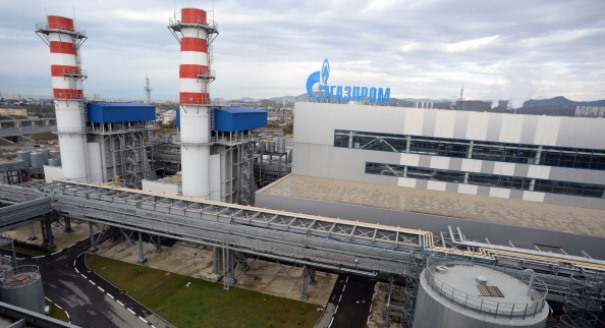
For Gazprom, it could be a mixed blessing. If the company cannot raise funds to finance its politicized and commercially non-viable projects, it might be told by the Kremlin to drop the ideas of building the Power of Siberia pipeline or the LNG plant in Vladivostok. Huge amounts of money would be saved for the national economy rather than wasted on projects with impossibly long payback prospects.

Unfortunately, this is probably but a dream. The Russian leadership has never stopped at such trifles and launched uneconomical projects regardless of their negative value just to make ‘friendly’ contractors happy. In this case, the missing funds would be taken from social programs—or taxes would be raised, or…

Paradoxically, the decision of the Western governments to restrict their companies’ participation in the Russian oil and gas industry, and prevent banks from lending money to Gazprom or Rosneft, is essentially a continuation of a process launched by Vladimir Putin in 2008. It was the Russian president who initiated a series of xenophobic bills that restricted international companies’ access to mineral licenses, large-scale projects and any form of equality with domestic players in this business. It was a very heavy blow on the industry. Today, Western governments are doing basically what the Russian leader wanted them to do, staying away from Russia’s oil and gas.

Mikhail Krutikhin is a partner at the independent RusEnergy consulting agency.

About the Author

Mikhail Krutikhin

Mikhail Krutikhin
EconomyTradeClimate ChangeForeign PolicyRussia

Carnegie does not take institutional positions on public policy issues; the views represented herein are those of the author(s) and do not necessarily reflect the views of Carnegie, its staff, or its trustees.

More Work from Carnegie China

  • Commentary
    Malaysia’s Year as ASEAN Chair: Managing Disorder

    Malaysia’s chairmanship sought to fend off short-term challenges while laying the groundwork for minimizing ASEAN’s longer-term exposure to external stresses.

      Elina Noor

  • Commentary
    When It Comes to Superpower Geopolitics, Malaysia Is Staunchly Nonpartisan

    For Malaysia, the conjunction that works is “and” not “or” when it comes to the United States and China.

      Elina Noor

  • Commentary
    Neither Comrade nor Ally: Decoding Vietnam’s First Army Drill with China

    In July 2025, Vietnam and China held their first joint army drill, a modest but symbolic move reflecting Hanoi’s strategic hedging amid U.S.–China rivalry.

      • Nguyen-khac-giang

      Nguyễn Khắc Giang

  • Commentary
    Today’s Rare Earths Conflict Echoes the 1973 Oil Crisis — But It’s Not the Same

    Regulation, not embargo, allows Beijing to shape how other countries and firms adapt to its terms.

      Alvin Camba

  • Commentary
    How China’s Growth Model Determines Its Climate Performance

    Rather than climate ambitions, compatibility with investment and exports is why China supports both green and high-emission technologies.

      Mathias Larsen

Get more news and analysis from
Carnegie China
Carnegie China logo, white
  • Research
  • About
  • Experts
  • Events
  • Contact
  • Careers
  • Privacy
  • For Media
Get more news and analysis from
Carnegie China
© 2026 Carnegie Endowment for International Peace. All rights reserved.






