

Commentary
Alexey Malashenko
{
  "authors": [
    "Alexey Malashenko"
  ],
  "type": "commentary",
  "centerAffiliationAll": "",
  "centers": [
    "Carnegie Endowment for International Peace",
    "Carnegie Russia Eurasia Center"
  ],
  "collections": [],
  "englishNewsletterAll": "",
  "nonEnglishNewsletterAll": "",
  "primaryCenter": "Carnegie Russia Eurasia Center",
  "programAffiliation": "",
  "programs": [],
  "projects": [],
  "regions": [
    "Caucasus",
    "Russia"
  ],
  "topics": [
    "Political Reform",
    "Security",
    "Religion"
  ]
}
Source: Getty
It is impossible to imagine Ramzan Kadyrov calling his subordinates and directly instructing them to commit the murder of Boris Nemtsov. However, the xenophobia and fear of the West characteristic of some segments of Russia’s Muslim community, including Muslims in the North Caucasus, creates a favorable climate for such acts.
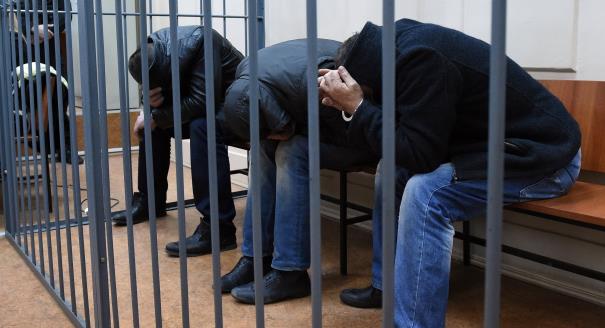
The Chechen connection has been made in connection to the murder of Boris Nemtsov, one of the leaders of the non-system liberal opposition. So far five suspects have been arrested in this case. The murder’s organizer, Zaur Dadayev, has already admitted his guilt, while his accomplice, Beslan Shavanov, killed himself during his arrest. Dadayev explained that Nemtsov had insulted Islam in the past and was punished for it.
The story conjures up associations with the Charlie Hebdo incident in which the magazine’s staff were shot and killed for publishing cartoons depicting the Prophet Muhammad. Afterwards, millions of outraged French citizens took to the street to protest the actions of the Islamist extremists and reassert Europeans’ right to self-expression.
Al Qaeda was behind the Paris murders—at least, that’s what many analysts think. But who was behind Nemtsov’s murder?
Although journalists often point to Ramzan Kadyrov, I find it hard to believe. I can’t imagine the Chechen leader calling his subordinates and directly instructing them to commit this crime. He has nothing to gain from it.
But the xenophobia and fear of the West characteristic of some segments of Russia’s Muslim community, including Muslims in the North Caucasus, creates a favorable climate for such acts. Islamic anti-Westernism matches the official Russian ideology, which focuses more on criticizing the tolerance and amorality of the West than on condemning terrorist attacks themselves. We have come full circle.
The actual mastermind of Nemstov’s murder will never be found because, in all likelihood, such an individual doesn’t exist. Incidentally, just a week after the Moscow tragedy, Ramzan Kadyrov was awarded the Order of Honor, once again proving the adage that “Caesar’s wife must be above suspicion” (or Caesar’s brother in this instance). The Kremlin continues to trust Kadyrov and is not about to distance itself from him as a result of his charges’ actions.
Those responsible—the murderers, that is—will certainly be punished. They might get off relatively lightly, though—after all, they acted in the name of their faith. For their part, Russian liberals should be more careful now. From this point on, besides being punished by the regime, they will also be targeted by terrorists, whose views sometimes coincide with those of the regime.
This post addresses only the one, most-talked-about theory of the murder, but we shouldn’t completely dismiss other possibilities. Besides, “the Chechen connection” does raise some questions. For instance, those that kill from behind usually don’t kill for their faith—this is a sign of cowardice. Also, the case has been solved surprisingly quickly, given the usual sluggish pace of Russian investigations. Moreover, the North Caucasus’s involvement in the killing may lead to the escalation of interethnic tensions. There are other holes in the Chechen story, but the investigators are unlikely to discard it at this point.
This publication originally appeared in Russian.
Former Scholar in Residence, Religion, Society, and Security Program
Malashenko is a former chair of the Carnegie Moscow Center’s Religion, Society, and Security Program.
Recent Work
Alexey Malashenko
Alexey Malashenko
Carnegie does not take institutional positions on public policy issues; the views represented herein are those of the author(s) and do not necessarily reflect the views of Carnegie, its staff, or its trustees.

The Thai-Cambodian conflict highlights the limits to China's peacemaker ambition and the significance of this role on Southeast Asia’s balance of power.

Pongphisoot (Paul) Busbarat

Beijing believes that Washington is overestimating its own leverage and its ability to handle the trade war’s impacts.


Rick Waters, Sheena Chestnut Greitens
Tapping our network of China experts in the region, Carnegie China offers this latest “China Through a Southeast Asian Lens” report to offer preliminary assessments of whether the U.S. effort to reshape the global trading order will lead countries in the region to tilt toward Beijing.

Selina Ho, Khin Khin Kyaw Kyee, Joseph Ching Velasco, …
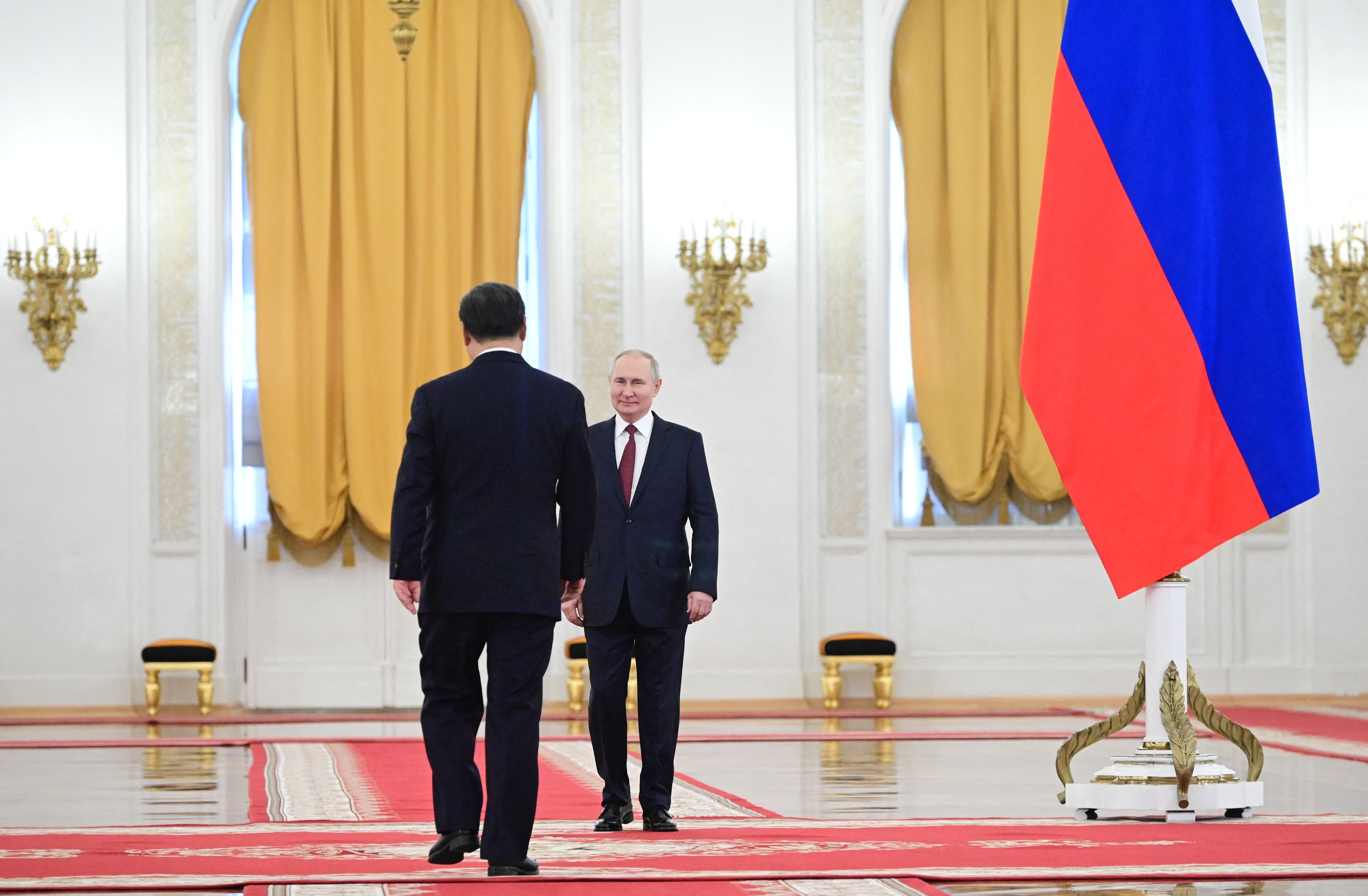
Beijing is trying to navigate the overall situation regarding Ukraine, especially the substance of interactions between Washington and Moscow.

Ellen Nakashima, Zhao Long, Pavlo Klimkin, …
While China will remain a significant political and economic force in the Global South, its ambition to leverage the Global South as a counterbalance to the United States and the Global North is far from assured.

Xue Gong