

Commentary
Nathalie Tocci, Jan Techau
{
  "authors": [
    "Jan Techau"
  ],
  "type": "legacyinthemedia",
  "centerAffiliationAll": "dc",
  "centers": [
    "Carnegie Endowment for International Peace",
    "Carnegie Europe"
  ],
  "collections": [
    "EU Integration and Enlargement"
  ],
  "englishNewsletterAll": "ctw",
  "nonEnglishNewsletterAll": "",
  "primaryCenter": "Carnegie Europe",
  "programAffiliation": "EP",
  "programs": [
    "Europe"
  ],
  "projects": [],
  "regions": [
    "Europe",
    "Western Europe",
    "Germany",
    "Iran"
  ],
  "topics": [
    "EU"
  ]
}
Source: Getty
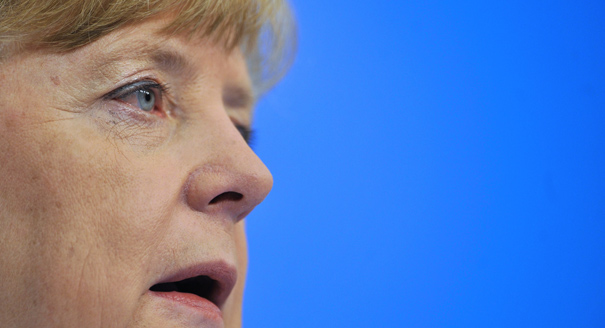
To survive, the European project will need to change. The European Union needs more integration, and German Chancellor Angela Merkel must lead the way.
Source: Berlin Policy Journal
Let’s put aside Angela Merkel’s economic wisdom in the Greek crisis for the moment. To be sure, as an economics layman with a penchant for fiscal conservatism, Merkel’s alleged toughness sounded reasonable to me, partly because it was well cushioned by enormous generosity. I think she basically had it right, and that her strategy for the euro crisis was better than those of most other folks, including Paul Krugman, Joseph Stiglitz, and Yanis Varoufakis. And Marine Le Pen, for that matter.
Right or wrong on the specifics of the Greek crisis, Merkel’s broader positions on the euro, on Greece, and on Europe suffer from a very fundamental contradiction, a contradiction big enough to get us all into deep trouble. Her position is this: the euro must be saved by all means, because Europe’s fate depends on the common currency. “If the euro fails, Europe fails,” as she has said more than once. Merkel wants to preserve deep economic integration, with the euro as its pinnacle, because she fears that if the economic heart of the EU unravels, the entire European construct will follow.
What Merkel does not want is the necessary political integration that must come along with economic integration of this depth. The German chancellor has learned to like the intergovernmental way of dealing with matters in the EU, preferring it to the integrated community method in which member states delegate power to institutions in Brussels to forge broader compromises, ostensibly for the greater good. This is no surprise: the intergovernmental method, in which member states hammer out compromise amongst themselves without much of a role for the European Commission, favors the bigger member states, particularly Germany. It is much easier to rely on intergovernmentalism when you are the frontrunner. And aside from Germany’s advantageous position, Merkel has learned to distrust and dislike the Brussels institutions, especially the Commission, which is no longer the staunch German ally it once was.The bottom line is that Merkel wants full economic integration but dreads political union. Unfortunately, the former requires the latter. This misunderstanding is the same mistake that David Cameron makes.
It is tempting to think you can enjoy the benefits of economic integration while leaving politics out. Economic negotiations are simpler: compromise is technical, and can often be bought with other financial concessions. Legitimacy is created by an outcome’s material usefulness, which is easily measured. And sovereignty bargains are a lot less painful in the economic realm than the political.
In politics, sovereignty bargains mean surrendering core state powers. And the usefulness of the outcome does little to establish legitimacy – in the political realm, legitimacy is created through input, i.e. the participation of the voters, the actual sovereign.
The EU has reached a level of economic integration where political integration can no longer be seen as optional. With a highly integrated single market, a common trade policy, and a common currency, it is impossible to keep fiscal policies, tax issues, social standards, etc. off the table. No matter what, they creep into the discussion. They are the price for this liberal marketplace we have been building.
It is a fundamental flaw in political thinking to believe that deep economic integration can survive, in the long run, without a systematic, at least somewhat centralized, rules-based, institutionally administered political structure. Of course, this kind of governance requires its own direct sources of legitimacy, such as referenda – or, even better, elections. And behind all of his looms the specter of statehood.
This is the real lesson of the Greek crisis. It is also the lesson from the famous dispute between America’s founding fathers Thomas Jefferson and Alexander Hamilton: Hamilton won a victory for a federal state, but the issue was only fully resolved by the Civil War. At stake is nothing less than the existential question of the state, or whether a state should exist at all.
The euro’s founding fathers foresaw this problem, but they believed that the necessity for political cooperation generated by the euro would be used by member states to move gradually towards political union. This was Helmut Kohl’s dream. Instead, these pressures were ignored by nations clinging to illusions of sovereignty until they broke free in the euro crisis, unleashing their full destructive potential.
Der Spiegel laments that Angela Merkel has no vision for the European Union beyond economic goals. All we ever hear from her is that Europe needs to become more competitive. She is right, of course, and a great deal of progress has been made in that direction. But now, Merkel needs to realize that even high levels of competitiveness cannot reign in the centralizing forces set in motion by deep economic integration. Political union is necessary. This is not a lofty vision dismissible as the preoccupation of dreamers; it is a question of practical survival for the EU at this very moment.
If we want to retain the deeply integrated common market we have created and the benefits it brings on a daily basis, a plan for political union must be devised now. Its outlines are clear: It will center on the euro group, it will mean unprecedented levels of supranational cooperation between those countries, and it must include early forms of pan-European democracy, perhaps something along the lines of what Wolfgang Schäuble has been talking about for some time.1 Many will hate it. If explained poorly, it will be hugely unpopular. Some countries will fall by the wayside. But if it is not done, what Europe has now cannot survive.
The burden is once more on Angela Merkel. She is the not-so informal leader of Europe, and her word counts. She needs to depart from the illusion that a weird mix of status quo and status quo ante can somehow be reached. If we want to preserve what we have, everything must change.
1 Karl Lamers/Wolfgang Schäuble, “More integration is still the right goal for Europe,” Financial Times, August 31, 2014.
This article was originally published by the Berlin Policy Journal.
Director, Europe Team, Eurasia Group
Techau is director with Eurasia Group's Europe team, covering Germany and European security from Berlin. Previously, he was director of Carnegie Europe.
Recent Work
Nathalie Tocci, Jan Techau
Jan Techau
Carnegie does not take institutional positions on public policy issues; the views represented herein are those of the author(s) and do not necessarily reflect the views of Carnegie, its staff, or its trustees.
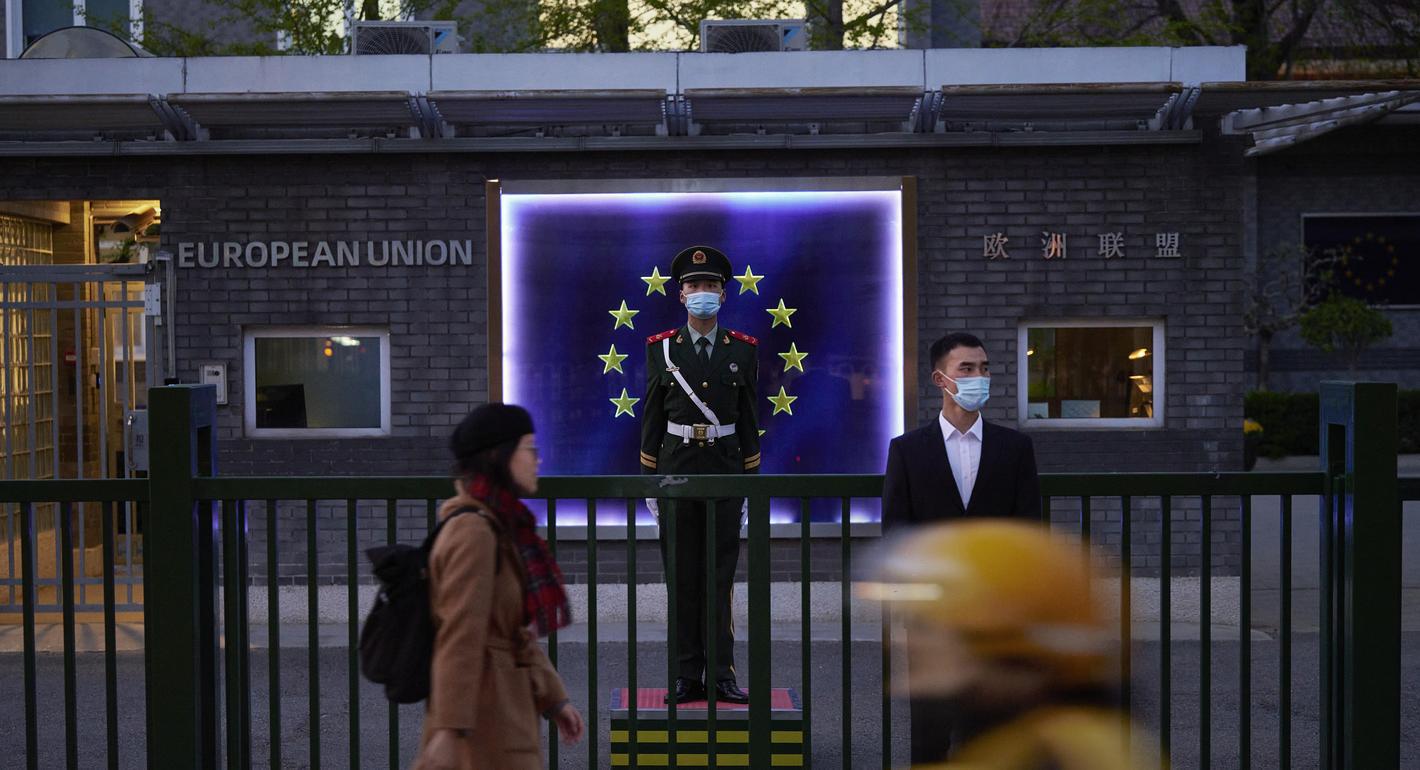
The Russian invasion of Ukraine is a turning point in the EU-China relationship, and evolution of the China-Russia relationship will continue to impact EU-China relations.
Yifan Ding, Alice Ekman
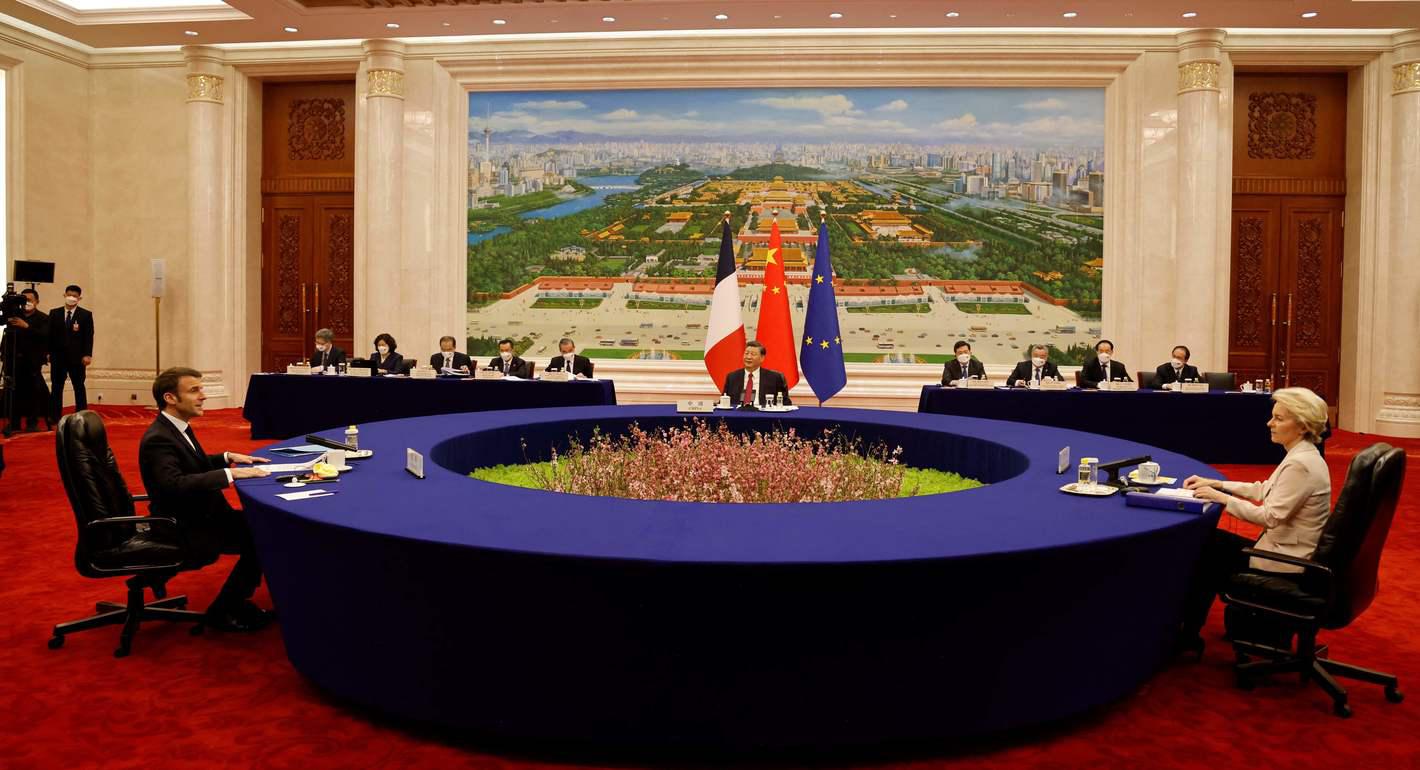
Recent visits by European officials highlight the EU’s lack of internal cohesion.


Paul Haenle, Chan Heng Chee, Liu Yawei, …
“It’s not so clear how we’re going to get out of this.”
Paul Haenle, Philippe Le Corre

It’s about managing oil prices, bread prices, and strategic partnerships.



Amr Hamzawy, Karim Sadjadpour, Aaron David Miller, …

With the potential of enabling not only significant economic growth but also the innovation of critical technologies in various fields, both the United States and China view 5G as one of the key influencing factors in the “great power competition.”
Lyu Jinghua