

Paper
Constantino Xavier
{
  "authors": [
    "Constantino Xavier"
  ],
  "type": "legacyinthemedia",
  "centerAffiliationAll": "",
  "centers": [
    "Carnegie Endowment for International Peace",
    "Carnegie India"
  ],
  "collections": [
    "Bay of Bengal Initiative"
  ],
  "englishNewsletterAll": "",
  "nonEnglishNewsletterAll": "",
  "primaryCenter": "Carnegie India",
  "programAffiliation": "",
  "programs": [],
  "projects": [],
  "regions": [
    "South Asia",
    "India"
  ],
  "topics": [
    "Foreign Policy"
  ]
}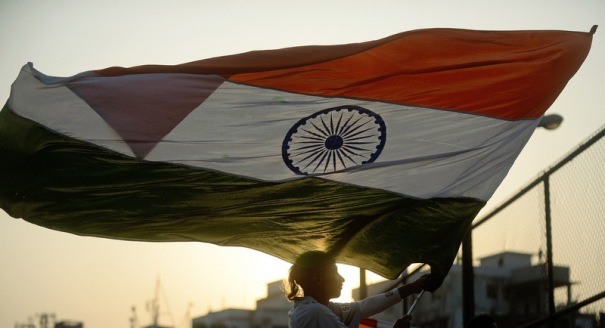
Source: Getty
India’s influence in the region will hinge on its ability to open its economy to its periphery, deliver on cross-border connectivity, and craft alternative cooperative arrangements with its neighbors.
Source: Hindustan Times
India should be thankful, for Pakistan's strategy of cross-border terrorism has achieved the impossible: For the first time in 30 years all other neighboring states are now siding with India on a Saarc issue. This gives New Delhi a window of opportunity to practice what it has been preaching and implement its grand plans for the region. India's influence in the region, and it's ability to deter Chinese inroads therein, will hinge on its ability to open its economy to its periphery, deliver on cross-border connectivity, and craft alternative cooperative arrangements with its neighbors.
Following New Delhi's lead, the governments of Afghanistan, Bangladesh and Bhutan have also opted out of the Saarc summit scheduled for early November in Islamabad. The Maldives, Sri Lanka and Nepal issued public statements of support for the Indian position, with implicit references to terrorism and a degenerating regional security environment. This has left Pakistan virtually isolated, in stark contrast with the past when these smaller states relied on Islamabad's support to use Saarc to pressure or gang up against India.
While the Nepalese government has announced consultations to reschedule the summit, relations between India and Pakistan are expected to deteriorate further. This does not bode well for Saarc's track record of regional cooperation. With Pakistan out of the picture, India's informal “Saarc minus one” approach will therefore likely emerge as Prime Minister Narendra Modi's default neighborhood policy. This strategy is not necessarily bad news for regional integration, as it will raise incentives for New Delhi to explore three alternative paths to foster cooperation across South Asia.
First, at the bilateral level, New Delhi will continue to dedicate resources to implement the grand regional connectivity plans that have remained on paper for decades, hostage to Saarc's consensus principle. This includes investments in Iran's Chabahar port as a crucial link to Afghanistan, new road and railway links to Nepal and Bangladesh, and a new sea bridge to Sri Lanka. New Delhi must, however, move fast if it wishes to take advantage of an unprecedented alignment of interests with the six other regional capitals: The governments in Kabul, Colombo and Dhaka, in particular, are now all predisposed to greater cooperation with New Delhi and have placed the ball in India's court to deliver. Beyond its idealist self-image as the region's benevolent big brother, New Delhi will also have to revive the realist motives of the Gujral doctrine of the 1990s: Any short-term economic concessions to smaller neighbors, for example in the terms of favorable trade conditions, should be seen as lucrative investments in strategic interdependence which enhances Indian influence and leverage in the long term.
Second, New Delhi will likely develop new sub-regional initiatives with friendly neighbors on specific issues, or so-called minilaterals. In some cases, such schemes can be implemented via Saarc, which allows for member-states to cooperate separately. New Delhi's experience in signing a trilateral motor vehicle agreement with Bangladesh, Bhutan and Nepal, after Pakistan blocked a region-wide proposal, offers a promising model. Similarly, on the Indian Ocean front, New Delhi can also build on the Trilateral Maritime Security Cooperation Initiative with Sri Lanka and the Maldives. Plans for a gas pipeline connecting India, Bangladesh and Myanmar are back on the table as well.
Finally, as an intransigent Pakistan blocks the Western front, Prime Minister's neighborhood first policy is expected to gradually shift East, seeking to tie regional cooperation on the subcontinent to Asean's successful regional integration story in Southeast Asia. For example, instead of seeking to persuade Pakistan to drop its opposition to Myanmar becoming a Saarc member, an idea first mooted by New Delhi in the mid-1980s, the Modi government is now signalling its commitment to act east through alternative arrangements. This is most recently reflected in the move to use the BRICS summit later this month in Goa to facilitate a parallel outreach to the Bay of Bengal Initiative for Multi-Sectoral Technical and Economic Cooperation (BIMSTEC).
The shift in India's regional strategy will, however, crucially depend on the government's capacity to override its security establishment's traditional anxieties about cross-border connectivity. As former foreign secretary Shyam Saran noted back in 2006, “India must start looking at national boundaries not as impenetrable walls which somehow protect us from the outside world, but as ‘connectors’, bringing India closer to its neighbors.” Despite the previous PM's promises to make regional borders irrelevant, today it still takes longer to ship a container from New Delhi to Dhaka than to Singapore.
As China looms large across the Subcontinent, in a formidable demonstration of how economics and security are connected, the PM will have to battle hard to invest the necessary resources to move South Asia to a new era of regional cooperation and integration. India's regional interests cannot afford to wait any longer for an intransigent Pakistan and a moribund Saarc.
This article was originally published in the Hindustan Times.
Former Fellow, Carnegie India
Constantino Xavier was a fellow at Carnegie India, based in New Delhi. His research focus is on India’s foreign policy, with emphasis on relations with its neighboring countries and South Asian regional security.
Recent Work
Constantino Xavier
Constantino Xavier
Carnegie does not take institutional positions on public policy issues; the views represented herein are those of the author(s) and do not necessarily reflect the views of Carnegie, its staff, or its trustees.

But their "principal to principal" model will only be as effective as the political strength of each leader back home.

Damien Ma

U.S. unpredictability has allowed China to capitalize on its positioning as the “responsible great power”. Paradoxically, the more China wins the perception game, the more likely expectations will rise for Beijing to deliver not just words but to demonstrate with its deeds.

Chong Ja Ian

Hanoi and Beijing have long treated each other as distant cousins rather than comrades in arms. That might be changing as both sides draw closer to hedge against uncertainty and America’s erratic behavior.

Nguyễn Khắc Giang

Across Asia, China is better positioned to withstand energy shocks from the fallout of the Iran war. Its abundant coal capacity can ensure stability in the near term. Yet at the same time, the country’s energy transition away from coal will make it even less vulnerable during the next shock.
Damien Ma

Malaysia’s chairmanship sought to fend off short-term challenges while laying the groundwork for minimizing ASEAN’s longer-term exposure to external stresses.

Elina Noor