

Commentary
Thomas de Waal
{
  "authors": [
    "Thomas de Waal"
  ],
  "type": "legacyinthemedia",
  "centerAffiliationAll": "dc",
  "centers": [
    "Carnegie Endowment for International Peace",
    "Carnegie Europe"
  ],
  "collections": [
    "Europe’s Eastern Neighborhood",
    "Transatlantic Cooperation"
  ],
  "englishNewsletterAll": "ctw",
  "nonEnglishNewsletterAll": "",
  "primaryCenter": "Carnegie Europe",
  "programAffiliation": "EP",
  "programs": [
    "Europe"
  ],
  "projects": [],
  "regions": [
    "Europe",
    "North America",
    "Eastern Europe",
    "Iran"
  ],
  "topics": [
    "Foreign Policy"
  ]
}
Source: Getty
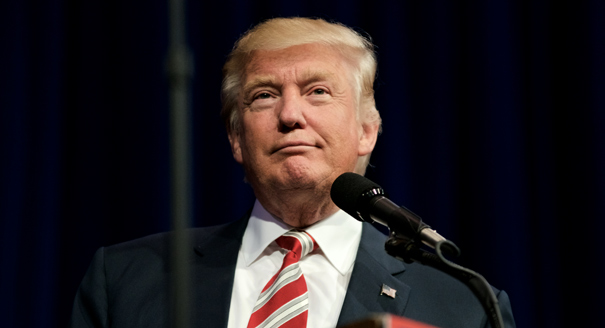
Even before U.S. President-elect Donald Trump won the White House, much of Eastern Europe was living in Trumpland, where politics is more about making deals than about building institutions.
Source: Financial Times
Since Donald Trump won the US election, there has been anxiety over what the tycoon’s victory means for eastern Europe. Will Ukraine be the big loser as the American president tries to cut a deal with Vladimir Putin over Syria? Can we expect a fresh round of Russian-inspired hybrid war in eastern Ukraine or even more Russian military incursions elsewhere in the region?
A new military scenario looks unlikely, if only because Mr Putin is desperate to see western sanctions on his country lifted. But the concern masks a more urgent problem.
Even before Mr Trump won the White House, much of eastern Europe was living in Trumpland, where business and politics are fused and politics is more about making deals than building institutions.
The sight of a billionaire businessman capturing power is familiar to the citizens of Ukraine, Moldova and Georgia. Each is run, formally or informally, by a wealthy tycoon. Bidzina Ivanishvili, the former prime minister and the godfather of the ruling party Georgian Dream, is estimated to be worth about $5bn, more than one-third of Georgia’s gross domestic product.
Vladimir Plahotniuc, Moldova’s richest man, is also its de facto leader, while Petro Poroshenko, Ukraine’s president, is one of the wealthiest men in his country.
For years, Moldova was known as eastern Europe’s “champion of reform”. It was granted visa-free travel and an association agreement with the EU before any of its neighbours. Yet on November 13 Moldova apparently rejected Europe by electing Igor Dodon, a pro-Russian socialist, to the post of president, a position with limited constitutional powers but symbolic importance.
The reason for this protest vote is systemic corruption which the EU and US failed to check and which culminated in the revelation in 2015 that $1bn, equivalent to one-sixth of Moldova’s GDP, had been siphoned from three banks, with the alleged connivance of top officials.
Iurie Leanca, Moldova’s then head of government, responded to the scandal by saying that he was “just a prime minister”. That is because real power in Moldova lies with Mr Plahotniuc.
Even if Moldova does not tilt back geopolitically towards Moscow, it risks a situation just as bad — being an unreformed grey zone on the margins of Europe. Ukraine presents a similar challenge but on a much bigger scale.
Mr Poroshenko has instigated more reforms in two years than his predecessors did in 20, overhauling the police force, the energy sector and the public procurement system. But he also displays a firm resolve not to reform any institutions that could threaten him personally.
Opinion polls routinely show that corruption has eroded the trust of Ukrainians in their leaders. Recent asset declarations by officials — with the prime minister declaring no fewer than 12 luxury watches — only reinforce this weary cynicism, which could empower populist or pro-Russian parties at the next election.
None of this will be shocking to Mr Trump, who already likes doing business in this part of the world. A Trump presidency that prioritises dealmaking with oligarch-politicians over the fight against corruption, locally and internationally, is bad news for the citizens of eastern Europe, and for Europe as a whole.
In Ukraine, where Joe Biden, US vice-president, has practised “tough love” on the government, the effects could be especially deleterious, as Mr Biden’s departure and the advent of Mr Trump will weaken the moral authority of the US.
That will leave the EU struggling to push for reform of a region that should be more afraid of dodgy banks than Russian tanks.
This article was originally published by the Financial Times.

Senior Fellow, Carnegie Europe
De Waal is a senior fellow at Carnegie Europe, specializing in Eastern Europe and the Caucasus.
Recent Work
Thomas de Waal
Thomas de Waal, ed.
Carnegie does not take institutional positions on public policy issues; the views represented herein are those of the author(s) and do not necessarily reflect the views of Carnegie, its staff, or its trustees.

Malaysia’s chairmanship sought to fend off short-term challenges while laying the groundwork for minimizing ASEAN’s longer-term exposure to external stresses.

Elina Noor
For Malaysia, the conjunction that works is “and” not “or” when it comes to the United States and China.
Elina Noor
In July 2025, Vietnam and China held their first joint army drill, a modest but symbolic move reflecting Hanoi’s strategic hedging amid U.S.–China rivalry.

Nguyễn Khắc Giang
The Thai-Cambodian conflict highlights the limits to China's peacemaker ambition and the significance of this role on Southeast Asia’s balance of power.

Pongphisoot (Paul) Busbarat
Beijing believes that Washington is overestimating its own leverage and its ability to handle the trade war’s impacts.

Rick Waters, Sheena Chestnut Greitens